
‘The Pro-Life Movement is Far From Over’
Pro-life ministries adjust as they continue to seek and serve vulnerable women.


“Since Roe was overturned, it’s a constant challenge to help pro-life supporters understand that the work of the pro-life movement is far from over … that it has in fact become more important, and in some ways more difficult, than ever,” Care Net President Roland Warren said of the challenges faced by pro-life ministries continuing to serve in a post-Roe world.
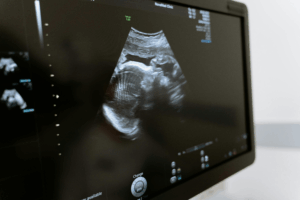
Photo by Mart Production / Pexels / Creative Commons
After the U.S. Supreme Court made abortion legal in the U.S. through its 1973 decision in Roe v. Wade, pro-life groups began to form. Fifty years ago, Harold O.J. Brown founded the organization now known as Care Net.
Organizations like Care Net evolved in their mission, often moving from political activism to focusing more on providing compassionate care to women through pregnancy resource centers.
The 2022 U.S. Supreme Court decision in Dobbs v. Jackson Women’s Health Organization sent the issue of abortion back to the states.
Varied state policies about abortion have caused pro-life organizations to adjust their strategies in reaching women facing unplanned pregnancies.
For example, Texas has strong pro-life protection, including the Texas Heartbeat Act. In states with these protections, abortion-minded women are increasingly seeking abortion by mail or crossing state lines, Andrea Trudden, vice president of communications & marketing for Heartbeat International, a network of pregnancy resource centers, told MinistryWatch.
In permissive states, Heartbeat has seen increased advertising and pressure from the abortion industry to normalize self-managed abortion — including chemical abortions. In some cases, states are using tax dollars to promote abortion.
Save the Storks has seen similar issues with women often traveling out of state or turning to online services to procure abortion pills.
Although there is no longer a federally-recognized right to abortion, the “heartbeat” of pro-life ministries remains. They continue to seek abortion-minded women to offer them the truth about abortion and the care and support they need to choose life.
“Care Net’s ministry model was built for a post-Roe America. Our focus has always been on addressing the ‘demand side’ of abortion by helping women and men address the physical, spiritual, emotional, and social aspects of abortion, and then helping them choose life for their unborn children and abundant life for their families. So, in that sense, little has changed,” Warren told MinistryWatch.
Trudden agrees. “What’s needed now is continued prayer, support, and partnership so that every woman knows she is not alone and every baby has the chance to live,” she said. “The pregnancy help movement is growing, but we cannot do this without the Body of Christ standing shoulder-to-shoulder with us. Together, we are writing the next chapter of life-affirming care.”
Even though many brick-and-mortar abortion clinics have closed, Heartbeat recognizes online abortion telehealth providers are increasing, so abortion access points are more prevalent than ever before. Additionally, abortion-friendly states have passed shield laws protecting providers who ship abortion pills into states with pro-life protections.
Heartbeat has adapted its strategy by strengthening its network for reaching women who are increasingly finding abortion access through digital channels. The Heartbeat Option Line®, established in 2003, is a 24/7 line available to anyone reaching out for help. Those who answer offer “compassionate, personalized guidance” and “hope for a new shared future for woman and baby.” Option Line is serving over 1,300 callers each day.
Since the Dobbs decision, pro-life ministry Save the Storks has expanded its services by partnering with pregnancy resource centers to help them become “high-quality healthcare providers,” by employing mobile medical clinics to go into neighborhoods where women need care, increasing engagement with church and community groups, and partnering with For Every Woman — a digital platform available 24/7 to women in need of care.
As Care Net looks to the future, it has adopted a “pro-abundant life” approach focused on the “demand” side of abortion rather than the “supply” side.
Trying to fight legislatively to ensure that abortions aren’t available will have a limited impact, Warren said, “because our nation has been convinced for the last 50 years that abortion is a morally neutral consumer product that women want and need.”
Instead, Care Net is focused on the heart, on God’s design for family, and God’s call to disciples.
“We reach women and men at risk for abortion to help them build strong marriage-based families and connect to local churches for ongoing physical, emotional, social, and spiritual support. This approach stops abortions now and addresses the issues that lead to abortions in the first place,” he said.
Chemical Abortion
The increasing availability and accessibility to chemical abortion pills is a constant challenge that pro-life ministries are working to overcome.
“Chemical abortion is the greatest challenge we face today,” Heartbeat acknowledged. While it is “marketed as ‘safe and simple,’” the ministry says the pills put women at greater risk —physically, emotionally, and relationally.
“We’ve seen tragic cases where traffickers, abusers, or even partners have forced women to take abortion pills — or worse, secretly poisoned them. By removing medical oversight and offering pills by mail, the abortion industry has created conditions that leave women more vulnerable to coercion and abuse.”
Warren acknowledges that the accessibility of chemical abortion pills has created tactical challenges for Care Net.
“The emergence of the abortion pill has made things more urgent, so there is more of a need to quickly reach people at risk for abortion,” Warren said.
Save the Storks has also seen an increase in women turning to abortion pills, which it says now comprise 63% of all abortions.
The ministries have all sought ways to address these challenges.
Care Net is ramping up its Pregnancy Decision Line — a national hotline — and recently merged with ICU Mobile to add a fleet of mobile medical units to its service.
The Pregnancy Decision Line is staffed by coaches and registered nurses who can provide immediate help and referrals to women facing unplanned pregnancies in an urgent state of mind.
“We are there to help them make sense of their situation and get them to a pregnancy center or mobile medical unit for the help they need,” Warren said, adding that 96% of the women and 97% of the men who call Pregnancy Decision Line are actively considering abortion.
Heartbeat is addressing the abortion pill crisis in several ways: by educating women on the risks of chemical abortion, by expanding the reach of the Abortion Pill Rescue® Network for those who regret taking the abortion pill, and by equipping pregnancy help organizations with the resources to offer compassionate medical and emotional care.
Access to MinistryWatch content is free. However, we hope you will support our work with your prayers and financial gifts. To make a donation, click here.
The Abortion Pill Rescue Network has saved the lives of over 7,000 unborn children, Trudden said. Since September 2021, Google has banned Heartbeat International from advertising Abortion Pill Reversal, which severely limits its ability to reach women online at the very moment they are searching for help.
It also has messaging to help lawmakers and the public understand “the hidden dangers of mail-order abortion, which endanger both mothers and babies.”
Save the Storks has adopted similar strategies: educating women about the risks of unsupervised chemical abortion while offering medical consultations through its health clinics, providing medical oversight and follow up through mobile medical clinics and pregnancy resource centers, and connecting women “with holistic support, housing, childcare, and financial aid—so she sees pathways forward beyond fear.”
Keeping Pro-Life Supporters Involved
“It is important to know that the work is far from over. Dobbs was not the finish line — it was a new beginning. Women are still facing unplanned pregnancies and still need real help,” Trudden said.
She acknowledged that the “noise of a polarized culture where misinformation about pregnancy help abounds” can make it difficult to keep supporters engaged.
“But our supporters remain faithful when they see the tangible fruit of their investment: families strengthened, babies saved, and communities impacted.”
“Our biggest challenge is narrative fatigue and digital noise in a polarized climate — cutting through fear-driven messaging with stories of hope and empowerment takes intentionality,” Kristin Giddings with Save the Storks told MinistryWatch.
Save the Storks emphasizes using clear impact metrics and invites its supporters to “invest in elevating care, expanding access, and rebuilding trust,” Giddings said.
“People are crying out for help like never before,” Warren said about the continuing need for pro-life pregnancy centers. “Every time we let our supporters know that abortions are up since Roe was overturned, they are shocked, but it creates the opportunity to have critical discussion about what the future of this work must look like.”
MAIN PHOTO: Photo by Mart Production / Pexels / Creative Commons
TO OUR READERS: The mission of MinistryWatch is to help Christian donors become more faithful stewards of the resources God has entrusted to them. Do you know of a story that will help us fulfill our mission, or do you want to give us feedback about this or any other story? If so, please email us at [email protected].
Related posts:
![MinistryWatch 1000 Database: Pro-Life Ministries]()
MinistryWatch 1000 Database: Pro-Life Ministries
![Weekly Review Feb 2022 MinistryWatch Updates: Webinar on Protecting Ministries, ECFA Membership Changes, Podcast Highlights, and More]()
Weekly Review Feb 2022 MinistryWatch Updates: Webinar on Protecting Ministries, ECFA Membership Changes, Podcast Highlights, and More
![Yelp Labels Pregnancy Resource Centers with Consumer Notice]()
Yelp Labels Pregnancy Resource Centers with Consumer Notice
![Pro-Abortion ‘Rage Giving’ May Be Down, but Pro-Life Support Remains Strong]()
Pro-Abortion ‘Rage Giving’ May Be Down, but Pro-Life Support Remains Strong
![Pregnancy Resource Centers Save Lives, Help Women, Change Hearts and Minds of Americans]()
Pregnancy Resource Centers Save Lives, Help Women, Change Hearts and Minds of Americans