
War Zone Aid Group Mixes Medicine and Munitions
Free Burma Rangers targets high-risk areas inaccessible to other NGOs.

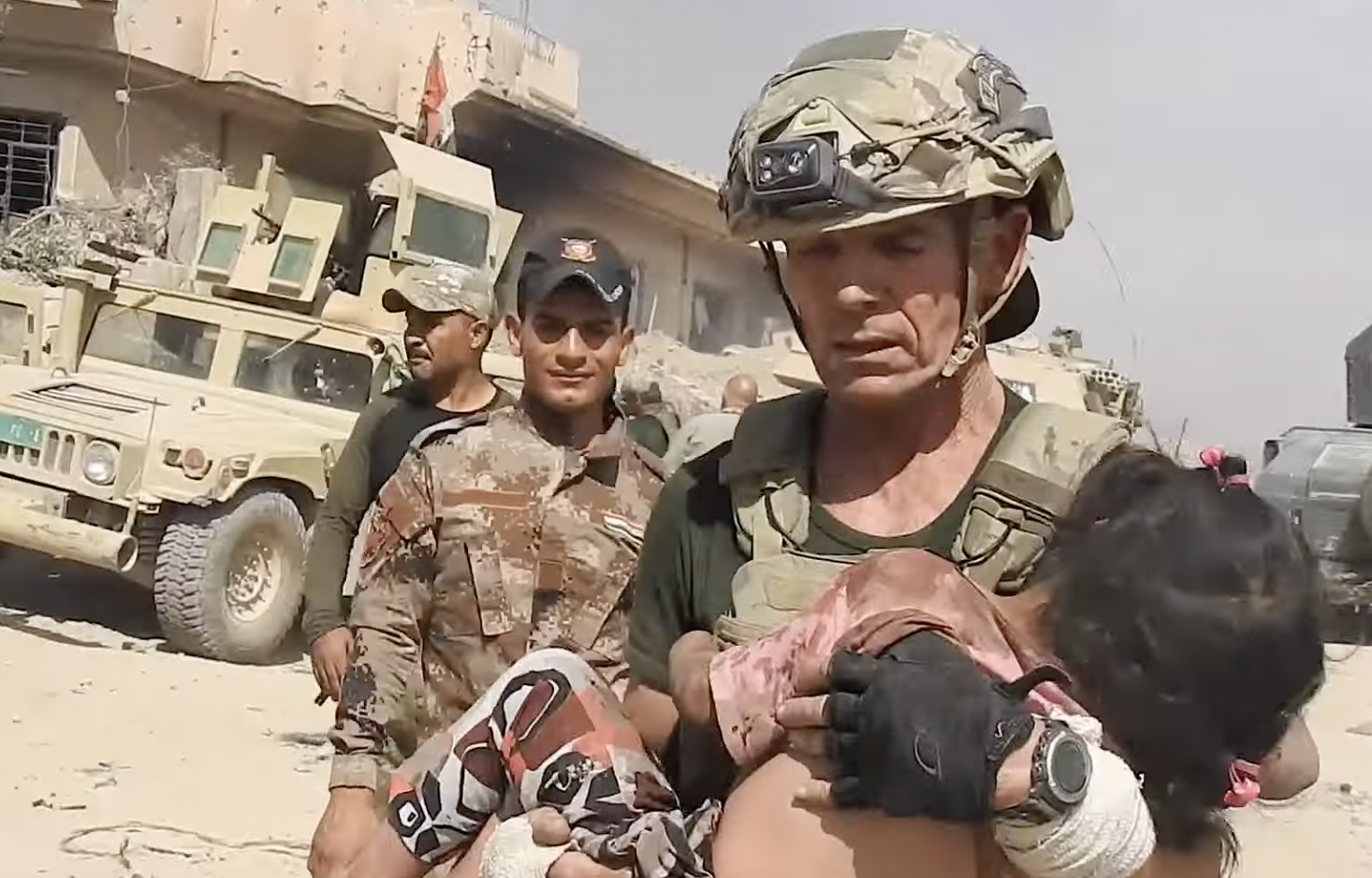
David Eubank doesn’t play by the rules of global humanitarian aid.
The former U.S. special forces officer and Fuller Theological Seminary-trained minister’s Free Burma Rangers (FBR) skirts the line between humanitarian and paramilitary in a way that makes some observers wince.
Eubank carries a gun—and he’s used it. He leads volunteer rescue teams through live fire, he openly takes sides in armed conflicts, and he coordinates his missions with what he considers “pro-democratic” forces. At his Burma (aka Myanmar) wilderness camp, his volunteer aid workers train alongside resistance soldiers.
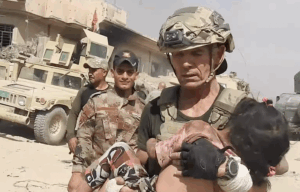
David Eubank during rescue mission / Video screenshot
Eubank also blurs the sacred and the secular. He is outspokenly evangelistic, and his organization’s website advertises a desire to provide “the love of Jesus,” yet he insists FBR is not a Christian organization and he welcomes volunteers from other faiths.
FBR sends medical teams to “operate in the humanitarian gap—that is, the space between the most dangerous part of an active frontline in combat and the rear areas, where most humanitarian organizations operate.”
To enter that gap is to assume extreme risk.
In a September interview with Burmese news source DVB, Eubank revealed that more than 70 aid workers have lost their lives, and more than 200 have been wounded, since FBR’s founding in 1997. Many of those casualties are honored on the ministry’s In Memoriam web page, which features dozens of men killed by human as well as natural causes. But as the 2020 documentary “Free Burma Rangers” demonstrated through harrowing battleground footage, those dangerous missions have successfully rescued children and families who otherwise would have faced certain death.
Originally a ragtag effort to aid ethnic minority civilians caught in the crossfire of Burma’s decades-long civil war, FBR has grown into a global movement reaching Iraq, Syria, Kurdistan, Tajikistan, South Sudan and Ukraine, where it has trained teams to, in its own words, “provide critical emergency medical care, shelter, food, clothing, and human rights documentation in their home regions.”
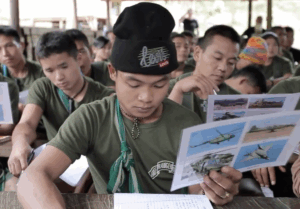
Video screenshot
In 2021, FBR experienced a revenue spike following the documentary’s release while a military coup brought renewed violence to Burma. Since then, revenue has declined from an annual high of about $9.1 million to over $5.3 million, which it received through its funding organization, Free the Oppressed. But even as the funding spike receded, the organization continued to serve thousands. In its 2024-2025 fiscal year report, FBR reported having treated over 35,000 patients, performed 163 surgical operations, trained nearly 2,000 people in “frontline medicine” and delivered nearly 17,000 pounds of medical supplies to Burma.
At the same time, Free the Oppressed’s most current Form 990 shows Eubank taking a salary of just $85,000—far below average for a nonprofit CEO—and his wife Karen, a vice president, receiving no pay at all.
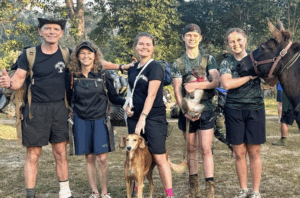
David and Karen Eubank and their three children / Photo via social media
What’s more, because FBR relies strictly on private donations, it suffered no direct impact from the dismantling of USAID early this year. It also avoided the outcries of fraud, corruption and ineffectiveness recently leveled against many international NGOs.
Even so, questions persist about Eubank’s willingness to use firearms. International Humanitarian Law allows medics on battlefields to carry light weaponry for self-defense, but if a medic functions as a combatant, the enemy is allowed to shoot back. Eubank insists his team members only fight defensively.
“Some of our team, a minority, have weapons. We don’t have a fund to buy weapons—that’s not in our charter. But if someone has their own weapon, they’re welcome to carry it,” Eubank told DVB. “They just can’t use it to initiate an attack against the Burma Army. They can use it to defend themselves, or others – a fundamental human right. We’re not an offensive force.”
On at least one occasion, FBR’s actions may have gone beyond mere self-defense. A March 2020 Offbeat Research report pointed to FBR’s own field footage as evidence the group acted offensively alongside Kurdish militias in Syria. FBR disputes this claim. The report also critiqued FBR’s Burma operations—specifically, the training of soldiers in land mine removal and battlefield communications—arguing “the existence of the Free Burma Rangers blurs the line between humanitarianism and ideological activism.”
FBR’s activities also pose potential diplomatic risks. The Southeast Asia Globe reported that Myanmar’s government once accused the U.S. military of working with Shan militants after Eubank was spotted in a partial U.S. military uniform.
Despite such concerns, FBR’s results have earned widespread praise, from positive coverage in Rolling Stone to an academic paper by Alexander Horstmann, a Southeast Asian studies professor at Tallinn University.
For Horstmann, FBR stands in contrast to “the failure of many humanitarian organizations who depend on the permission of the state in order to be able to help.” He wrote, “The way that FBR has crossed state borders to help and has organized into camps and in the borderlands of Myanmar and elsewhere puts FBR in a special position among humanitarian organizations, and into the limelight of humanitarian work and religious ethics in today’s crisis-ridden world.”
Free Burma Rangers currently earns very high ratings in the MinistryWatch database, including a Donor Confidence Score of 98. In 2021, it was a recipient of our Shining Light Award.
TO OUR READERS: The mission of MinistryWatch is to help Christian donors become more faithful stewards of the resources God has entrusted to them. Do you know of a story that will help us fulfill our mission, or do you want to give us feedback about this or any other story? If so, please email us at [email protected].
Related posts:
![Clearing Landmines, Restoring Hope in Burma]()
Clearing Landmines, Restoring Hope in Burma
![Samaritan’s Purse Aids Texas Tornado Victims, Free the Oppressed Trains Afghan Refugees, India Gospel League Supports Manipur Families, Cadence International Sends Interns Abroad, Christian World Outreach Trains West African Girls]()
Samaritan’s Purse Aids Texas Tornado Victims, Free the Oppressed Trains Afghan Refugees, India Gospel League Supports Manipur Families, Cadence International Sends Interns Abroad, Christian World Outreach Trains West African Girls
![Luke Combs Launches Salvation Army Red Kettle Campaign, Free Burma Rangers Aid Refugees, One Collective Trains Ukrainian Youth in Construction]()
Luke Combs Launches Salvation Army Red Kettle Campaign, Free Burma Rangers Aid Refugees, One Collective Trains Ukrainian Youth in Construction
![Weekly Review: ECFA Membership Changes, MinistryWatch Database Changes, Mark Driscoll in the Ministrywatch archives]()
Weekly Review: ECFA Membership Changes, MinistryWatch Database Changes, Mark Driscoll in the Ministrywatch archives
![Ministries Making a Difference]()
Ministries Making a Difference