

ELCA Minneapolis Area Synod Sues DHS Over Access to Immigrant Detainees
Represents second lawsuit challenging government barring clergy from DHS facilities.

(RNS) — A group of religious organizations and faith leaders in Minnesota has filed a lawsuit against the Department of Homeland Security, alleging the agency is violating their religious freedom by denying them access to immigrant detainees at a local federal building.
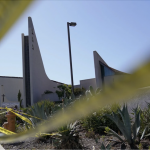
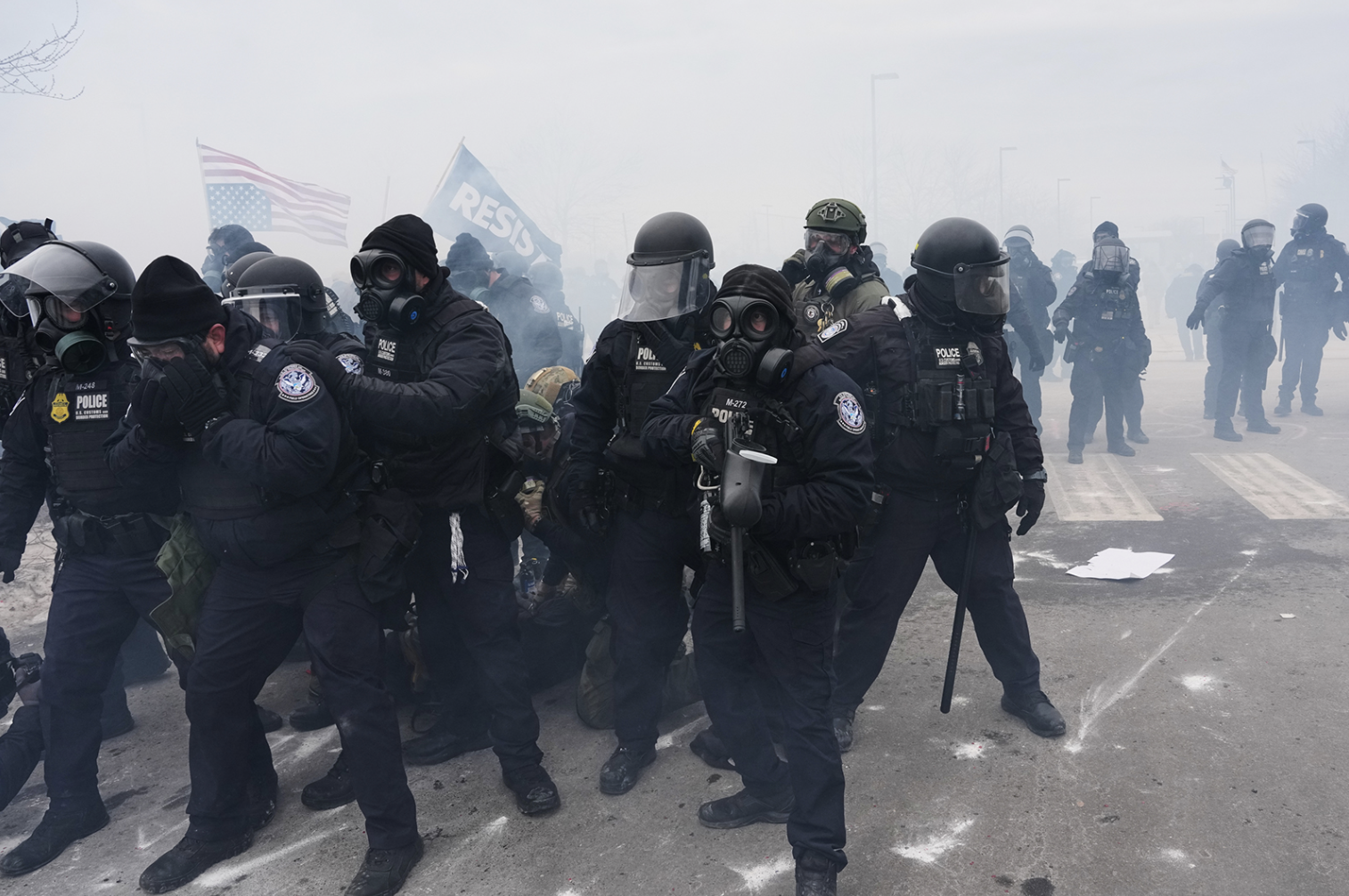
Federal immigration officers confront protesters outside Bishop Henry Whipple Federal Building, Jan. 15, 2026, in Minneapolis. (AP Photo by RNS/Adam Gray)
The lawsuit was filed Monday, Feb. 23, by the Minneapolis Area Synod of the Evangelical Lutheran Church in America, the Minnesota Conference of the United Church of Christ and the Rev. Christopher Collins, a Jesuit priest. It alleges the government’s refusal to allow faith leaders access to the Bishop Henry Whipple Federal Building, which houses the local offices of the U.S. Immigration and Customs Enforcement, is a violation of their rights under the First Amendment and the Religious Freedom Restoration Act.
“Pastoral care is the heart and soul of what our Pastors and Deacons are called to provide in their congregations and around the community. We walk together, listening, praying, guiding, and offering the peace and presence of Jesus Christ,” Bishop Jen Nagel, of the ELCA’s Minneapolis Area Synod, said in a statement. “This is particularly important during times of stress, grief, isolation, and transition.”
Clergy have been denied access to Whipple as recently as Monday morning, according to Irina Vaynerman, CEO of Groundwork Legal, one of the law firms representing the plaintiffs along with the firm Saul Ewing.
“Faith leaders and clergy across the state have been attempting to access the Whipple building since the beginning of Operation Metro Surge,” Vaynerman said in an interview, referring to the immigration enforcement campaign that began in Minneapolis in December. Clergy, she added, were even denied access on Ash Wednesday.
“There was permanent damage done when they were not able to provide that care on Ash Wednesday, but the need and desire to provide the care — and receive the care — extends beyond even one of the holiest days of those in the Christian faith,” she said.
The lawsuit alleges that preventing clergy from entering the facility to offer pastoral care to migrants infringes on their religious freedom.
“By categorically barring faith leaders from praying with detainees, offering sacraments, or providing spiritual guidance, the government imposes a profound and unjustified burden,” the complaint reads. “The ability to provide pastoral care ensures that even in the most dire legal processes that could result in deportation or prolonged detention, individuals are treated with dignity and humanity, not as mere inventory.”
Access to MinistryWatch content is free. However, we hope you will support our work with your prayers and financial gifts. To make a donation, click here
DHS did not immediately respond to a request for comment on the lawsuit, but the complaint alleges agency officials told Bishop Nagel that Whipple is a processing facility, not a detention facility, and that “no one is allowed access to provide pastoral care, purportedly for safety reasons.”
The agency made a similar argument last year to justify barring faith leaders from entering an ICE facility in Illinois. Vaynerman alleged that the Whipple building is not simply a processing center, but a place where detainees have been held for hours and sometimes days.
The faith leaders’ lawsuit is similar to a separate ongoing legal battle in Illinois, where a group of Catholic priests, nuns and organization leaders filed suit last year insisting they be granted access to detainees at an ICE facility in Broadview, just outside of Chicago. The government’s refusal to allow the faith leaders to enter the facility — which plaintiffs allege is a shift from years past — sparked a series of protests at the site that resulted in the arrest of at least eight leaders from a range of religious traditions.
Pushback to Trump’s mass deportation efforts in general has been far-reaching, with religious leaders in Minnesota, in particular, staging major protests. They also invited leaders across the country representing various religions to a training seminar on how to resist ICE. The issue of access for faith leaders to detainees reached all the way to the Vatican: Pope Leo spoke out on the topic in November, saying, “I would certainly invite the authorities to allow pastoral workers to attend to the needs of those people.” What’s more, Catholic bishops — including at least two associated with Trump’s own Religious Liberty Commission — have voiced concern about the denial of access.
Last week, a federal judge issued an order requiring the federal government to coordinate with the Coalition for Spiritual and Public Leadership — a Chicago-area Catholic advocacy organization and one of the plaintiffs in the case — to allow clergy to access the site on Ash Wednesday. The government ultimately granted two Catholic priests and a nun access to the facility, but for reasons that remain unclear, they initially found the building empty. After an hour wait, a small group of detainees were brought to the facility, where they met with the faith leaders.
In an interview, the Rev. Leandro Fossá, who was part of the delegation allowed into the facility, described an emotional meeting with the detainees — young men and women “just past their teens.”
“We saw their tears, confusion. For them, their dreams were just about to end, they had to start all over, so you could see the anxiety on their faces — the battle is lost,” he said.
But Fossá, who has long worked in prison ministry, said that as he and others offered the group Communion and rubbed ashes on their foreheads, the value of their ministry was made clear. “Our presence, our words, our journeying with them — it was a moment where they could feel that they are not alone,” he said. “The community is with them. God walks with them.”
Fossá said he and others discussed with officials in the building the possibility of a weekly or even daily delegation at the facility, but a formal agreement has yet to materialize, and the lawsuit is ongoing.
Fossá said he’s committed to the work of Christ: “I was in prison and you visited me. I was naked and you clothed me.”
“We cannot choose to love someone only when that person has papers.” he said.
TO OUR READERS: The mission of MinistryWatch is to help Christian donors become more faithful stewards of the resources God has entrusted to them. Do you know of a story that will help us fulfill our mission, or do you want to give us feedback about this or any other story? If so, please email us at [email protected]