

Chaos at Christianity Today
Staff departures and strategic reversal raise doubts about Christianity Today's future direction

The leadership of Christianity Today attempted to put a good face on all the changes happening there. A statement released on Oct. 2 said, “Celebrating the 70th anniversary of its founding, Christianity Today announced a new editorial leadership team to bring together the full scope of its various media platforms.”
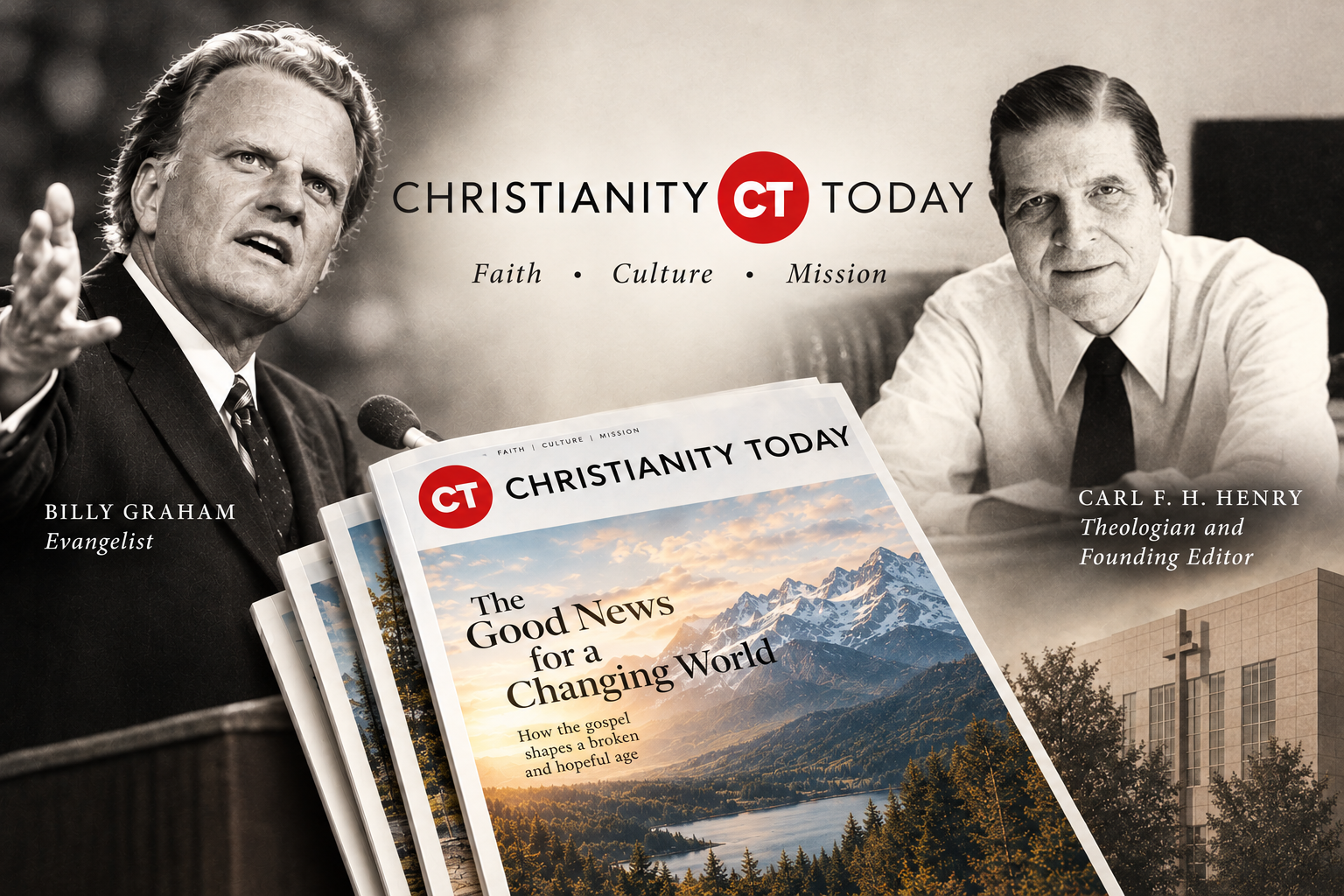
Graphic created using ChatGPT.
The real news in the announcement was the appointment of Erik Petrik as chief content officer and incoming editor in chief. But insiders and recently departed staff tell me this announcement glosses over the chaos in the organization.
Even from the outside, the chaos is not hard to see. Petrik’s appointment, for example, means that CT — in less than a seven-year span — has had six editors in chief: Mark Galli, Daniel Harrell, Tim Dalrymple, Russell Moore, Marvin Olasky and Erik Petrik.
What the Oct. 2 announcement also did not say was that simultaneous to Petrik’s appointment, the magazine was laying off 20% of its staff and 40% of the editorial team. Among those hit by the layoffs was Andy Olsen, an award-winning journalist and the editorial director for news at CT. In the wake of these layoffs, Deputy Editor Bonnie Kristian announced her resignation. This recent round of layoffs followed two rounds of staff reductions in 2025 (in March and September), which shed another 20 people.
These disruptions at Christianity Today should be of interest to all those who care about evangelicalism in this country. The magazine was, after all, founded by evangelical icon Billy Graham and (arguably) the 20th century’s foremost evangelical theologian, Carl Henry. CT has been both a leader of and a chronicler of the post-World War II evangelical movement since the beginning.
For those reasons and others, I reached out to the new president of Christianity Today, Nicole Martin, for some answers that might shed light on the recent changes and the impact these changes will have on the magazine’s future direction.
Access to MinistryWatch content is free. However, we hope you will support our work with your prayers and financial gifts. To make a donation, click here.
I asked Martin to explain the real reasons for the layoffs. The financial condition of the organization seems sound, and Marvin Olasky was brought in specifically for the purpose of ramping up the journalistic quality of the publication. All organizations go through changes in direction, but such a radical pivot away from a direction the organization had turned toward seems to indicate chaos, or at least uncertainty, about strategic direction. It is especially hard to explain since both Nicole Martin and Erik Petrik have been involved in senior leadership at CT during both pivots.
To put the matter bluntly, do they know what they are doing, or are they just trying things to see if something sticks?
Martin said, “The recent changes bring our projected expenses in line with our projected income going into FY 2027 and beyond. This also gave us an opportunity to accomplish a strategic shift sooner than anticipated. Historically CT has hired staff editors, which then allowed us to source great writers from the wider evangelical community. We are returning to that model.”
Presumably, she means that CT is rejecting and undoing Olasky’s vision for a team of journalistically trained staff writers. The magazine will in the future depend on writers that may or may not have reporting experience. Again, there is nothing inherently wrong with that strategy — except that it is a reversal of the strategy that brought Olasky to the magazine in the first place. I would also add that opinion writing is not a scarce commodity in today’s media economy. Hard-hitting, boots-on-the-ground journalism is. It is odd in the extreme that CT is jettisoning the very capability that differentiated it from virtually all other Christian publications.
Given this hard pivot, Erik Petrik’s selection as editor in chief is slightly easier to understand. Petrik is not a journalist. His background is in film, pastoral ministry and entrepreneurship. Easier to understand, but all the more disappointing for those of us who value journalism.
Martin explained that Petrik’s experience would help CT embrace new media. She said, “CT’s editorial vision is expanding to appropriately integrate content that now enters our world through multiple sources: CT Media, Inkwell, and CT Pastors (soon to be CT Leaders), as well as our print and online offerings. This continues our transformation from a print magazine to a more comprehensive media organization that includes a variety of written, audio, and video content across platforms.”
Martin also maintains that “our reporting priorities have not changed.” She said, “Although we reduced staff writers, we did our best to retain staff editors who have always been the shaping force behind CT’s output.” The departures of Olasky, Kristian and Olsen (not to mention Clarissa Moll and Sho Baraka) make this statement hard to square with reality.
Several recently departed writers and editors told me that some of the investigative coverage the magazine had done in recent years made some board members and donors uncomfortable. Martin emphatically denied that donors or board members ever put pressure on the editorial staff. “Any narrative that asserts that changes are being made as the result of pressure from board members, donors, or advertisers is untrue,” she said.
Only time will tell if these changes at Christianity Today were strokes of strategic genius, or the desperate moves of people who do not really know what they are doing. One thing is absolutely clear, though: given the chaos of the current media ecosystem, the world desperately needs a publication that stands on a biblical foundation, that takes a clear-eyed view of the world and that brings back to its readers, listeners and viewers what it sees in compelling ways.
It is not clear to me that CT’s new strategy will produce such a publication, one we so desperately need. Candidly, I have my doubts. The organization has simply let too much talent walk out the door to recover easily.
But I do pray for its success — in part because the consequences of its failure will hurt us all.
EDITOR’S NOTE: This article was modified to add Daniel Harrell to the list of CT editors.
MAIN PHOTO: