

Helping Churches Make Room for Mental Health
Equipping churches to listen, build supportive communities, and respond more wisely to people facing mental health challenges.


On Oct. 10, the World Health Organization celebrated World Mental Health Day, arguing that people who live with mental health conditions should help shape the services, policies and communities intended to support them.

This week’s Ministries Making a Difference looks at five Christian ministries working at that intersection — helping churches listen better, reduce stigma, build supportive communities and, when needed, connect people with professional care.
At MinistryWatch, we spend much of our time reporting on transparency, accountability and stewardship — including stories of waste, fraud and abuse. Ministries Making a Difference highlights another part of the picture: ministries doing notable work in their communities and around the world.
Sanctuary Mental Health/Facebook
Sanctuary Mental Health Ministries
Pastor Wally Nickel knows mental illness from both sides of ministry. After experiencing his own mental health crisis and living with anxiety and depression, Nickel changed how he approached pastoral care. He began spending more time listening and helping lead peer-support groups at his church, serving not only as a facilitator but also as a participant with lived experience of his own.
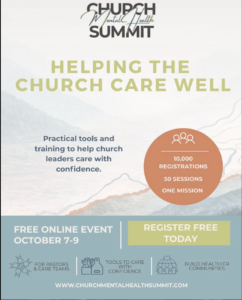
Sanctuary Mental Health Ministries equips churches to talk about mental health through an eight-session course developed with mental health professionals, theologians and people with lived experience. Its materials aim to build awareness and empathy, not to train church members as mental health professionals. Sanctuary also recently participated in the Church Mental Health Summit, an online gathering that equipped pastors, counselors, care teams and church volunteers to build healthier systems of care in their congregations.
TheGraceAlliance/Facebook
Mental Health Grace Alliance
Beverly Hogan began helping lead a Family Grace group in Charlotte, North Carolina, where families gather around a shared experience: loving someone who struggles with mental illness. Hogan says participants often arrive seeking help for someone else and discover that caregivers also need support, wisdom and community. Group members hear from others walking similar paths rather than carrying the experience alone.
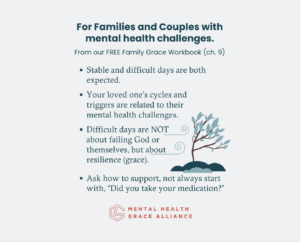
Mental Health Grace Alliance provides peer- and lay-led Christian support groups for adults, students, families and caregivers. Its programs combine biblical encouragement, community and evidence-informed tools for people facing depression, anxiety, trauma and other mental health challenges.

keyministry.org
Key Ministry
A church does not need a large staff or mental health clinic to become more welcoming to people living with mental illness. In an Oct. 7 discussion, Key Ministry asked what mental health ministry can look like in smaller churches. The conversation focused on trained volunteers, support groups, referral networks and connections to professional care, rather than expecting pastors or laypeople to provide treatment.
Key Ministry helps churches identify barriers that may keep people with mental health conditions and their families from participating in church life. Its model addresses stigma, anxiety, social isolation, differences in social communication and sensory processing, and negative past experiences with churches. The ministry provides training, planning tools and consultations to help churches adapt existing ministries and create environments where people affected by mental illness and trauma can participate, build relationships and be discipled.

mercy.org
Mercy Community Healthcare
Cadence was struggling to manage stress and difficult emotions at school when she began counseling through Mercy Community Healthcare’s school-based program. Therapy helped her develop coping skills and expand her “window of tolerance,” allowing her to handle distress without becoming overwhelmed.
The Christ-centered health center employs licensed therapists and psychiatric providers who work with primary care teams. Services include counseling, psychiatric assessment and medication management, trauma treatment, family counseling and school-based therapy. Mercy also uses care coordination to connect patients with other medical and social services.
Mercy Community Healthcare has a 1-Star Financial Efficiency Rating, a C Transparency Grade, and a Donor Confidence Score of 73 in the MinistryWatch database (Give with Confidence).

ccef.org
Christian Counseling & Educational Foundation (CCEF)
What should a Christian do when anxiety makes attending church itself difficult? CCEF counselor Ed Welch advised a friend not to begin with easy answers. Instead, he suggested slowing down, listening to the person’s story and asking what about worship or interactions at church feels threatening or unsafe.
Christian Counseling & Educational Foundation takes a distinctly biblical-counseling approach. It applies Scripture to struggles including anxiety, depression, grief, abuse, addiction and family conflict. CCEF describes its counseling as an extension of the ministry of the local church and also trains pastors and laypeople in biblical counseling. CCEF recently released its latest annual report.
CCEF has a 3-Star Financial Efficiency Rating, a C Transparency Grade and a Donor Confidence Score of 98 in the MinistryWatch database.
Access to MinistryWatch content is free. However, we hope you will support our work with your prayers and financial gifts. To make a donation, click here.