
Supreme Court Broadens Scope of Ministerial Exception
Ruling protects Christian ministries

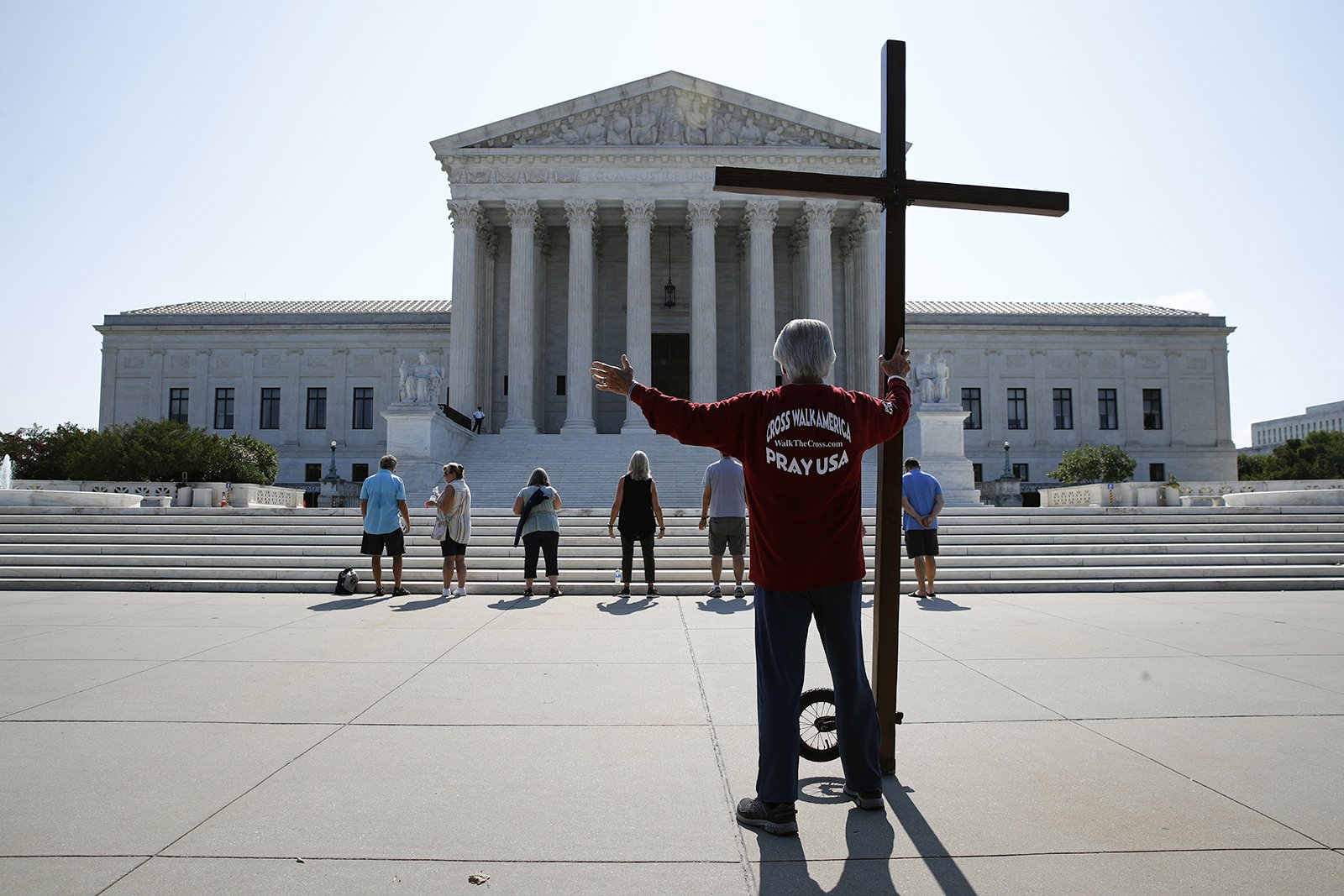
The Supreme Court has affirmed and clarified the “ministerial exception” rule to include lay people, stating that employees don’t have to be ordained to be considered religiously significant. The Court ruled 7-2 Wednesday that two Catholic schools had the right to fire teachers who led students in prayer and religious instruction without being sued for discrimination.
“The religious education and formation of students is the very reason for the existence of most private religious schools, and therefore the selection and supervision of the teachers upon whom the schools rely to do this work lie at the core of their mission,” wrote Justice Samuel Alito, who authored the ruling. “Judicial review of the way in which religious schools discharge those responsibilities would undermine the independence of religious institutions in a way that the First Amendment does not tolerate.”
The ministerial exception is a legal doctrine arising from the First Amendment that bars the government from interfering with religious institutions’ hiring and firing of clergy.
The idea is that the government should not impose on religious institutions in matters of faith and doctrine.
In the combined cases of Our Lady of Guadalupe School v. Morrissey-Berru and St. James School v. Biel, two Catholic school teachers who taught fifth grade found their contracts were not renewed due to poor performance, which “ranged from failure to follow basic educational expectations to chaotic classrooms with children crawling on the floor,” according to the Becket Fund, who represented the schools.
But the teachers sued, claiming discrimination. Agnes Morrissey-Berru, who was forced to retire, sued on the basis of age. Kristen Biel, who asked for time off because she was receiving treatment for breast cancer, sued on the basis of disability. She has since died.
Neither school required its teachers to be practicing Catholics, and Morrissey-Berru was not. But both teachers performed some religious functions, such as teaching classes on the Catholic faith, praying with students, integrating Catholic values into other subjects, and accompanying them to Mass, according to Becket.
The court found that was sufficient and that the schools had a right to fire the teachers under the ministerial exception.
“There is abundant record evidence that they both performed vital religious duties, such as educating their students in the Catholic faith and guiding their students to live their lives in accordance with that faith,” Alito said.
Wednesday’s ruling offered an added boost to religious schools. Last week, the high court said state programs that provide scholarships to students in private schools may not exclude religious schools.
The idea of a ministerial exception has been around for a long time. Through the years, courts have recognized that secular justices should not adjudicate internal affairs of a church or synagogue. For example, courts can’t tell the Catholic Church to hire a woman as a priest when the church maintains an all-male priesthood.
At the root of the case was the question: What is an “important religious function”?
The schools argued the sole test for eligibility for the ministerial exception is whether the employee fulfills an important religious function, regardless of whether the employee has religious training or a formal title such as “minister.”
Several lawyers wrote amicus briefs agreeing.
“In the long run, nothing is more important to religious organizations than transmitting the faith to the next generation,” said Douglas Laycock, a leading scholar in the area of religious liberty who argued the Hosanna-Tabor case before the court eight years ago. “Churches have to keep control of that process.”
The U.S. Conference of Catholic Bishops and the Ethics & Religious Liberty Commission of the Southern Baptist Convention both cheered the ruling.
“If a religious organization cannot recruit leaders who agree with the beliefs and practices of those organizations, then there can be no true religious freedom,” wrote Russell Moore, president of the ERLC.
The Religion News Service’s Yonat Shimron contributed to this report.
Related posts:
![Weekly Review: MinistryWatch Podcast: Southern Baptist Abuse Investigation, Hillsong Update, and Christian Facebook Pages Analysis]()
Weekly Review: MinistryWatch Podcast: Southern Baptist Abuse Investigation, Hillsong Update, and Christian Facebook Pages Analysis
![Court Will Take New Look at Masks in Religious Schools]()
Court Will Take New Look at Masks in Religious Schools
![Russell Moore Defamation Lawsuit Withdrawn by Georgia Pastor Mike Stone]()
Russell Moore Defamation Lawsuit Withdrawn by Georgia Pastor Mike Stone
![Can Anyone Lead the Southern Baptist Convention Forward?]()
Can Anyone Lead the Southern Baptist Convention Forward?
![EDITOR’S NOTEBOOK: Podcasts for Doers and Donors]()
EDITOR’S NOTEBOOK: Podcasts for Doers and Donors