
Parsing the Case Against Compassion International
Reporting by The Roys Report sparks important questions.

I write a weekly column here at MinistryWatch called “Signs and Wonders.” It is a kind of smorgasbord of short items that caught my eye during the previous week. It is fun for me to write, and our readers seem to like it.
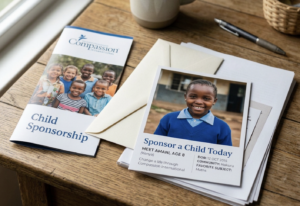
But Julie Roys did not like something I wrote about Compassion International and The Roys Report’s coverage of the organization. Before I go on, here is what I wrote:
The Roys Report published an article that would lead the reader to believe that Compassion International failed to act when they had evidence of 25,000 “suspected grooming cases.” But a close read of the article reveals more smoke than fire.
The article hangs on the word of a whistleblower, Andrew Vezey, a former Compassion employee. I must admit that I found the article less than convincing. Maybe he is a courageous whistleblower. Maybe he is a disgruntled ex-employee.
I will also say that the evidence of any actual wrongdoing here (as opposed to possible wrongdoing) seems mighty thin. Vezey helped build an AI tool that used millions of pieces of correspondence to “train” the AI. It flagged 25,000 that were suspicious, but those “suspicions” were based on arbitrary criteria that may or may not be a predictor of grooming, such as sending email addresses. Correlation is not causality.
Asking for a picture of a child in a bikini is inappropriate, but did that letter actually get through to the child, or was it flagged using conventional methods? My understanding is that all letters were already reviewed by staff, and that such a letter would not have gotten through to the child.
I will admit that a child predator would want an email address, but so might others, and for innocent reasons. My wife Missy and I have sponsored Compassion children and one of the things that always frustrated me is the difficulty of forming any real relationship with the child, or of finding out what happened to the child years later. Did they go to college? Did they get married? We have no idea. I can think of a lot of reasons someone might send or ask for an email address that do not involve grooming.
Access to MinistryWatch content is free. However, we hope you will support our work with your prayers and financial gifts. To make a donation, click here.
Julie Roys wrote to me that she was “dismayed when I heard your inaccurate critique of our reports on Compassion during your podcast published on Nov. 4. It sounded like you based your judgement on one article, even though three had published before Nov. 4.”
I should pause here and note that my article was published on Nov. 4. And I will add that I have read or listened to subsequent coverage, including her interview with whistleblower Andrew Vezey, and I stand by my assessment of the Roys Report coverage as “more smoke than fire” and for noting that all AI models and agents have their first iterations using “arbitrary criteria” that get refined over time.
That said, I do invite you to read the full coverage at The Roys Report, which you can find here. There are, indeed, new developments.
Perhaps the most significant one is that Compassion International sued Vezey. (You can read the lawsuit here.) It says, “Compassion has suffered damages, including the cancellation of donors and sponsorships.”
The lawsuit further says, “Defendant’s unlawful dissemination of Compassion’s Confidential Information (‘CI’) has compromised protection for Compassion’s internal deliberative processes and resulted in the spread of false and misleading information about Compassion and its mission.” The suit concludes that Compassion suffered “severe reputational harm.”
According to The Roys Report, “The court granted Compassion a temporary restraining order, lasting 14 days. The order prevents Vezey from ‘using, distributing, or disclosing Plaintiff’s CI, trade secrets, and proprietary information.’”
I reached out to both Vezey and to Compassion for comment. I did not expect either party to respond. When a lawsuit is on the table, people usually clam up. I understand that. Still, I felt it was my duty as a journalist to ask.
To my surprise, Compassion provided extensive information. Tim Glenn is director of Global Public Relations and Public Affairs. He took aim at the reporting of The Roys Report. He said:
“We answered 30 questions over the course of nearly two weeks of conversations with the [Roys Report] reporter [Rebecca Hopkins] before the first article was published. Over 6,100 words were included in all of those responses. She used 82 of those words across all four articles. That’s 1.3%. As you know, good investigative journalism strives to present both sides of an argument equally and allows the reader to decide. Instead, the reporting is riddled with words like ‘suspected.’ Variations of ‘Vezey says’ are used nearly 50 times. That’s a significant level of source reliance for an investigative piece.”
In addition to this concern about process and journalistic ethics, Glenn also said that both Vezey and the reporter didn’t understand key aspects of the development of the AI model. He said:
The question is not whether Andrew applied thought to the model. He gathered information but ultimately chose to build the framework and criteria based on his assumptions. What we have learned, and what Andrew would have learned had he not resigned, is that the AI model is still not ready. We do not agree with Andrew’s assessment of his own model. AI development is not simply the act of asking a prompt to perform a task. It requires a trustworthy business framework capable of performing that task within defined business, operational, and human boundaries. This is where the model is sorely lacking and what our team is working to shore up now. Until then, the model cannot reliably identify grooming or psych harm. As it is, we can’t confirm that the model even has an acceptable false-positive rate, or if every flagged case is an actual risk. It’s important to note that we don’t use the model for grooming and psych harm scans right now, because the model needs so much work. Perhaps the biggest disconnect between the RR articles and what we know to be true is that an AI flag is the beginning of the review process. Not the end.
The RR reporting insists on equating flags with findings. However, the key question is: Does the AI test prove widespread grooming and safeguarding failures?
It does not.
By the way, all items in bold above were also in bold in Glenn’s original email to me.
He also addressed my comment — the one Roys took issue with — that the AI tool Vezey developed was based on “arbitrary criteria.” Glenn said:
Andrew is not a child safeguarding or protection expert, or a risk expert. He is a data analyst. The first thing anyone that designs an AI framework should do is challenge the results. The AI model over-flagged letters for suspected grooming, especially in our ministry context. It needs considerably more work. The grooming and psych harm part of the model is not ready for full operational use. We explained that to the reporter over and over again.
So, I believe your use of the word “arbitrary” is fair. While Andrew may have been informed by research, the indicators he chose to identify suspected grooming and psych harm were ultimately his judgments about what should and should not be flagged. The existence of an AI framework does not itself validate the model’s conclusions. The central question has always been whether flagged content represented confirmed safeguarding concerns requiring action, and that determination requires human review. Andrew left our organization before that human review by child protection and safeguarding experts was fully underway.
It is important not to forget that at the center of this controversy should be whether any children were actually abused. Neither Vezey nor The Roys Report provided any evidence of that. But Vezey did discover there had been 125 “unplanned visits” by sponsors to their children since Jan. 1, 2024. That is a potentially troubling finding. But is it true?
Glenn answered:
This is true…sorta. First, unplanned visits are not proof of harm. An unplanned visit means a sponsor showing up without going through our trips team processes to schedule it. It does not mean that a child was harmed. It doesn’t even mean a sponsor intended to harm a child. It does not mean a sponsor was alone with a child. Oftentimes, these are church mission trips, where the sponsor is in the same country as their child and just wants to “show up and surprise them.”
Sometimes it’s a sponsor who visited their child (going through the correct process) in the past and assumed they didn’t have to go through that process a second time. We don’t allow that. Our national office and church staff, following our longstanding processes, are what caught these incidents and allowed for follow-up. When someone does it, we let them know it’s a violation of our policies and could result in termination of their sponsorship. We investigate every unplanned visit case. It’s important to note: none of the 125 unplanned visit cases resulted in a report of harm to a child.
When Julie Roys challenged me to correct my article, she argued that “Compassion translators often miss grooming in letters. Vezey explained just how much translators miss in our podcast.”
Glenn said that is simply not true. He said:
“No. Vezey SUPPOSED how much translators miss. Andrew uses phrases like, ‘how many got through translation’ and even says, ‘our system successfully flagged six and a half times more than what translators found.’ There is an important distinction that keeps getting blurred. AI didn’t FIND more than translators. AI FLAGGED more than translators — as it should in these early stages of testing. We’d rather the initial prototype over-flag letters, so we can refine it to the appropriate level, as opposed to it under-flagging and not recognize that it underflagged. Again, we’ve explained all of this to the reporter, who chose not to include this in her reporting.”
Perhaps the most inflammatory part of the Roys Report coverage was its account of a child sponsor named “Wayne,” who asked one of the children for a photo of herself in a bikini. I noted (as you read above) that this is indeed a troubling incident. But I also said there was no evidence the letter ever got to the child.
Julie Roys, in asking me to correct my story, said, “You also mentioned in your podcast that our article did not mention whether Wayne’s bikini letter reached his sponsored child. Compassion did not answer that question in its initial statement to us.”
Glenn responded:
“I’m going to stop short from calling this an outright lie, but we can’t answer questions we aren’t asked. We were sent four rounds of questions from the reporter over the course of nearly two weeks leading up to the first article. Not one single question about Wayne. When the Wayne story was published, we responded and asked the reporter to correct the omission that the letter referenced was never delivered to the child. It took 11 hours and 4 emails to get the change made to the first article. And when it was, it was later in the story, not where Wayne was introduced. The Wayne story was also re-introduced in the second article. And once again, the reporter omitted that the letter was never delivered. That’s either sloppy journalism or a deliberate attempt to sway the audience.”
Both Tim Glenn and Julie Roys had much more to say in their correspondence with me. I admit that I am leaving much out, but I think you have enough here — and in the articles The Roys Report has published — to get a full picture of the positions of both organizations. But in case that is not clear, here is a summary statement from Compassion’s Tim Glenn:
“The Roys Report’s biggest claim remains unproven. The entire premise of these articles and the podcast is that Compassion knew about widespread grooming and chose not to act.”
Julie Roys’ position is also clear:
“Given your inaccurate statements and crucial omissions, I would appreciate it if you would correct your previous podcast in an upcoming episode. I also would appreciate it if you’d pull the previous podcast or edit out the segment on Compassion.”
It is my hope that this article both clarifies my position and has given both sides ample opportunity to make their cases.
One final note: I reached Andrew Vezey, and this was his response:
“I appreciate you reaching out. Unfortunately, I cannot speak to anyone about my time at Compassion at the moment due to the temporary restraining order granted by the El Paso County District Court as part of Compassion’s lawsuit against me. Until the lawsuit and restraining order are over, I would ask that you route all questions through my legal defense team at Leventhal, Swan, Taylor, and Temming PC.”
I did reach out to his law firm via phone and email but did not get a response.
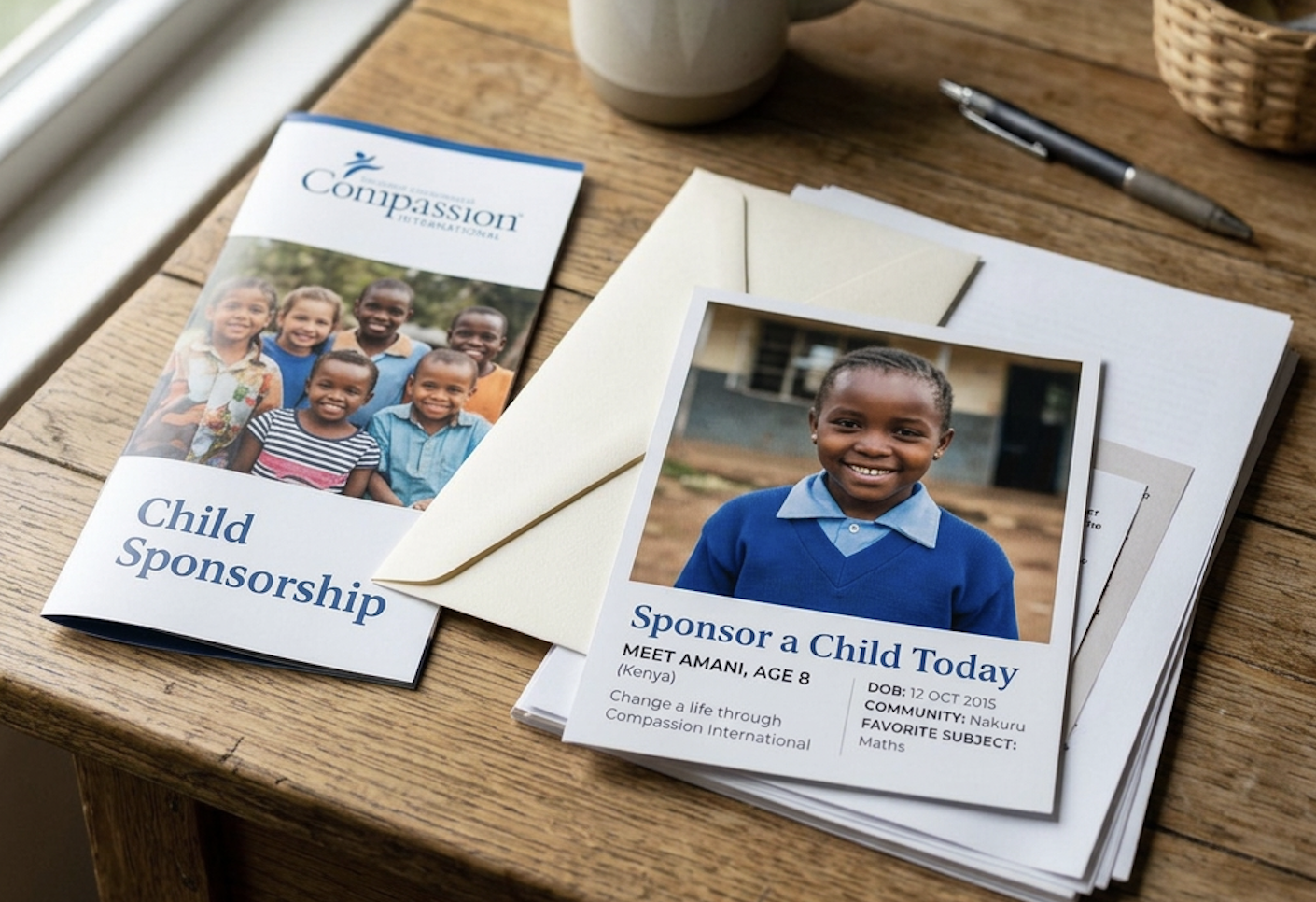
MAIN PHOTO: Graphic generated using AI.
Related posts:
![Evangelical Groups Hold Vigil Against Foreign Aid Cuts]()
Evangelical Groups Hold Vigil Against Foreign Aid Cuts
![Missionary Brad Sasser Ministers to Hikers with Food, Prayer, and Gospel Along Trails]()
Missionary Brad Sasser Ministers to Hikers with Food, Prayer, and Gospel Along Trails
![MinistryWatch’s Top 10 Stories for the Month of April: James MacDonald, Charles Stanley, Lonnie Frisbee, and the United Methodist Church]()
MinistryWatch’s Top 10 Stories for the Month of April: James MacDonald, Charles Stanley, Lonnie Frisbee, and the United Methodist Church
![Compassion Kerfuffle]()
Compassion Kerfuffle
![On This Date at MinistryWatch: Hillsong Music and Televangelist Todd Coontz]()
On This Date at MinistryWatch: Hillsong Music and Televangelist Todd Coontz