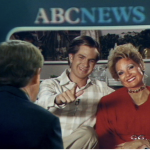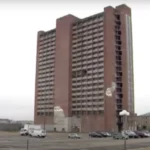


Jim and Tammy Faye Bakker Redefined Faith-based Fraud
The Bakkers left a debt that evangelicalism is still paying

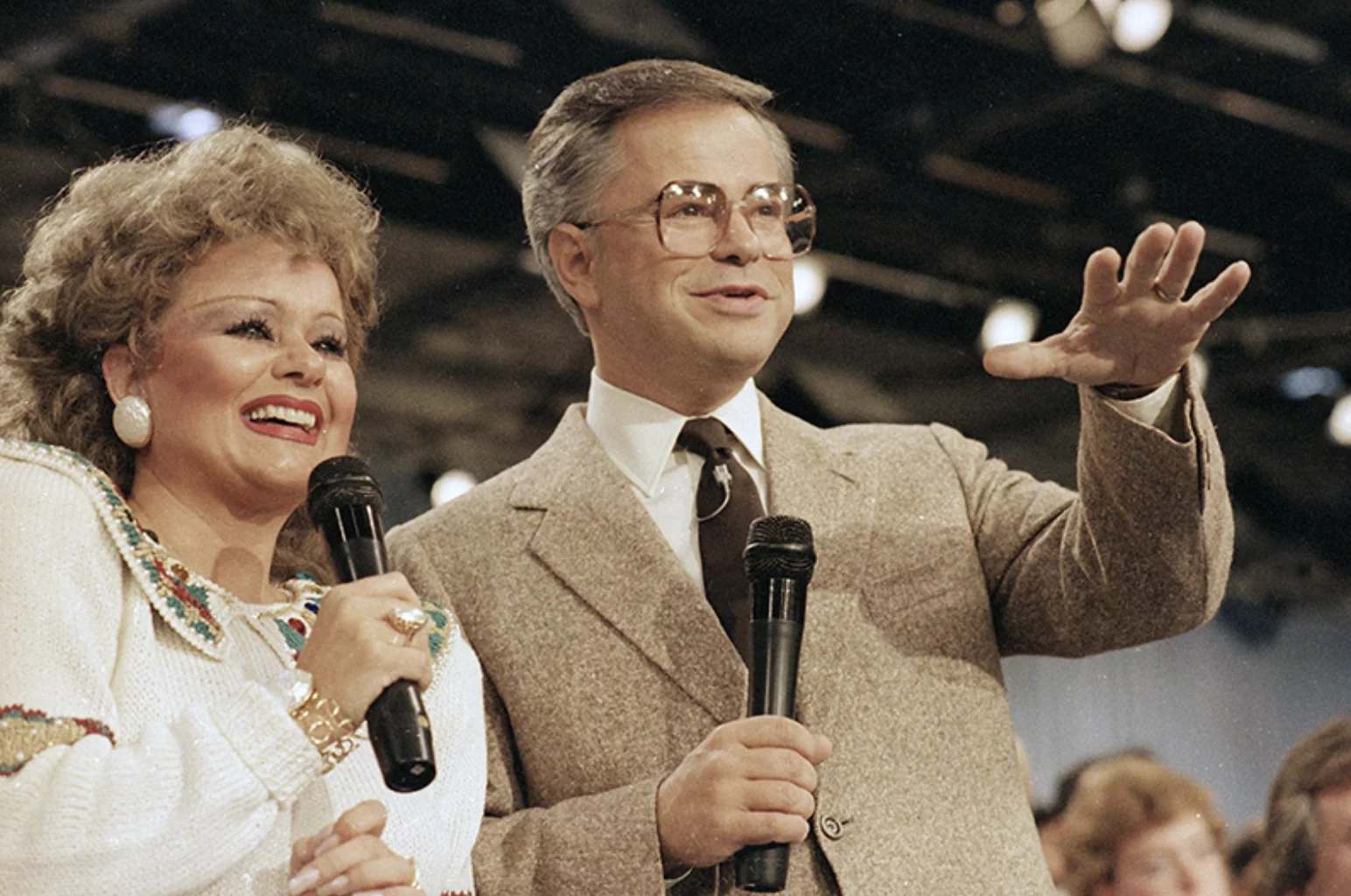
Tammy Faye Bakker and her then-husband Jim Bakker talk to their TV audience at their PTL ministry near Fort Mill, S.C., in this Aug. 20, 1986 file photo. (AP Photo via RNS/Lou Krasky, file)
EDITOR’S NOTE: Jim Bakker died last week. (You can read his obituary here.) Jim and his wife Tammy Bakker were featured in Warren Smith’s book “Faith-Based Fraud.” Here is the chapter devoted to them and their PTL Network.
Perhaps the most famous religious fraud of the 20th century was the Jim and Tammy Bakker/PTL scandal.
The PTL (“Praise The Lord”) scandal, though it happened more than 50 years ago, has become emblematic of faith-based fraud, and no discussion of the subject is complete without an examination of what happened in the Bible Belt city of Charlotte, North Carolina.
The basic facts are these: Jim Bakker led The PTL Network with his wife Tammy Faye. Using money donated by viewers of his program, the Bakkers created Heritage USA, a compound just south of Charlotte in the suburb of Ft. Mill, South Carolina. This sprawling facility included television production studios and a resort hotel. It also included an amusement park, offices, and other facilities.
Access to MinistryWatch content is free. However, we hope you will support our work with your prayers and financial gifts. To make a donation, click here.
But Bakker’s network ultimately collapsed amid allegations of financial impropriety and sexual misconduct. When the total damages were finally accounted for, thousands of investors lost more than $150 million. These losses do not include the hundreds of millions of donor dollars that went into the non-profit organization.
Indeed, a class action lawsuit brought against Bakker alleged that more than 160,000 people gave him money. Jim Bakker ultimately spent about five years in prison and wrote a best-selling book called “I Was Wrong.”
But did he really believe that? It is hard to come to that conclusion if you look at his current activities. Today, Bakker continues on television and continues to ask for money to support his ministry and lifestyle—this time from the vacation capital of middle America: Branson, Missouri. In 2020, the New York Attorney General’s Office warned Bakker to immediately stop promoting a product sold on his program’s website as a cure for the coronavirus.
The attorney general sent Bakker a cease-and-desist letter to stop “false advertising” of Silver Solution on his television program. He and a guest, Sherrill Sellman, claimed that the product killed the corona virus. The Food and Drug Administration and the Federal Trade Commission also issued warnings to Bakker.
So, it is not unreasonable to ask again: Has Jim Bakker changed his stripes, or has this old dog just learned new tricks? What is even more important to ask: What does the PTL scandal tell us about American evangelicalism and the temperament of religious people in the 20th and 21st centuries?
The PTL scandal also gives us a chance to examine the dramatic effects of television on ministry. Jim and Tammy Bakker did not, of course, originate Christian television. But Jim and Tammy Bakker, and many of the frauds we will examine from here on out, involve some significant television component.
This fact should cause any logical mind to ask this question: Was television merely incidental, or did the celebrity and money that television brings lead inevitably to the scandals that follow?
Jim and Tammy Bakker can help us answer these questions. But before we go into any of these questions, let’s start with the facts.
Before PTL Meant “Pass the Loot”
James Orsen Bakker was born in Muskegon, Michigan, on January 2, 1940. This part of middle America was conservative Lutheran and Dutch Reformed country. He and Tammy Faye LaValley met when they were both students at North Central University in Minneapolis. Even then, the young couple sensed a call to full-time ministry. They left college without receiving their degrees and immediately became itinerant evangelists, preaching and doing children and teen ministry in churches around the country.
All evidence suggests that the young Jim and Tammy, in those days, were honestly “on fire” for Christ. These were lean times but good times for the Bakkers, they would later say. Ministering in a different church every week gave them an opportunity to hone their presentation skills. They could do the same “schtick” over and over till they had it down to a well-rehearsed act that on television often legendary journalist Francis Fitzgerald said gave them the air of being the “George Burns and Gracie Allen” of Christian television.
In 1966 they settled in Portsmouth, Virginia, and began working for the Christian Broadcasting Network (CBN). Founded by Pat Robertson in 1961, CBN eventually grew to be the largest Christian television network in the nation. But when the Bakkers joined CBN, it was still a small operation. The network’s flagship program was and remains “The 700 Club,” named after the original 700 people who pledged $10 a month to keep the program on the air. The Bakkers joined the fledgling network to host “The Jim and Tammy Show.” The program was aimed at young people, and it became so successful that Jim and Tammy’s celebrity was nearly as great as Pat Robertson’s, a situation that was awkward for both.
So, in the early 1970s, the Bakkers moved to California to begin a new program called “Praise The Lord” for the fledgling Trinity Broadcasting Network (TBN). TBN was run by another husband-and-wife team, the flamboyant couple Paul and Jan Crouch. Once again, the Bakkers were instrumental in the creation of a Christian network that would eventually become one of the largest in the world. (MinistryWatch reported that in 2017 TBN had revenue more than $600 million.)
Robertson and the Crouches focused on building a television network, but the Bakkers were fundamentally entertainers and not businesspeople, which may in fact have been the cause of their ultimate demise. Their goal was to build a program centered around their personalities that would not be carried exclusively by either CBN or TBN, but by both of these networks, as well as many other stations around the country. With this goal in mind, in 1975 the Bakkers moved to Charlotte, North Carolina, to begin “The PTL Club.”
Evangelicalism in the 1970s: The Jesus Movement
It is worth a digression to talk about what was happening to evangelical Christianity in America at this time.
The 1970s was a time of rapid change in the life of the evangelical church. The 1970s began the rise of the megachurch. In 1969 Larry Norman released his album “Upon This Rock,” widely considered to be the first contemporary Christian music album. We’ve already mentioned the founding of the Trinity Broadcasting Network and the Christian Broadcasting Network, both of which saw explosive growth through the 1970s. James Dobson founded Focus on the Family in 1977. It also owed much of its success to media, especially radio, and it became one of the largest parachurch ministries in the nation.
Some of these innovations in Christian media were the result of cultural shifts in American life. The 1960s get all the credit (or the blame) for a huge culture shift in American life, but it was the 1970s that saw the Roe v. Wade Supreme Court decision that legalized abortion. The ‘70s also saw an explosion in the use of drugs that made the ‘60s look like a church picnic. And some of the changes were the result of more benign and less spectacular causes, such as changes in technology and in the regulatory environment related to the media, especially the cable television industry.
Cable television had been around since the 1940s. Remote communities could not pick up broadcast signals from far-away cities. They would put a community antenna on a local hill or mountain. That elevated antenna would then supply nearby homes with the television signal via cable. In 1952 about 70 such systems existed nationwide, serving about 14,000 people.
Ironically, this system — designed merely to give remote areas access to the same broadcast stations that cities enjoyed — ended up doing much more than that for some communities. A community antenna in the right place could pick up signals from very far away. Remote subscribers to cable systems often ended up with many more TV channel options than those living in cities.
Armed with this obvious advantage, these small and rural cable systems began to grow. Eventually, that growth posed a threat to broadcasters, who had a powerful lobby that persuaded lawmakers to place restrictions on the growth of cable.
But, in another ironic twist, one of the restrictions the FCC placed on cable, in 1969, was a rule requiring cable systems with more than 3,500 subscribers to have local facilities and original programming. This rule did not drive cable systems out of business. Rather, it motivated them to expand, developing local production capabilities. A series of rule changes followed. In 1976 the FCC required new cable systems to have at least 20 channels. This 1976 ruling suddenly created a voracious appetite for cable television programming.
Proving once again the futility and unintended consequences of government regulation, restrictions designed to make it more difficult for cable systems to operate had in fact turned cable into a juggernaut.
And, once again, Jim and Tammy Bakker were at the right place at the right time.
Charlotte: God and Mammon
That “right place” was Charlotte, North Carolina, for even if the PTL Network had never come into existence, Charlotte would still hold a unique place in the history of 20th-century American evangelicalism.
Charlotte owes its founding to Presbyterian missionaries, and it had been a center for Presbyterian and Reformed activism since before the United States was founded. German Lutherans, Ulster Scots (Scotch-Irish), and other Reformation Christians had fled Catholic regions of Europe for the New World. They went west, with the rest of the country, until they hit the Appalachian Mountains. Some crossed the mountains and settled Pennsylvania, Ohio, and beyond. But many migrated south, along what geographers call the Fall Line, that line separating the hilly piedmont from the easily traveled coastal plain. Eventually that path came to be called The Great Wagon Road, a route that is not too different from today’s Interstate 85.
As these pilgrims traveled south and west, they either found what they were looking for or grew weary and stopped to put down roots. Richmond, Raleigh, Winston-Salem, Charlotte, Greenville, Spartanburg, and Montgomery all trace their history to this story of migration down the Great Wagon Road, a migration motivated at least in part by religion.
Even today, we see the religious heritage of this migration. Old Salem, in Winston-Salem, North Carolina, was founded by Moravians in 1766. Lenoir-Rhyne University in Hickory, North Carolina, was founded by German Lutherans. In 1786 one of the most important and influential laws in American history passed in Richmond: the Virginia Statute for Religious Freedom. Written by Thomas Jefferson and sponsored by James Madison, the statute might be thought of as the first draft of the U.S. Constitution’s First Amendment, guaranteeing freedom of religion. It is so important that we recognize it each January 16 with National Religious Freedom Day.
Returning specifically to Charlotte: The oldest Presbyterian churches in Charlotte date from the early 1700s. Their pulpits were filled with preachers who were fiercely independent, many of them becoming part of a “black robe brigade” that led the fight for independence from England.
British General Charles Cornwallis is best remembered by history as the losing general at the Battle of Yorktown, thus ending the War for American Independence. But he had earlier fought in the Carolinas and had a headquarters in Charlotte. He found the citizens of Charlotte most unwelcoming. They sometimes emptied their chamber pots from second-story windows onto the heads of British soldiers. Cornwallis eventually evacuated the town, declaring it to be a “hornet’s nest of rebellion.” To this day Charlotte remains proud of this description. A hornet’s nest is on the city’s official seal, and the city’s NBA basketball team is the Charlotte Hornets.
But in the early 1800s, the religious life of Charlotte and the country took a turn. In 1801 a revival service was held in Cane Ridge, a rural area in Kentucky. The Cane Ridge revivals attracted as many as 10,000 people — and that at a time when Louisville, the nearest city, had only about 2,000 people.
Historians consider the Cane Ridge Revival the beginning of a religious movement in America often called the Second Great Awakening. It took only a year or two for preachers who participated in the Cane Ridge revivals to make their way to Charlotte, and similar services brought Pentecostal fire to this Presbyterian stronghold.
To skip forward 200 years is, of course, to leave much out. But it is safe to say that the twin pillars of Reformed and Presbyterian thought combined with, and sometimes in conflict with, the evangelical fervor and doctrinal confusion of the Second Great Awakening explains much about Charlotte today. Understanding Charlotte’s religious life helps explain much of what goes on in the religious life of America and the world.
Why? Because Charlotte became, along with Orlando and Colorado Springs, one of the cities in America to which large parachurch organizations have migrated. Today, for example, Charlotte is home to a major campus for both Reformed Theological Seminary and Gordon-Conwell Theological Seminary, as well as several other seminaries. The Billy Graham Evangelistic Association is headquartered here. Billy Graham’s organization is now led by his son Franklin, who is also simultaneously the president of Samaritan’s Purse, headquartered in nearby Boone, North Carolina.
Organizations such as JAARS (formerly the Jungle Aviation and Radio Service), SIM (formerly Sudan Inland Mission), and the Bible Broadcasting Network are unknown to most of the world, but missionaries around the globe know these organizations and, in many cases, depend on them for support and even for survival. Charlotte also had a strong charismatic/Pentecostal streak. Beginning in the 1970s, Charlotte-based Derek Prince Ministries, which emphasized healing and other gifts of the Spirit, was beginning to have a worldwide impact. Today, charismatic/Pentecostal ministries such as Morningstar Ministries, Todd Bentley’s Fresh Fire Ministries, FIRE School of Ministry, and Elevation Church all call Charlotte home.
So, it was not so unusual that Jim and Tammy Bakker would choose Charlotte for their new ministry home. In some ways, the Bakkers must have seen Charlotte as having what they likely thought of as the best of the worlds in which they had previously lived. Charlotte’s Scots-Irish Presbyterianism and German Lutheranism were not foreign to this young couple who grew up among the Dutch Reformed folk of Michigan. The charismatic and evangelical zeal of many people already there made the Bakkers’ landing in Charlotte a soft one.
And, because of Charlotte’s growing influence as a banking center Charlotte had a lot of money.
The Rise and Fall of PTL
Today, so many years after the fall of the PTL Network, it’s hard to recall just how significant a pop culture phenomenon the Bakkers and the PTL Network were. At its height, PTL took in $10 million a month in contributions and other revenue. PTL never had the tens of millions of viewers it claimed. Nonetheless, hundreds of thousands of people would be watching The PTL Club at any given moment, and millions tuned in to at least some portion of the program on a weekly basis.
When cable restrictions were lifted in 1972, cable systems began to proliferate. It was possible to pipe dozens or even hundreds of channels into homes. The problem, however, was that Christian TV had very little programming ready for prime time. In 1975 the Bakkers jumped into that programming void.
The PTL Club, their television program, quickly landed on a hundred stations. Many of these stations asked for more programming, so The PTL Club quickly became The PTL Network, including a satellite system that delivered 24-hour-a-day programming to cable systems around the country.
From the beginning, the Bakkers were not discriminating regarding their programming partners. Indeed, they attributed their early success to their decision not to be a “respecter of persons.” They accepted programming and had guests on their program of all religious stripes, provided they were vaguely Christian. During the late ‘70s, mainstream evangelicals such as Billy Graham appeared on Bakker’s program, but so did Pentecostal leaders such as Oral Roberts. Other guests included James Robison and Robert Schuller. These guests brought to the PTL Network the audiences of these preachers. But also appearing on PTL were pop culture stars Little Richard, Mr. T, Col. Sanders of Kentucky Fried Chicken fame, and Gavin McLeod, who played Capt. Stubing on the then-popular TV program “The Love Boat.”
The money began to pour in almost immediately, first in the millions and then in the tens of millions. The Bakkers struck a chord with America. Today the daytime talk show is a commonplace. If you know even a little about popular American culture, you need little explanation when you hear “Oprah,” “Ellen,” and “The View.” But daytime television in the late ‘60s and early ‘70s was dominated by soap operas and game shows.
Jim and Tammy Faye Bakker quickly competed favorably with those few talk show hosts who were on the air then, such as Merv Griffin and Phil Donahue. They had a comfortable and friendly banter, developed in those days they barnstormed churches and youth gatherings, and refined on CBN and TBN. Tammy Faye’s hair and makeup were a little outrageous, but Jim would say how beautiful she looked, and viewers got the impression that Tammy Faye looked the way she looked because Jim liked her that way. Besides, her hair and makeup were only slightly amplified versions of the hair and makeup of many of the viewers themselves when they went off to their Pentecostal and Baptist churches on Sunday morning.
For millions of viewers, Jim and Tammy Faye were familiar figures, not unlike young couples they sat in pews with every Sunday. To see them on television, to know that they were speaking to millions, was in a sense a validation of themselves, and people like them.
From 1975, when Jim Bakker was 35 years old, until about 1984, the PTL Network appeared to be a model of rapid but regular and orderly growth. As the money poured in, the Bakkers made investments in their facilities, first building a state-of-the-art broadcast facility, and then offices. These facilities increased yet further the capacity of the PTL Network to both raise and spend money.
By 1987, when scandal brought down the Bakkers, PTL claimed to have 13 million subscribers and assets in excess of $175 million, including a 2,300-acre Christian theme park called Heritage USA. Heritage USA included a 500-room luxury hotel, an amphitheater for staging outdoor plays, and Billy Graham’s childhood home, brought from Charlotte and reconstructed piece by piece.
(2026 Revision: Today, the hotel is in disrepair and is slated for demolition. The Billy Graham childhood home was moved to the Billy Graham Library in Charlotte.)
Many film clips of old PTL shows are online. They show classic ‘70s variety show fare. In fact, Jim and Tammy were often compared to Donny and Marie Osmond or even to Sonny and Cher.
Richard Ostling, the long-time religion reporter for TIME Magazine, wrote a profile of televangelists called “Power Glory—and Politics” for TIME in 1986. He described the Bakkers’ affable manner: “Tammy was no great singer, and Jim no penetrating interviewer, but their TV ascent was rapid. Says their avuncular announcer, Henry Harrison: ‘They were just a cute little couple that people felt good about watching.’ Soon Bakker was giddily expanding religious and charitable works at home and abroad, though shunning politics.”
All appeared positive and prosperous, but we now know that PTL operated on the brink of collapse almost from the beginning, both financially and spiritually. The building and buying boom at PTL left the ministry tens of millions in debt by the late ‘70s. When The Charlotte Observer did a story in 1979 that suggested Bakker was diverting funds from a project to help the poor in Africa into the operating account of PTL, the Federal Communications Commission (FCC) investigated.
This investigation, however, actually fueled the fire under Bakker’s supporters. Just as Charles Ponzi was able to convince a jury that he was an innocent, beleaguered underdog, Bakker told his viewers that he must be doing something right because the liberal, anti-Christian, mainstream media and the federal government were both against him.
During this time, Christian news outlets who might be expected to take an early interest in the Bakkers were nowhere to be found. A small Christian newspaper operated in Charlotte during some of the years the Bakkers were in town, but this paper depended on PTL both for advertising dollars and circulation. In fact, the newspaper was distributed for free in the PTL Hotel.
By the time WORLD Magazine launched in 1986, the scandal was already public and PTL beginning to unwind. Christianity Today recapped the coverage of others but offered no original reporting.
I mention the absence of Christian media not to indict them for negligence of duty. I have run enough small media operations to know that covering such stories is not easy. They require financial, professional, and spiritual resources. But Christian publications knew long before the rest of the world what the Bakkers were up to. They were in the best position to shine a light on them. Would an early story from a Christian media outlet have prevented what followed? Would an investigative story by a Christian outlet aimed at the Christian audience that supported the Bakkers, but which also became the financial victims of the Bakker scandal, have made a difference? We will never know.
What we do know is that the Observer’s 1979 coverage did not provide a corrective. Far from it. It seemed to contribute to Bakker’s isolation and hubris. He told his viewers that it was a “witch-hunt” and they should send him more money in order to “give the devil a black eye.”
In 1980, the 40-year-old Bakker — who claimed to be overwhelmed by stress and isolation — had a sexual encounter with 21-year-old Jessica Hahn. Hahn claimed that she was drugged and raped. Bakker maintained that the sex was consensual, but he does not deny the event occurred.
For those of us who call ourselves Christ followers, perhaps the most tragic aspect of Bakker’s story is that this obvious moral rottenness and hypocrisy did not bring down the PTL Network. Those closest to Bakker, and thousands of people who worked in the PTL/Heritage USA empire, were willing to overlook what they knew — or not ask questions about what they suspected.
It was not moral outrage, but money, that ultimately brought down the Bakker’s PTL empire. At first, the way the ministry handled money might charitably be called eccentric or outrageous, but probably not illegal. The PTL ministry had purchased a $375,000 oceanfront condominium and a $935,000 jet aircraft. Bakker purchased a $449,000 house in Palm Springs, California, and had spent $93,000 on antique cars — all with bonuses he regularly gave himself. And, of course, there was the infamous air-conditioned doghouse for Tammy Faye’s dog.
(2026 Revision: A 1981 dollar is worth about $3.70 today.)
Court documents made public at the time of PTL’s 1987 bankruptcy listed the following expenditures:
- Rental of “a jet plane for a two-week vacation in California at a cost to PTL of $124,000, including the time it sat on the ground idle.”
- While on vacation, Bakker bought two Rolls Royces for PTL and his own personal use. Bakker’s cost: $58,884; and PTL’s cost: $27,438. The cars apparently remained in California and were never brought to Charlotte for use by the ministry. They were apparently meant to be Jim and Tammy Faye’s personal vehicles while they were at the Palm Springs home.
- “PTL spent $8,870 decorating Bakker’s houseboat; spent approximately $5,900 for a multistory playhouse for the Bakker children, equipped with electricity and heat.”
Again, as distasteful as these extravagances were, it is likely that they were not illegal, at least not illegal prima facie. And to many they were not even distasteful. By the early ‘80s, Bakker and other televangelists were firmly embracing prosperity theology, which said that such extravagances were a sign of God’s blessing and anointing. They encouraged their listeners to give in order to get.
Television producer Phil Cooke got his start in the business working for Oral Roberts. Cooke was an undergraduate at Oral Roberts University. He has gone on to work for virtually every major television ministry. But in recent years he has become an outspoken critic of the prosperity gospel movement and those who promote it — especially on television. Cooke is quick to mention greed as a cause for this wrongdoing, but the greed is not just on the part of those preaching it. Cooke also highlights the greed of those who hear the preaching:
Many TV evangelists are rich because of greed, but not their greed. It’s our greed. An earlier generation donated money to help those in need. Growing up, my mother taught us about those “less fortunate”, and we gave because the Bible expressed great concern about the poor and suffering. But as I grew up, a concept came along that turned giving on its head. “Seed faith” transformed everything we knew about raising money. The original concept was actually Biblical — based on planting a seed and expecting a harvest.
Cooke believes that this biblical idea has been perverted. He echoes Patty Roberts, Oral Roberts’ former daughter-in-law, when he says: “Johann Tetzel, the most aggressive of the Dominican friars selling indulgences had a saying: ‘As soon as a coin in the coffer rings, the rescued soul from Purgatory springs.’ It doesn’t sound that different from today’s ‘Plant a seed to meet your need.’”
Where Was the Church?
We have already asked: During the PTL scandal, where was Christian media? The unfortunate answer: Mostly absent, or indifferent, or distracted.
But Jim Bakker’s transgressions were both theological and financial, so it is also fair to ask: Where was the church when all of this was taking place?
One of the reasons I spent time in this chapter tracing the growth of Charlotte and of modern evangelicalism was to make this point: Jim Bakker’s fraud would not have been possible without the aid, or at least the indifference, of Charlotte’s evangelical community.
People who knew better — or should have known better — were either complicit or at least silent when much of Bakker’s bad behavior was taking place. The numbers alone support this conclusion. At its peak, around 3,000 people worked for the PTL Network or for Heritage USA. Many if not most of these people attended evangelical churches in the Charlotte area. It is likely that Bakker’s sexual misconduct could have been kept within his tight-knit inner circle. It is even possible that the financial misconduct was kept to a small number of people. Possible, though we must admit, not likely. Hundreds of millions of dollars poured into the ministry. Bakker’s organization, by the early 1980s, employed dozens of accounting professionals. They should have seen or at least suspected financial impropriety.
Then there’s this: How is it possible that not one of the 3,000 people who worked for Bakker said anything about the increasingly idiosyncratic theology and practices of the Bakkers? If a single one of these people spoke up about the excesses they must have witnessed, I find no record of it.
Where Was the ECFA?
The Evangelical Council for Financial Accountability (ECFA) has often been cited as an antidote to such situations as the PTL scandal, but the PTL scandal in fact represents a major failure of the ECFA. The PTL Network was an ECFA member when the scandal broke.
In fact, the ECFA was founded in 1979, and most of the televangelist scandals — PTL, Jimmy Swaggart, Robert Tilton, the list goes on — occurred after its founding. Indeed, the ECFA (for all the good it does identifying standards and in educating its members) has been and continues to be inadequate to prevent the rise of significant faith-based fraud.
A brief history of the ECFA will help make this and other important points more obvious.
First, we should acknowledge that the purpose of the ECFA is honorable: its goals are to identify and promote fiscal integrity and sound financial practices among its member organizations. These are, of course, perfectly worthy goals. It is also important to note that the ECFA has done an effective job of accomplishing these goals. The ECFA document “Seven Standards For Responsible Stewardship” is a great gift to the non-profit world. It clearly identifies standards, sets the bar, to which Christian ministries should aspire.
My point is not to say that the ECFA is bad or ineffective in its mission to set standards. My point is simply to say that what the ECFA does is a very small part of what needs to be done to ensure integrity in the Christian nonprofit sector.
It’s interesting, though, that a myth has grown up around the founding of the ECFA. And that myth has done a disservice both to the ECFA and to donors. That myth is that the ECFA is the cure, the antidote, the backstop that prevents this sort of fraud.
The more complete truth is that the ECFA was created as an attempt — what turned out to be a successful attempt — to prevent government regulation of the Christian philanthropic world.
In 1977, Congressman Charlie Wilson of Texas introduced legislation that terrified many in the philanthropic world. His legislation would require tax-exempt organizations to disclose financial information “at the point of solicitation.” This legislation would have been tremendously burdensome to nonprofits. So burdensome, in fact, that some people speculated that Charlie Wilson was drafting the legislation specifically to limit the activities of Christian ministries.
It was a reasonable conclusion. Though evangelical Christians helped Democrat Jimmy Carter get elected in 1976, it did not take long for evangelicals to realize that the policies of Carter and the Democrats, especially on the issue of abortion, were not their own. Charlie Wilson was among the first Democrats to realize what was happening, in part because of his own political circumstances.
His circumstances are well-known to anyone who has seen the movie “Charlie Wilson’s War,” which starred Tom Hanks, Julia Roberts, and Philip Seymour Hoffman. By 1977, Wilson had already developed a reputation as a drunk and a womanizer and a liberal. Indeed, his nickname was “the liberal from Lufkin.” He did not run from this reputation. In fact, he reveled in it, even though his behavior caused endless headaches for his campaign staff.
One telling and typical anecdote: At the beginning of one re-election campaign, he called his beleaguered staff together and promised them that this year things would be different. “No more loose women,” he told his staff with a perfectly straight face. “I’ve found a nice Christian girl. She’s a member of the choir. Upstanding in every way. And I’m going to marry her — as soon as she finishes high school.”
Wilson was joking, but his threat to regulate the nonprofit industry was no joke. Wilson’s politics and lifestyle made him a target of conservative Christian critics, so he knew earlier than most politicians the growing power of the religious right. But Wilson was also a master of parliamentary procedure and a behind-the-scenes political knife fighter, skills developed in part during his 12 years in the Texas legislature before his election to the U.S. House of Representatives in 1972.
So, when Wilson started making efforts to regulate the nonprofit sector, key Christian leaders took those efforts seriously. No matter how outrageous or onerous Wilson’s legislation turned out to be, it might pass.
Senator Mark Hatfield knew this. Mark Hatfield was a unique figure during his 30-year tenure in the U.S. Senate and perhaps a unique figure in the history of the U.S. Congress. He was an outspoken evangelical Christian and solidly pro-life in all debates and votes related to abortion. However, in many other views he was moderate to liberal. During the nuclear freeze movement of the 1970s, he allied with Senator Edward Kennedy, arguably the Senate’s most liberal member. While governor of Oregon (he was elected in 1958 and served two four-year terms before being elected to the U.S. Senate), he was the only governor in the nation to vote against a resolution supporting the Vietnam War at the annual meeting of the National Governor’s Association.
So, both sides had much not to like about Hatfield, but both sides also acknowledged that he was smart, politically savvy, and personally a gentle, delightful man.
Hatfield’s words therefore had special weight when he warned evangelicals that Charlie Wilson’s proposed legislation was a threat to take seriously. Hatfield encouraged evangelical leaders to get together and formulate a plan for self-regulation that would prevent Wilson’s legislation from gaining traction. To that end, in December of 1977, a group of more than 30 evangelical leaders met, with the Billy Graham Evangelistic Association and World Vision playing key roles. But it took two years for the organization to reach agreement on its mission and charter. The ECFA officially came into being in 1979.
This history is especially significant when you remember what we have already said about PTL. PTL was investigated by both The Charlotte Observer and the FCC in 1979, the year of the ECFA’s founding. In 1980, the Jessica Hahn affair occurred and in its aftermath cash payments to her that ultimately ran into the hundreds of thousands of dollars.
All of this might have been easy for the ECFA to explain if PTL was not a member, but in fact The PTL Network was one of the ECFA’s earliest members. According to Gary Tidwell, whose book “The Anatomy of a Fraud” laid out the financial aspects of the PTL fraud:
PTL was a member of ECFA from April 1981 until December 1986. However, on April 5, 1984, the ECFA Standards Committee, through ECFA’s president, wrote to Jim Bakker that the 1984 renewal membership had been deferred until the ECFA received “accurate, complete and current information.” Furthermore, the letter stated, “Because your application of membership renewal for 1984 has not yet been approved, and since the ECFA credentials and ECFA seal remain property of ECFA and may be used only in the event of an organization’s good faith compliance with the ECFA standards and the organization’s current membership in ECFA, PTL shall not be authorized to use the ECFA seal on any literature, films, correspondence or other fund-raising material.” PTL’s renewal application with the ECFA was eventually approved on August 20, 1984.
During the short period in 1984 — from April to August — when PTL’s ECFA membership renewal was in limbo, PTL continued to represent itself as an ECFA member, and the ECFA apparently did nothing to stop it. PTL’s accounting firm, Laventhal and Horwath, issued a qualified opinion regarding PTL’s finances in both 1985 and 1986. A qualified opinion means that an organization’s financial statements do not comply with “generally accepted accounting procedures,” or GAAP.
Despite these two years of qualified opinions, PTL remained a member of ECFA almost to the very end, until December 1986. By then, largely because of the nearly one thousand articles written about PTL by the Charlotte Observer between 1984 and 1987, the role of the ECFA in providing any oversight or warning to the donor public was virtually inconsequential. Most critics, journalists, and historians who have looked at the PTL scandal say that the role of the ECFA was at best minimal and at worst, by allowing PTL to remain a member for so long, helped the Bakkers and their staff cover up the true extent of the fraud.
Tidwell, in “The Anatomy of a Fraud,” wrote: “One can only speculate, as to what might have happened had the ECFA vigorously pursued these matters. At a minimum, ECFA had a chance to prove itself as a viable self-regulating organization and, possibly, the great tragedy that occurred regarding PTL’s lifetime partners might have been avoided.”
In a Gannett News Service article dated May 1, 1987, the president of ECFA said, “It’s obvious we didn’t ask enough questions or all the right ones or the answers we got weren’t full answers.”
In fairness to the ECFA, we must remember that the events described here took place now more than 35 years ago. The ECFA says that it has made changes to its way of doing business to prevent such problems from recurring. The ECFA was, in some ways, a victim in this scandal. PTL officials either withheld information or attempted to portray that information in the most favorable light imaginable.
The Math Didn’t Work
What the ECFA could not accomplish, the Charlotte Observer’s Pulitzer Prize-winning reporting did. The articles, written by an investigative team led by Charles Shepard and Mark Ethridge, focused on the centerpiece of Bakker’s empire: Heritage USA, a sort of Disneyland for Christians.
The main fundraising tool used by Bakker was a $1,000 lifetime membership to Heritage USA. The membership gave buyers a three-night stay at the hotel each year, as well as other benefits. As fundraising plans go, this was not a bad one. Colleges and universities use a similar technique when they make tickets to popular sporting events available first to their large donors. Permanent seat licenses which give their holders early access to ticket purchases at sporting events work in a similar way, as do timeshares. So, once again, we see that what eventually becomes a fraudulent scheme starts out as something completely legal and reasonable, only to go badly awry over time.
This train went off the rails when the lifetime memberships were dramatically oversold. Bakker had been clear that only 25,000 lifetime partnerships would be sold in the first hotel (The Grand), and 30,000 lifetime partnerships would be sold in the second hotel (The Towers).
However, according to court documents, Bakker and others sold 66,683 partnerships in the Grand and 68,755 partnerships in the Towers. Furthermore, of the $66.9 million raised for The Grand, only 52% was used for construction expenses. Of the $74.2 million raised for The Towers, only 15.4% was used for construction.
The balance of the funds was drawn down almost instantaneously to meet daily operational expenses at PTL, including executive compensation. These facts formed the basis for the charges of wire fraud and mail fraud that ultimately sent Bakker to prison. According to Gary Tidwell, The Grand Hotel was oversold by at least July 7, 1984, and The Towers was oversold in May 1986. On both dates, PTL was a member in good standing of the Evangelical Council for Financial Accountability.
Reconstructed, but Unregenerate
Amazingly, then and now, some people believe that Bakker got a raw deal. Consider, for example, WORLD Magazine’s May 25, 1987, story that describes a family from Clearwater, Florida, the Spikeleto family, who bought at least four of the timeshares. “We don’t have any regrets,” said Rudy Spikeleto. In fact, when Jerry Falwell, Sr., replaced Bakker as head of PTL, in a too-little-too-late attempt to clean up the mess, the Spikeletos said they were disappointed. The WORLD article goes on: “They just wish Jim Bakker himself could come back, because his record at dealing with crises in the past indicates he could handle this one, too. Even the reports that $92 million is missing do not concern many of those visiting here. They assume Bakker did something appropriate with the money; their trust is eerily total.”
Indeed, people such as the Spikeletos did give Bakker a second chance. Today he is in Branson, Missouri, and he has a new wife and a new television program. In January 2008 he moved into a 600-acre development called Morningside. It is hard to see the compound in Branson and not think that after all these years Bakker has finally created in Branson what he tried to create in Ft. Mill.
On television still, he peddles everything from doomsday prepper food to — in 2020 — a solution that regulators say he claimed would cure the COVID-19 virus. But Bakker remains brazenly undeterred, once again. He stopped selling the “Silver Sol Solution” on his program, but he did so only after FTC and FDA threats of legal action. He blames “certain government agencies” for his troubles. “While I strongly disagree with the idea that these statements were in context anyway misleading,” he told his television audience in March of 2020, “in response to these government agencies, and after prayerful thought, we have suspended offering silver solutions.”
“My heart is broken,” he added. “We know this is an inconvenience to those of you, our partners, who regularly use the Silver Sol solution. It has tore up a lot of our viewers. I am so heartbroken.”
Bakker, once again — as he did in the 1980s — painting himself as a heroic figure in a spiritual war, committed again to “giving the devil a black eye”: “It’s just like there is warfare. If there has ever been warfare in this country, it is right now.”
Related posts:
![Family Behind Fake Church Sentenced]()
Family Behind Fake Church Sentenced
![Oscar Winner ‘The Eyes Of Tammy Faye’ is Loving but Uninsightful Portrait of Evangelical Celebrity]()
Oscar Winner ‘The Eyes Of Tammy Faye’ is Loving but Uninsightful Portrait of Evangelical Celebrity
![On This Date at MinistryWatch: T.D. Jakes, Liberty University, Jim Bakker, and Paula White]()
On This Date at MinistryWatch: T.D. Jakes, Liberty University, Jim Bakker, and Paula White
![On This Date: Dr. Michael Brown Released to Resume Ministry]()
On This Date: Dr. Michael Brown Released to Resume Ministry
![MorningStar and SC County Reach Settlement Over Former PTL Ministries Tower]()
MorningStar and SC County Reach Settlement Over Former PTL Ministries Tower