
Hurricane Isaias Relief
Plus, poll misunderstandings, Grand Canyon University Law School, remembering Sgt. York.

EDITOR’S NOTE: “Signs and Wonders” is a column that shares thoughts on news items that either do not rise to the level of a news story for MinistryWatch or are slightly (even significantly) outside of our normal charity and philanthropy “beat.” My goal is to be punchy, opinionated, and not to worry much about being slightly off brand. If that is not for you, no hard feelings. But if it is…read on.
Hurricane Isaias Relief
Operation Blessing, an international humanitarian organization, is on the ground in Florida providing hot meals, emergency supplies and critical assistance to families impacted by Hurricane Isaias after pre-positioning its disaster response team in neighboring Alabama ahead of the storm.
According to a statement from the organization: “The organization’s Global Disaster Response (GDR) team mobilized in advance of the hurricane, allowing personnel to enter affected communities within hours of the storm’s passage and begin assessing damage and delivering urgently needed assistance.” Operation Blessing established its base of operations at Brownsville Church in Pensacola, where its team is working alongside local leaders and volunteers to provide hot meals and distribute emergency relief supplies to families recovering from the storm.
Operation Blessing has one of the highest ratings in our database. See the details here.
Polls Are Not Predictive
One of the most common (and most frustrating) things I hear coming out of the mouths of conservatives and Christians is that “polls are always wrong.” Polls are not always wrong. In fact, modern polling is remarkably accurate. Computing power and advanced modeling have become extremely sophisticated. However, polls are not predictive. Polls provide snapshots of a moment in time. They are not movies.
My data guru Ryan Burge made that point recently about the religious climate in Canada. Nearly 25 years ago, Canadian sociologist Reginald W. Bibby published “Restless Gods: The Renaissance of Religion in Canada.” That renaissance never occurred, and Bibby’s thesis fell victim to this rookie mistake of sociologists and journalists — they try to predict. The moral of the story: stick to the facts. Or, as Yogi Berra famously said, “Predictions are dangerous, especially predictions about the future.”
Access to MinistryWatch content is free. However, we hope you will support our work with your prayers and financial gifts. To make a donation, click here.
Evangelical Press Association Name Change
In the fall of 1947, James DeForest Murch, Ph.D., editor of the NAE magazine United Evangelical Action met with a handful of editors at the National Sunday School Association convention to discuss the possibility of an association of evangelical editors. On May 6, 1948, 35 editors met at Congress Hotel in Chicago to organize the Evangelical Press Association, to adopt a doctrinal statement. That statement depended heavily on the doctrinal statement of the then-new National Association of Evangelicals. On April 4-6, 1949, the first annual EPA convention met in Chicago.
However, this month, the Evangelical Press Association changed its name to the Christian Communicators Network. Only 244 of the more than 600 eligible voters participated, and of those 244, 57% voted for the change, and 42% voted against it. In other words, because there was no quorum requirement, a small minority — less than 25% of the voting members — were able to impose their will on the majority. I will have more to say about this later, but for now I will just say that I sure hope the board knows what it is doing.
New Christian College Accrediting Body Formed
Five independent colleges announced Tuesday that they have joined as founding members of the National Association for Academic Excellence (NAAE), a new accrediting body for colleges and universities.
“Higher education accreditation is responsible to the Department of Education for the quality of institutions, and as a new accreditor, we hope to dramatically improve the quality of accreditation and the quality of higher education as a result,” Rob Manzer, president and CEO of NAAE, told The Christian Post.
People I have talked with, including David Dockery (who I consider to be the dean of Christian higher education in this country) tell me this new organization is a positive development. Under the Biden Administration, the six regional accrediting bodies recognized by the Department of Education became increasingly arbitrary. Some regions required strict adherence to DEI (diversity, equity, and inclusion) requirements. Other standards varied by region. Christian college leaders worried that their regional accreditation — and their access to federal funds — might be in jeopardy. This new body, if recognized by the Department of Education, will provide an alternative to the current regional accrediting bodies for Christian colleges and universities.
The NAAE’s charter members include Merrimack College, an Augustinian school in North Andover, Massachusetts; Benedictine College in Atchison, Kansas; the University of Mount Saint Vincent in New York City; Bellevue University in Bellevue, Nebraska; and Houston Christian University in Texas.
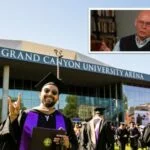
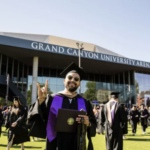
Grand Canyon University’s New Law School
James L. Williams will be the inaugural dean of the new College of Law at Grand Canyon University. In a statement, GCU President Brian Mueller said, “We are grateful James answered the calling to serve. There are many accomplished attorneys who understand the law. What makes James uniquely suited for this role is the way he brings together legal excellence, a passion for teaching and mentoring, and a deeply rooted Christian faith.” The College of Law could welcome its first class as early as fall 2027, subject to required regulatory approvals.
While I salute this new development, I would add that nearly 30 law schools exist at Christian colleges in this country, while not a single Ph.D. program in journalism exists at a Christian college. I am all for Christian lawyers — but I’d argue there’s a much greater need for Christian journalists.
Remembering Sgt. York
On Oct. 8, 1918 — 108 years ago last week — Sgt. Alvin York participated in a patrol that changed his life and became a part of the American Myth. York was drafted into World War I, despite being nearly 30 years old. At first, he claimed conscientious objector status, but after a season of searching his own conscience and the scriptures, he concluded he could honorably serve in the military. Honorably serve he did, earning the Congressional Medal of Honor and becoming an American legend. The story is too long to recount here, but I have written about it before and I recommend his story to you.
Upcoming Webinar
We will be doing another online seminar this week, on Thursday. This one is on “How To Find And Read A Form 990.” It is free, but you do need to register, which you can do here.
New on the Podcast
We do a reader survey twice a year, and one of the findings that continues to astound me is that the vast majority of our readers don’t know we have a podcast. Not only do we have one, this month we dropped our 650th episode! So, if you are just discovering it, you have a lot of great content to listen to. This month, we dropped a new interview with Bonnie Kristian, author of the new book “In Defense of Evangelicalism.” I strongly recommend this conversation, which you can find here.