
DOJ Sues Idaho City for Discriminating Against Church
Christ the Redeemer is a church plant of Doug Wilson’s Christ Church.

Another municipality is being accused of discriminating against a church who wanted to locate its services in a downtown area.
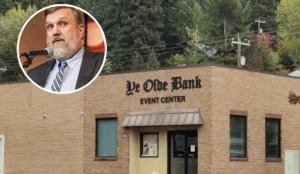
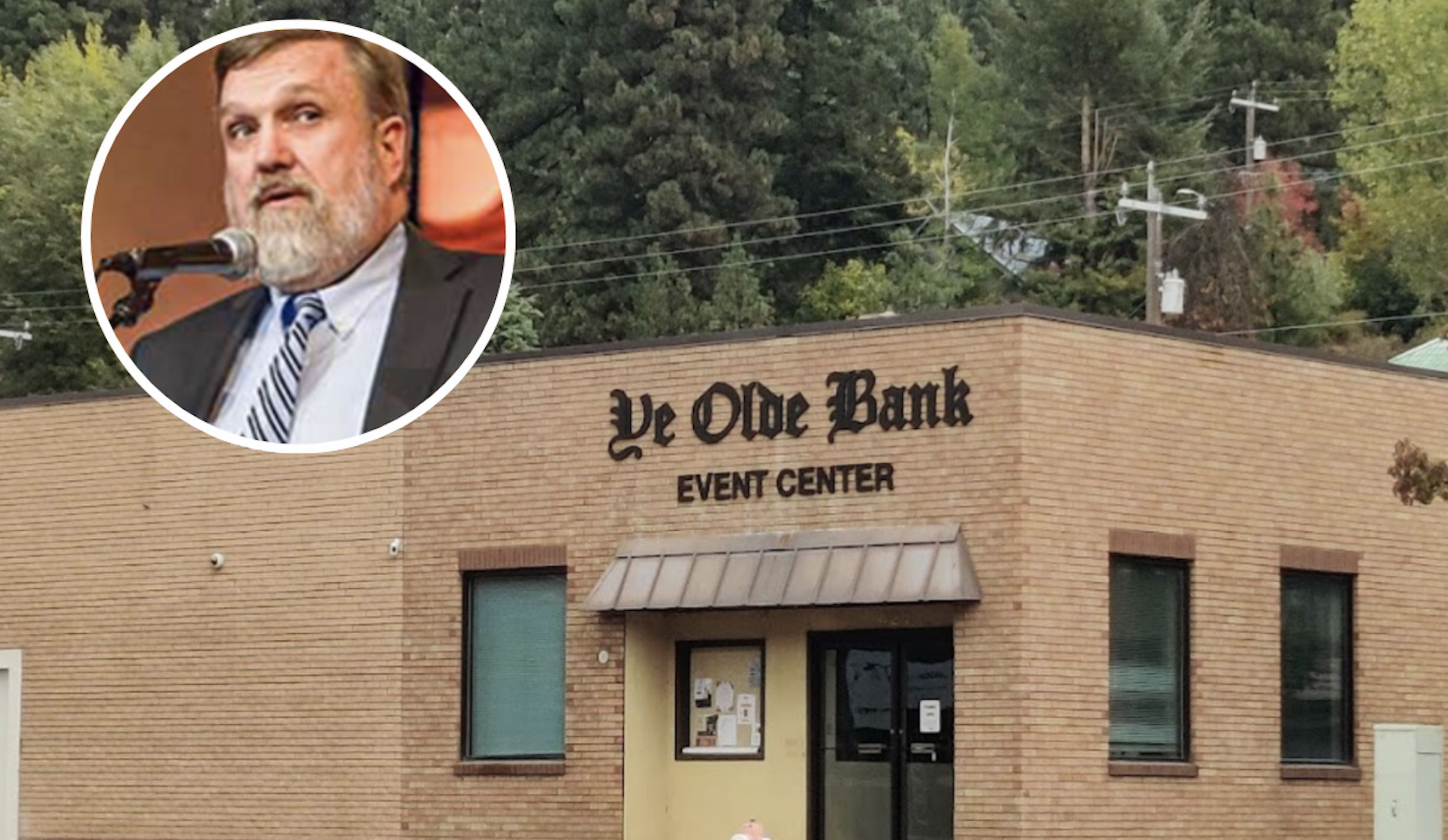
Ye Olde Bank Building in Troy, Idaho (Google Photos) / Insert of Doug Wilson (RNS photo)
The U.S. Justice Department has filed a lawsuit against the City of Troy, Idaho, — a small town with a population of about 1,000 — seeking injunctive relief to keep the city from discriminating against a church plant of Christ Church in violation of the Religions Land Use and Institutionalized Persons Act (RLUIPA).
RLUIPA is a federal law meant to guard religious institutions from “unduly burdensome, unequal, or discriminatory land use regulations.”
In January 2023, the church, now an independent congregation of the Communion of Reformed Evangelical Churches (CREC) known as Christ the Redeemer, sought a conditional use permit to meet in a former bank building that had been purchased by church member Matt Meyer.
When the city held a hearing about the permit, neighbors opposed it. “Many of views expressed at the hearing reflected animus against Christ Church’s beliefs or its members, including that the Church was proposing an ‘evangelical community’ that was not ‘open to everyone,’” the lawsuit states. The CREC was started by Doug Wilson, a pastor who has taken some positions that are considered controversial.
The city denied the conditional use permit in March, saying the church use “did not enhance the commercial district” and “was not in harmony with the Comprehensive Plan.”
The church appealed, but was again denied on May 31, 2023.
Access to MinistryWatch content is free. However, we hope you will support our work with your prayers and financial gifts. To make a donation, click here.
In the meantime, Meyer talked to a friend who asked if he’d ever heard of RLUIPA. Meyer did some research and reached out via the DOJ’s website contact form. He was surprised but heartened when he heard back. He kept the DOJ informed about the city’s actions over the next few months.
Despite the permit denial, in June 2023, Meyer allowed the church congregation to meet in his building, believing his religious and property rights were being infringed by the city. The city took no action.
In August, the city sent out a notice telling its residents that it would take no action against the church while it was being investigated by the DOJ. Meyer said the church continued to meet and experienced no issues with parking, and no businesses were negatively impacted by the church’s Sunday gatherings.
Meyer would occasionally hear from the DOJ checking in on how things were going, and he would ask for an update to which the DOJ would decline to comment.
Without notice to Meyer, the DOJ filed suit against the City of Troy on May 20, 2025. He learned about the lawsuit when he got an interview request.
“It brings a certain level of resolution and relief to be supported by the Department of Justice,” Meyer said in response to the lawsuit. He also hopes it will help those who opposed the church understand that the city was the one “bullying” the church and not vice versa.
Christ the Redeemer is a thriving congregation in Troy, with 150 members and a desire to bless their community and neighbors, Meyer, now an elder at the church, told MinistryWatch.
He bears no hard feelings against the city, but hopes the city will choose to settle the lawsuit and take RLUIPA training to better understand the issues.
This is one of several instances of RLUIPA lawsuits covered by MinistryWatch that have been brought against local governments.
- Christ Episcopal Church in Toms River, N.J., is being targeted for eminent domain proceedings by the city to develop a park. Attorney Dan Dalton told MinistryWatch that the case would likely be subject to RLUIPA.
- Hope Rising Church in Clarion, P, filed a lawsuit in November alleging the city was violating its rights under RLUIPA when it would not approve the church’s zoning use variance request. The DOJ filed a statement of interest supporting the church.
- The Summit Church in North Carolina, led by former Southern Baptist Convention President J.D. Greear, claims Chatham County’s decision to reject its rezoning request to build a new regional campus in a rural area violates RLUIPA. It filed suit in February.
- In December 2024, the DOJ filed a RLUIPA complaint against the City of Brunswick, Ga., in December because of the city’s actions to close The Well ministry to homeless persons. The Well is a faith-based ministry operated by FaithWorks, an organization of the South Georgia Conference of the United Methodist Church.
- In March 2024, Gethsemani Baptist Church filed a complaint in federal court under RLUIPA to stop the City of San Luis, Ariz., from blocking the church from distributing food to the poor. The Department of Justice filed a “statement of interest” in the case in August 2024.
- The Rock church in Castle Rock, Colo., succeeded in July in obtaining a preliminary injunction that will allow it to operate an “on-site temporary shelter ministry” consistent with its religious beliefs. The court found The Rock was entitled to an injunction because of the protection afforded it under RLUIPA.
TO OUR READERS: The mission of MinistryWatch is to help Christian donors become more faithful stewards of the resources God has entrusted to them. Do you know of a story that will help us fulfill our mission, or do you want to give us feedback about this or any other story? If so, please email us: [email protected]