
Christian Ministry Leaders Grow Less Confident in Trump’s Policies
Optimism about the administration's impact on Christian work has dropped — even as most ministries report revenue growth and rising AI adoption.

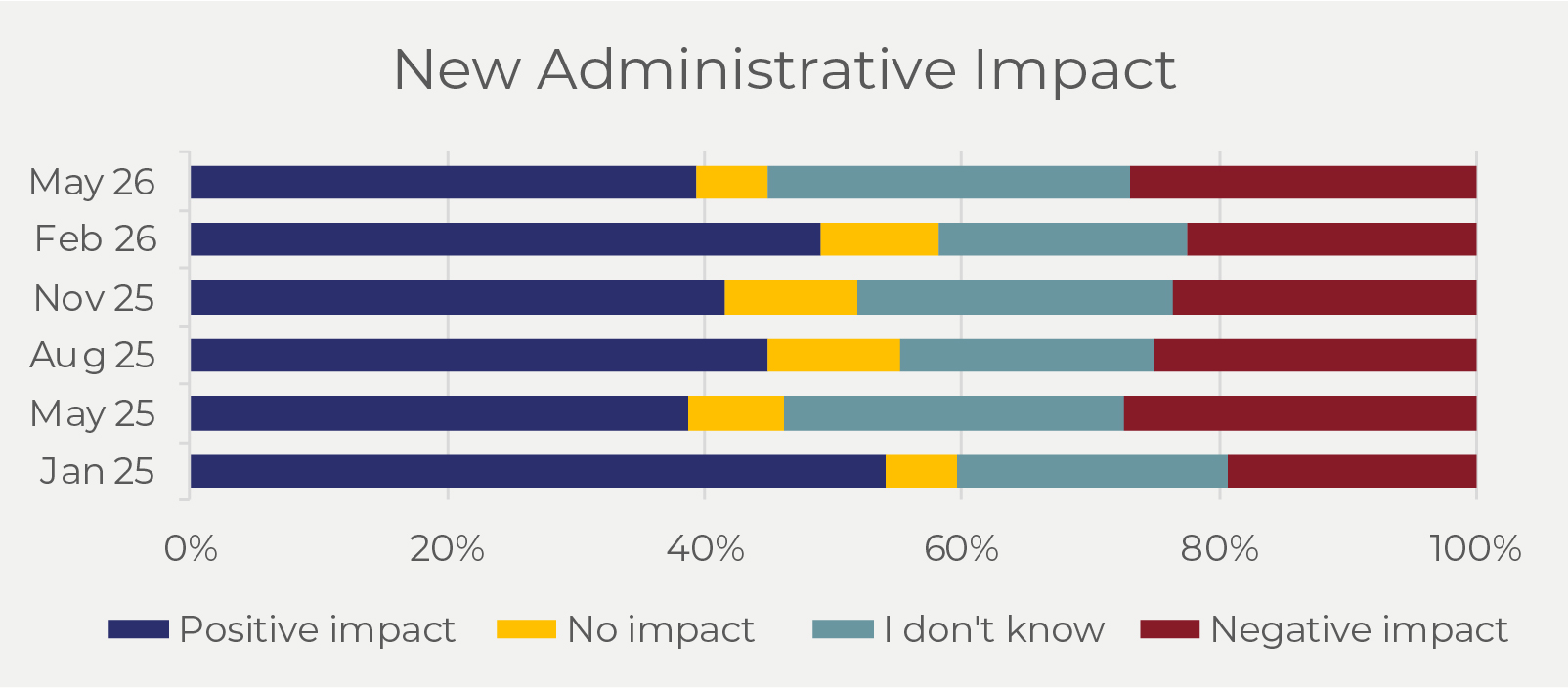
Optimism is down by 15 percentage points among Christian ministry leaders about the positive impact Trump administration policies have on their work.
Not long after President Donald Trump won the election, a January 2025 MinistryWatch survey of Christian ministry executives showed that about 54% were optimistic Trump’s policies would have a positive impact on the work they do—in the most recent poll, that number dropped to 39%.
And instead of 19% of leaders thinking the administration might have a negative impact, that number has risen to 27%.
Only about 5% of leaders said the administration’s policies will have no impact, and roughly 28% said they don’t know what impact it will have.
MinistryWatch has been conducting its quarterly survey of leaders of the nation’s 1,000 largest Christian ministries since October 2022. We have consistently reported about the insights they have provided, highlighting noteworthy trends over time.
These most recent numbers are reflective of a study in May 2026 by The Center for Effective Philanthropy, which found that a large majority — 73% — of nonprofits reported an increased demand for their services “while also facing heightened financial instability, staffing challenges, burnout, and an atmosphere of fear and stress.” Only slightly fewer — at 66% — expressed concerns about the financial stability of their organizations.
Diane Yentel, president of the National Council for Nonprofits, believes the Trump administration has been targeting nonprofit organizations. “At a time when most nonprofits report increased demand for services, this report confirms that politically motivated efforts to destabilize the sector are pushing essential organizations to the brink,” she said in a press release about the recent study.
The Trump administration framed it differently, saying its efforts were aimed at stopping bureaucrats from “wasting taxpayer dollars on frivolous grants.” Instead, it said it would direct agencies to “award grants to a wide array of meritorious grantees, not just the universities and nonprofits that have received awards year after year.”
Greatest Challenges Ministries Face 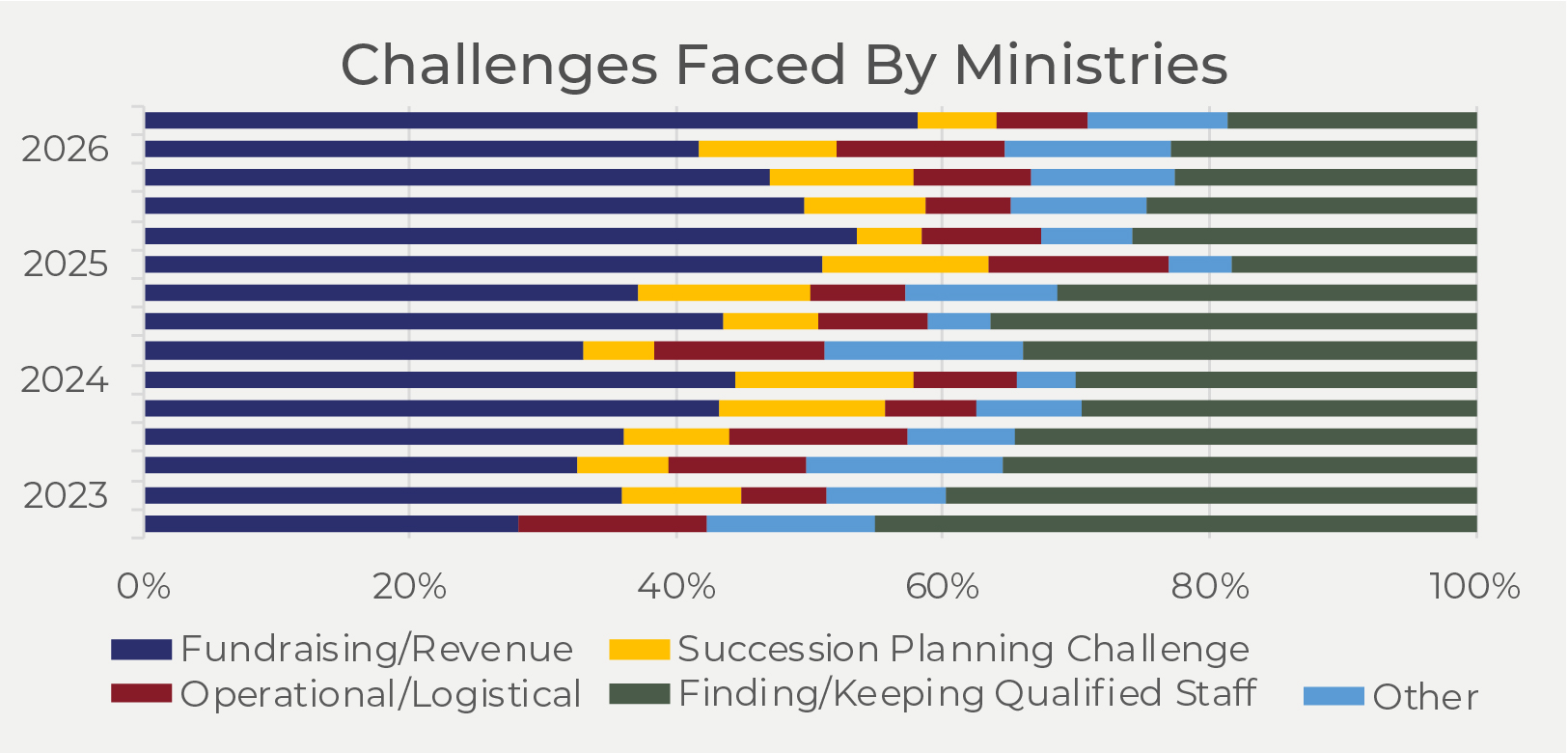
The greatest challenge faced by ministry leaders continues to be fundraising and revenue, with 56% of respondents citing it as their top concern.
When the survey began in October 2022, 42% of respondents said finding and keeping qualified personnel was their biggest challenge, while fundraising came in second at 26%.
Since then, fundraising has climbed steadily to the top spot, and this quarter marks the highest percentage of leaders identifying it as their greatest challenge.
Finding and keeping qualified staff has remained consistent at about 18%. Operational and logistical challenges and succession planning round out the top four challenges identified by ministry leaders.
Access to MinistryWatch content is free. However, we hope you will support our work with your prayers and financial gifts. To make a donation, click here.
Revenue
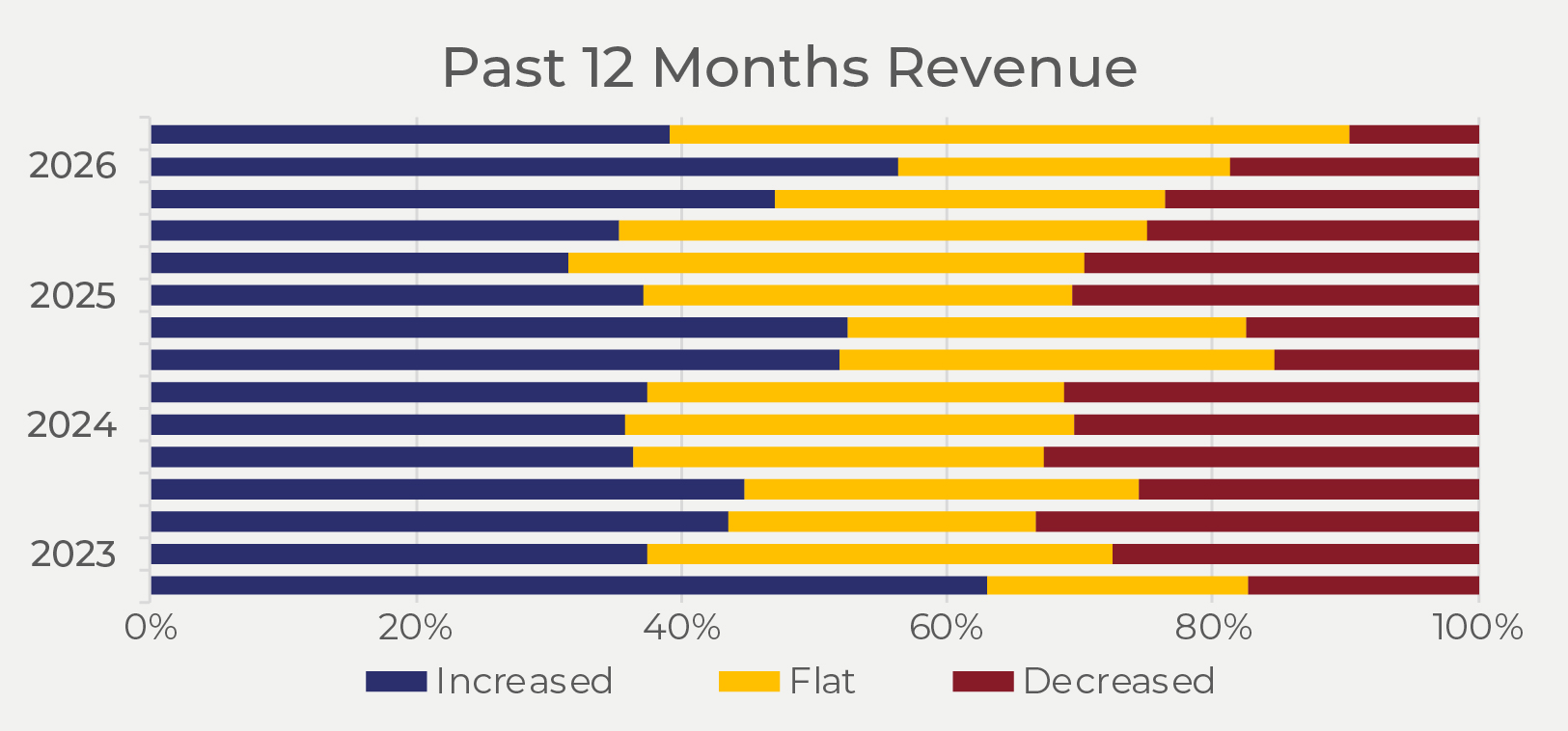 Despite fundraising challenges, ministry leaders report that their revenue continues to grow. More than 66% say their ministry’s revenue increased by at least 1% in the last year, and nearly 18% said their revenue increased by more than 10%.
The number of leaders reporting flat revenue has also increased. At the beginning of the survey, only 11% reported flat revenue — that number has since risen to 24%.
About 9% of respondents saw a decrease in revenue, down significantly from 16% in October 2022 and 17% a year ago.
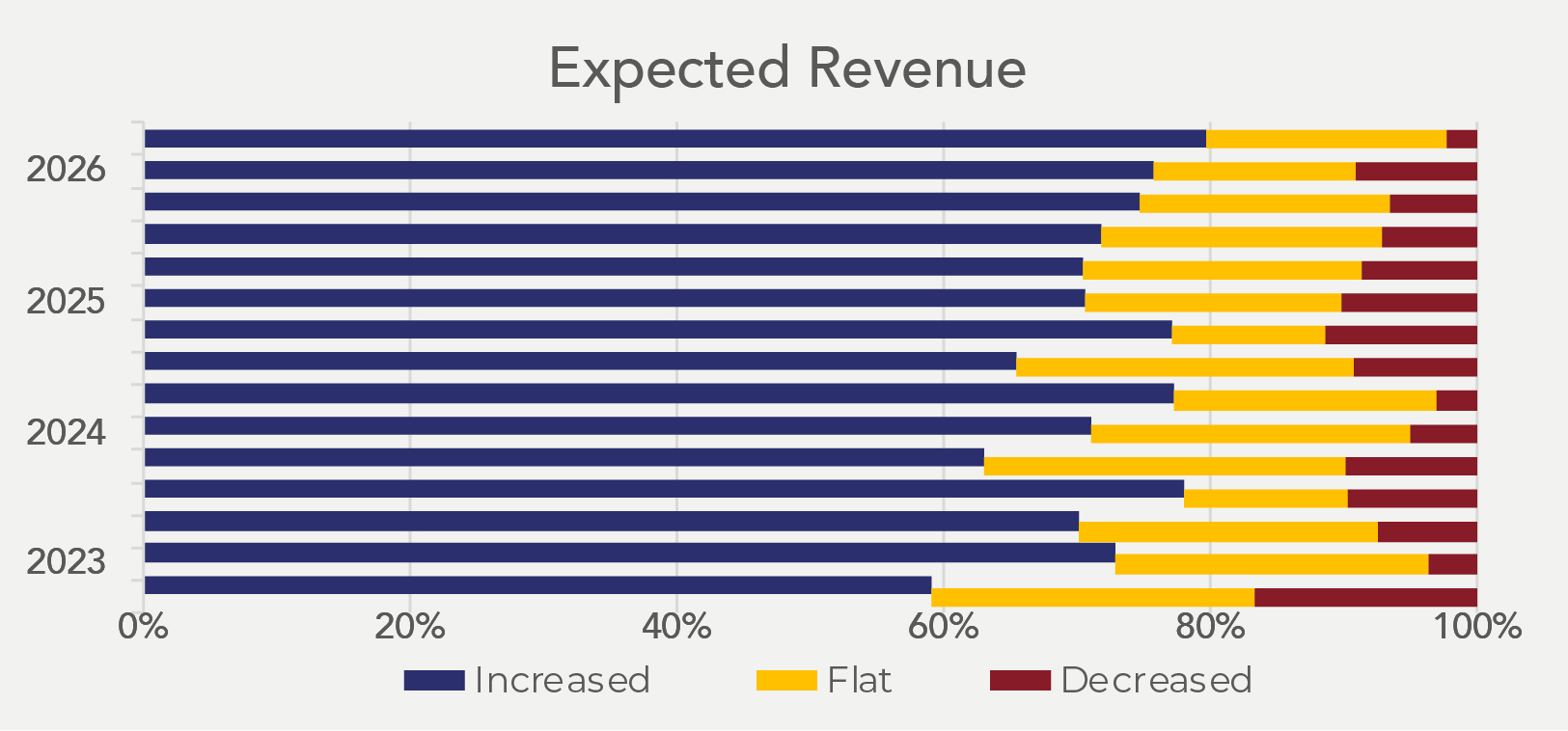
Nearly 80% of responding leaders believe their revenue will increase in the coming year. Of those, 63% expect an increase of between 1% and 10%, while 17% expect revenue to grow by more than 10%.
Only 2% expect a revenue decrease in the coming year, and about 18% expect revenue to remain flat.
In response to a related question, 58% of ministry leaders believe the country is not in a recession and will not enter one in the next year. That is down slightly from 62% who held that view at the start of President Trump’s second term in January 2025.
Artificial Intelligence (AI) Usage
“Some warn that AI will erode human dignity, replace labor, and hollow out meaning itself. Others celebrate it as a transformative tool capable of solving humanity’s deepest problems through efficiency and computation,” wrote Mitchell Bahnsen in a Gospel Coalition article.
Bahnsen encouraged Christians to view AI and other technology as stewardship, part of “humanity’s long tradition of tool-making and cultural development.”
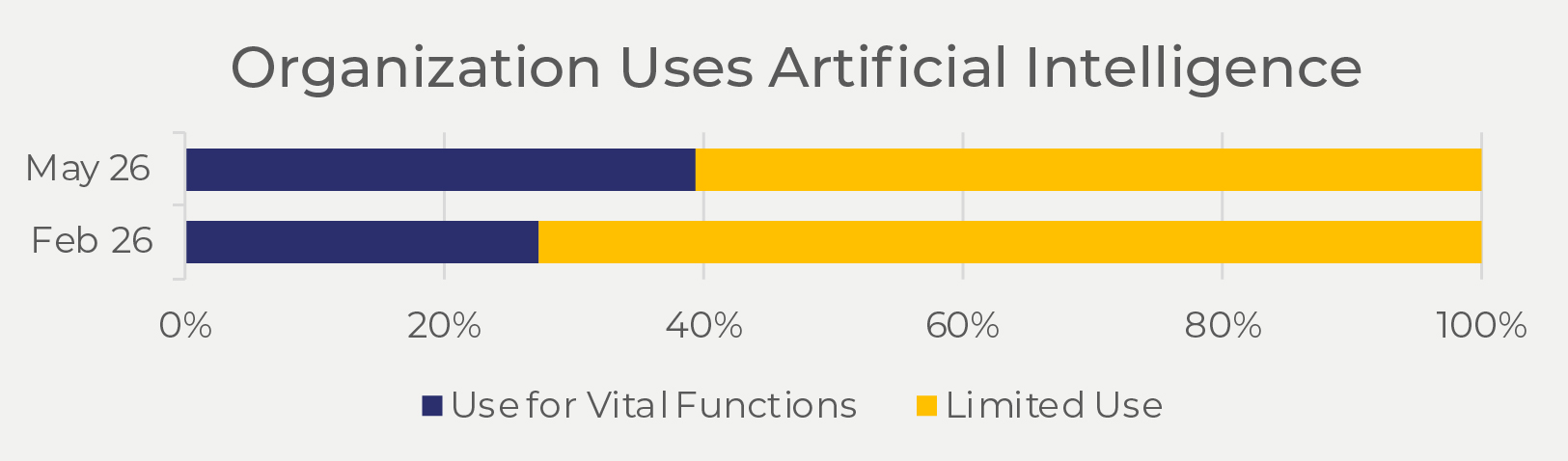
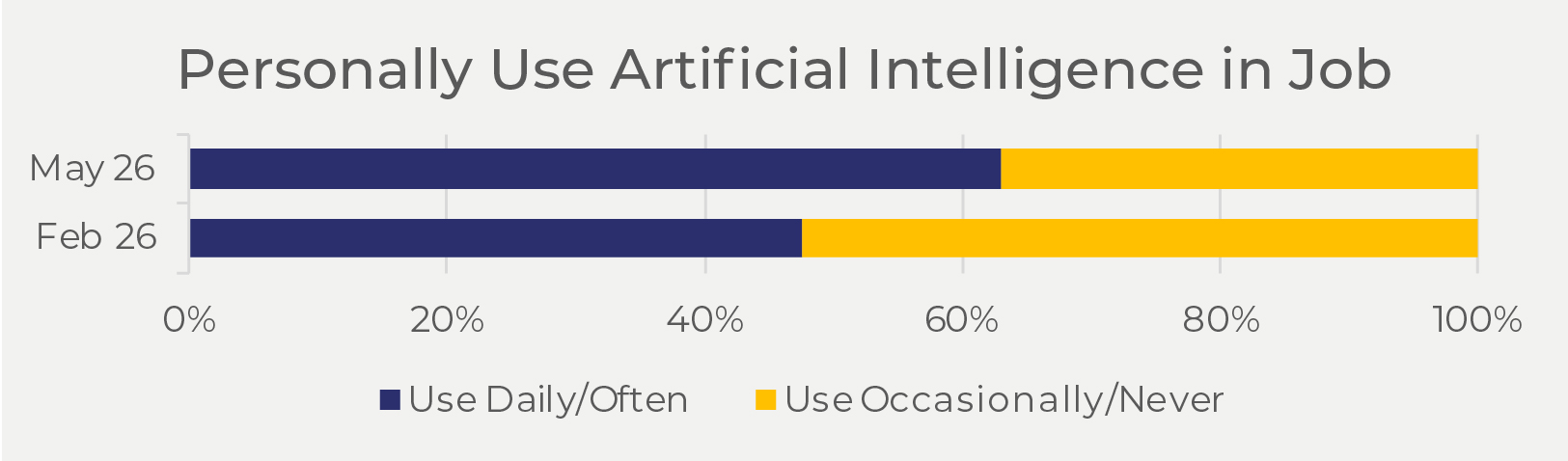
Ministry leaders are growing in their adoption of AI technology as part of their organizational operations. According to survey responses, about 89% have used AI regularly or have at least experimented with it.
Additionally, 91% of responding leaders say they personally use AI in their work — with nearly 30% using it every day. Only about 9% of leaders say they don’t use AI in their roles.
This growth of AI usage mirrors trends in the broader nonprofit world. According to a Center for Effective Philanthropy report, almost two-thirds of foundations and nonprofits report using AI, mostly for “internal productivity and communication-related tasks.”
TO OUR READERS: The mission of MinistryWatch is to help Christian donors become more faithful stewards of the resources God has entrusted to them. Do you know of a story that will help us fulfill our mission, or do you want to give us feedback about this or any other story? If so, please email us at [email protected].
Related posts:
![AI Use Growing Among Christian Ministry Leaders]()
AI Use Growing Among Christian Ministry Leaders
![Almost Half of Christian Ministry Executives Believe a Recession is Coming]()
Almost Half of Christian Ministry Executives Believe a Recession is Coming
![Revenue Decline Remains Largest Challenge for Ministry Leaders]()
Revenue Decline Remains Largest Challenge for Ministry Leaders
![Finding and Keeping Qualified Staff Remains Top Concern Among Christian Ministry Leaders]()
Finding and Keeping Qualified Staff Remains Top Concern Among Christian Ministry Leaders
![MinistryWatch Survey of Christian Ministry Executives: Optimism about Revenue Continues]()
MinistryWatch Survey of Christian Ministry Executives: Optimism about Revenue Continues