

Beyond the Food Box
Helping families move from emergency meals toward reliable food, income, and education.


On Oct. 16, the U.N. Food and Agriculture Organization acknowledged World Food Day. 
Some Christian relief ministries are looking beyond how many meals they can distribute: Emergency food can save lives. But lasting food security also might require better farming, steady income, education, local markets, and the ability to withstand the next drought or economic shock.
At MinistryWatch, we spend much of our time reporting on questions of transparency, accountability, and stewardship — including stories of waste, fraud, and abuse. Ministries Making a Difference highlights another part of the picture: ministries doing notable work in their communities and around the world.
This week’s Ministries Making a Difference looks at four Christian ministries working along that spectrum, from immediate nutrition to longer-term food security.
photo, growinghopeglobally.org
Growing Hope Globally
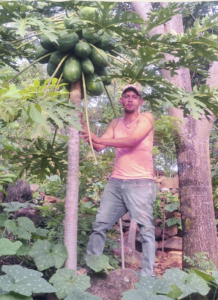
Cristian spent seven years moving between cities in Honduras, looking for work that would justify living apart from his wife, Kenci, and their 3-year-old son.
Eventually, he returned home. Through a program supported by Growing Hope Globally, local partner CODESO taught Cristian to diversify his 2-acre farm and use conservation practices to improve the soil. Today, Cristian grows more food, saves through an agricultural savings group, and sells his own products in local markets. He once carried packages for other employers. Now, he supplies some of them.
Growing Hope Globally connects U.S. churches and farmers with agricultural development programs overseas. Its model grew from understanding a problem: shipping American grain abroad could cost far more than the grain itself and undermine local farmers. So, instead of shipping American grain overseas, participating U.S. farmers sell their crops and use the proceeds to support locally led agricultural programs. This approach avoids shipping costs and invests in farmers building their own food supply and income.
Food for the Hungry
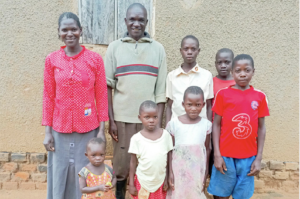
Stephen farmed a small plot in Uganda from morning until dark, but he still could not grow enough food or earn enough money to send his children to school. Food for the Hungry provided Stephen with a goat and training. The goat produced offspring, which the family sold. They bought a cow, later sold it, and used the proceeds to purchase an acre of land. Stephen now grows sorghum, cassava, maize, and other crops, earns enough to pay school fees, has money in savings, and leads a local savings group.
photo, fh.org
Food for the Hungry works with local leaders on agriculture, clean water, education, health, livelihoods, and other efforts intended to help communities address the causes of poverty rather than depend indefinitely on outside relief.
Food for the Hungry has a 2-Star Financial Efficiency Rating, an A Transparency Grade, and a Donor Confidence Score of 80 in the MinistryWatch database.
Feed the Hunger
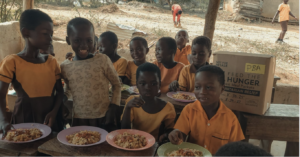
At two schools in Ghana, hunger had begun interfering with education. Students often stayed home or struggled to participate when they did not have enough to eat. This year, more than 300 students at Boko Islamic Basic and Junior High Schools began receiving meals provided through Feed the Hunger. The ministry reported improved attendance and participation after the meals became available.
photo, Feed the Hunger/Facebook
In addition to providing food, Feed the Hunger partners with local Christian leaders to provide school supplies, clean water, Bibles, emergency aid, and microenterprise assistance. In 2025, it distributed more than 13,000 education packs and nearly 16,000 hygiene packs while working with 53 partners in 29 countries.
Feed the Hunger has a 2-Star Financial Efficiency Rating, an A Transparency Grade, and a Donor Confidence Score of 80 in the MinistryWatch database. The ministry has published its 2025 ministry report.
Access to MinistryWatch content is free. However, we hope you will support our work with your prayers and financial gifts. To make a donation, click here.
Feed My Starving Children (FMSC)
When Feed My Starving Children first encountered Emma in Uganda, he was 2 years old and weighed about 9 pounds. His parents had died, and his 9-year-old brother searched for scraps to feed the children. Emma began eating the ministry’s MannaPack meals each day. Within a year, he gained 22 pounds and could walk. In September, FMSC said Emma is now 14, attends school, and plays soccer.

photo, fmsc.org
FMSC focuses initially on the immediate end of the food-security spectrum. Volunteers pack fortified meals that partner organizations distribute worldwide, and many of those partners combine the food with education, health care, orphan care, and longer-term development.
Feed My Starving Children has a 2-Star Financial Efficiency Rating, a C Transparency Grade, and a Donor Confidence Score of 53 in the MinistryWatch database (Exercise Caution). FMSC is not a member of the ECFA.
“We are rated by Charity Navigators and Candid which gives us greater reach since our ministry is beyond just evangelicals. In addition, the fee structure for EFCA is steep,” FMSC CFO Dan Stennes-Rogness told MW in 2025.
What about food security in the U.S.?
photo, blackchurchfoodsecurity.net)
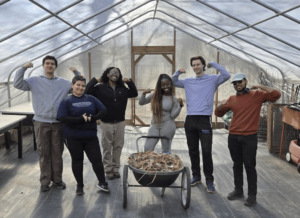
These ministries are also working closer to home: The Society of St. Andrew rescues fresh produce from farms and supports community growing projects; Encompass Ministries pairs food assistance with employment, budgeting, and life-skills support; and the Black Church Food Security Network helps churches build local food systems through gardens, farmers markets, and direct relationships with Black farmers.