
Dolly Parton’s Entrepreneurial Philanthropy
Plus, Costi Hinn, faith in nonprofits rises, and Rabbit Room’s publishing phenomenon.

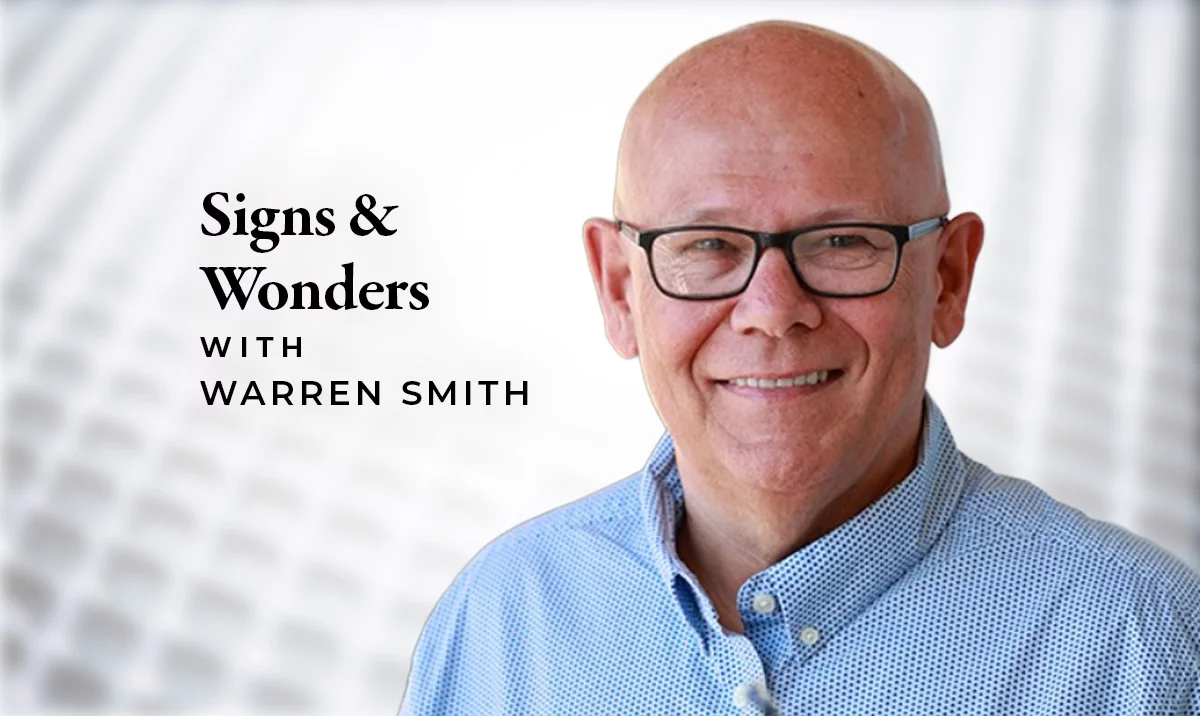
EDITOR’S NOTE: “Signs and Wonders” is a column that shares thoughts on news items that either do not rise to the level of a news story for MinistryWatch or are slightly (even significantly) outside of our normal charity and philanthropy “beat.” My goal is to be punchy, opinionated, and not to worry much about being slightly off brand. If that is not for you, no hard feelings. But if it is…read on.

Prosperity Gospel Survivor. The Prosperity Gospel teaches, according to Randy Alcorn, “that God will bless with material abundance and good health those who obey Him and lay claim to His promises.” Costi Hinn, the nephew of Prosperity Gospel preacher Benny Hinn, knows the dangers firsthand, and he has been speaking out for the past several years. If you want to know more about Costi Hinn’s ministry, you can of course go to his website, but I also recommend this link to Randy Alcorn’s website, which aggregates videos and other resources.
Dolly Parton’s Entrepreneurial Philanthropy. Dolly Parton’s death brought a rash of articles about her philanthropy. Late in life, she became known for making outsized and very public gifts. And even in her philanthropy she displayed entrepreneurial vigor and a showman’s (or showwoman’s) touch. For example, in 2007, headlines said Dolly gave $1 million to the Sevier County Hospital in Tennessee. She was even on hand for the opening of the $115 million LeConte Medical Center in 2010.
A closer look, though, reveals that about $250,000 came from the Dollywood Foundation, $250,000 came from Dolly Parton’s Dixie Stampede, and about $500,000 came from a benefit concert hosted by Parton herself. In exchange, the medical center named a wing of the building after her — the 30,000-square-foot Dolly Parton Center for Women’s Services.
There is nothing wrong with any of that. In fact, it shows creativity and entrepreneurship badly needed in the world of philanthropy. But it does demonstrate that her charity was not exactly what it seemed.
Access to MinistryWatch content is free. However, we hope you will support our work with your prayers and financial gifts. To make a donation, click here.
But here, too, the numbers are not exactly what they seem. There is no doubt that Dolly Parton herself is the driving force behind the Imagination Library, but she personally donated a small fraction — probably less than 2% — of the money to keep the charity going.
Most of the $700-plus million has been paid by local and state governments. Some of it has been paid by donations from other celebrities and philanthropists.
For example, Dolly Parton’s Imagination Library of Ohio is its own nonprofit organization with revenue of about $13 million. Most of that money comes from the State of Ohio, and the money goes to serve only children in Ohio. In fact, that is one of the quirks of the program. There is no means test. Both rich kids and poor kids can take advantage of the “free” books. The only requirement is that the child be under the age of 5, and live in an area with a local, usually taxpayer-funded chapter. The Ohio chapter is one of the largest in the nation. Its executive director makes nearly $200,000 per year. Karen DeWine, who is related by marriage to Ohio Governor Mike DeWine, serves on its board.
Ohio’s Imagination Library is by far the largest, but certainly not the only one. Nearly 100 local Imagination Library chapters file with the IRS. The Colorado chapter has revenue of $2.7 million. All the others have annual revenue of less than $1 million. In Oregon, Kentucky, and Alabama, local organizations raise money, and that money is matched by taxpayer money. In Missouri, 100% of the books distributed there, including postage and other costs, are paid by the state. Indiana provided an initial grant of $6 million to get the program started, but local donors now keep the program going.
It is also worth mentioning that in 2022, Amazon founder Jeff Bezos gave $100 million to Dolly Parton personally when she received the Bezos Courage & Civility Award. It is not clear where that money went, but it did correspond with a significant scaling up of the Imagination Library. From 2020 to 2025, the Dollywood Foundation, which runs the Imagination Library, nearly tripled in size. Revenue in 2025 was more than $90 million. Interestingly, almost none of the revenue came from charitable contributions. Almost all of it came from “program services,” presumably state and local organizations paying the Imagination Library for books and services.
Again, there is nothing illegal about any of this. In fact, I admire the entrepreneurial vigor. But the simple fact remains: Of the more than $700 million spent by the Imagination Library over the past 30 years, only a fraction of it came from Dolly Parton herself. A lot of it came from you and me, taxpayers in the states where the Dolly Parton Imagination Libraries operate.
Confidence in Nonprofits Rises. A new study by the Independent Sector shows nonprofit organizations remain the most-trusted sector in the U.S., even as perceptions of government institutions and private corporations worsen. The survey, conducted by Edelman Data & Intelligence, found that 56% of respondents indicated high levels of trust in nonprofits, stable from 2025 and significantly higher than trust in the military, the media, government institutions, and large businesses and corporations.
One of the more interesting findings: “When asked about nonprofit use of AI tools, 76% of respondents agreed that nonprofits should fully disclose when and how they use AI, and more respondents said AI use by a nonprofit would make them less likely to trust that organization (37%) than more likely (22%).”
“As Americans struggle with economic challenges and political divisions, their trust in nonprofit organizations to deliver for their communities remains higher than any other sector of society,” said Dr. Akilah Watkins, president and CEO of Independent Sector. “Our new research shows that this high level of trust is largely driven by transparency and direct engagement: When Americans feel that they have a role in and insight into a nonprofit’s work, they are more likely to trust that organization to deliver on its promises ethically and effectively.”
Rabbit Room’s Publishing Phenomenon. “The Coming of Arthur,” the second of four volumes in renowned British poet and priest Malcolm Guite’s masterwork, “Merlin’s Isle: An Arthuriad,” will be available Nov. 9. According to a statement from the Rabbit Room Press, its publisher, it is already generating record-breaking presales of 10,000 books. “The Coming of Arthur” follows series debut “Galahad and the Grail,” which reached the Top 50 on Amazon’s “Best Sellers in Books” chart and has sold over 50,000 copies since its April release.
Related posts:
![Nonprofits’ Recovery Slower than Broader Economy]()
Nonprofits’ Recovery Slower than Broader Economy
![Value of a Volunteer Soars 6.2%]()
Value of a Volunteer Soars 6.2%
![Trust in Nonprofit and Philanthropic Groups Declining, Survey Shows]()
Trust in Nonprofit and Philanthropic Groups Declining, Survey Shows
![The Rabbit Room Builds Christian Community by Supporting Artists, Authors, and Musicians]()
The Rabbit Room Builds Christian Community by Supporting Artists, Authors, and Musicians
![Weekly Review December 2021 MinistryWatch Updates: ECFA Removals, Dave Ramsey Lawsuit, and Relief Efforts for Tornado Victims]()
Weekly Review December 2021 MinistryWatch Updates: ECFA Removals, Dave Ramsey Lawsuit, and Relief Efforts for Tornado Victims