Sean Feucht Ministries Succeeds in Getting Lawsuit Dismissed
Plaintiff granted leave to amend within 21 days.

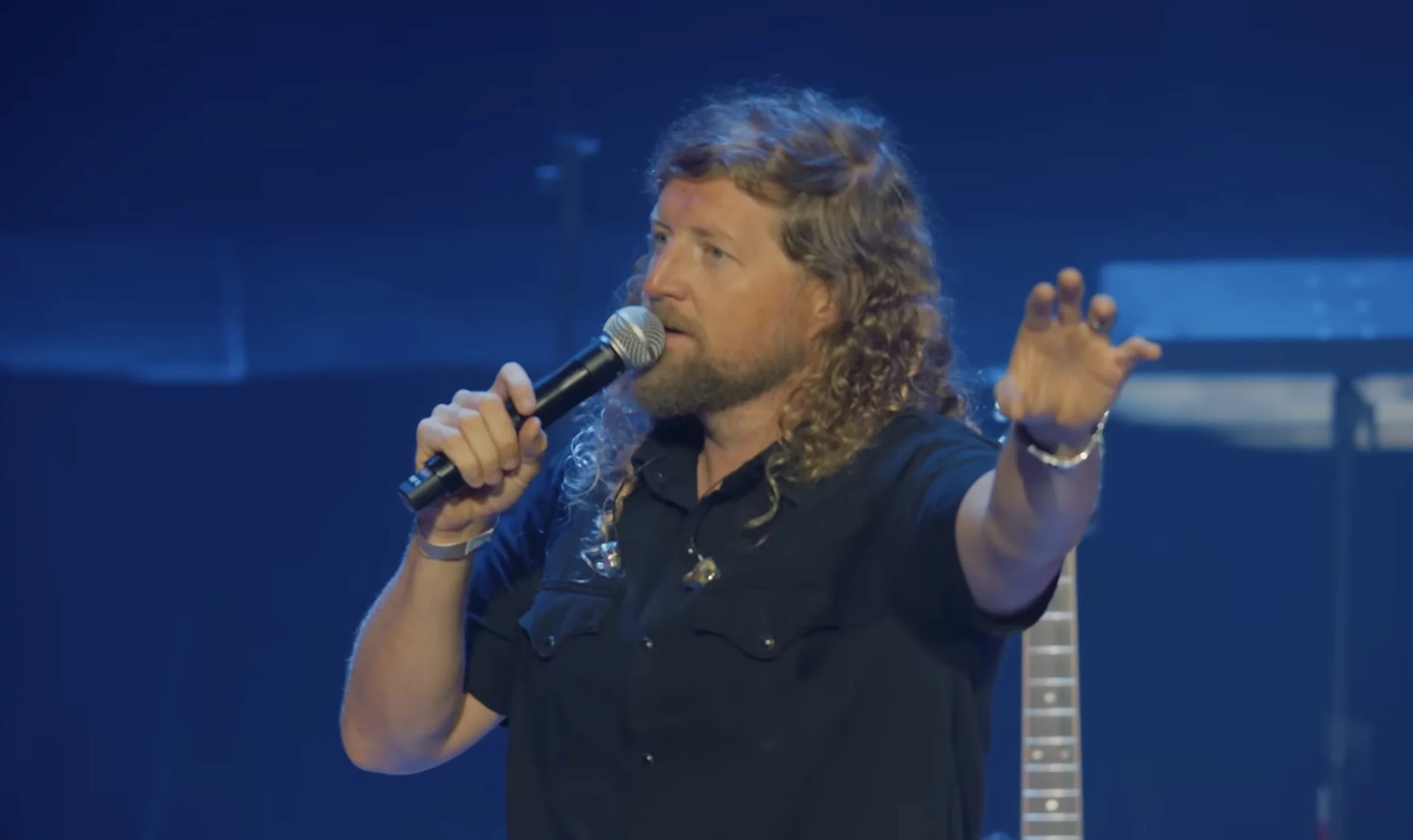
Sean Feucht succeeded in getting a lawsuit against his ministry dismissed by a federal judge, though the plaintiff has 21 days to file an amended complaint.
Reacting to the dismissal, Feucht wrote on X: “[T]hey attacked us, slandered us, and spread allegations they couldn’t support in court.”
Sean Feucht at a Let Us Worship event in Nashville, Tenn. / Video screenshot @Sean Feucht
The lawsuit was brought by S.R. Bray and its principal, Steve Bray, over a $250,000 donation Bray made through his donor-advised fund at the National Christian Foundation to support Feucht’s 2023 “Let Us Worship” tour. Bray claimed the donation was fraudulently solicited.
Bray alleges the funds were “misappropriated and commingled with Mr. Feucht’s personal funds,” and claimed that Feucht “knowingly misrepresented the intended use of funds in order to induce” the donation.
Bray asserted four claims: fraudulent misrepresentation, negligent misrepresentation, unfair business practices under California law, and civil theft by false pretenses.
U.S. District Judge David O. Carter of the Central District of California dismissed all four claims.
Carter ruled that Bray had failed to plead sufficient facts to allow Feucht to respond to the claims. For example, on the negligent misrepresentation claim, the judge agreed with Feucht that Bray had failed to provide a factual basis to “support the assertion that funds provided by [Bray] to the [Feucht Ministries] are the same funds diverted by Defendants toward alleged ‘fraudulent conduct.'”
In his motion to dismiss, Feucht had argued that the church autonomy doctrine barred the lawsuit, pointing to the ministry’s IRS classification as an association of churches as evidence. The doctrine is a legal principle rooted in the First Amendment’s Free Exercise Clause that protects religious institutions from lawsuits that require courts to delve into matters of faith and doctrine.
Access to MinistryWatch content is free. However, we hope you will support our work with your prayers and financial gifts. To make a donation, click here.
Feucht’s ministry contends that how it spends donated funds to carry out its mission is central to its religious doctrine — and therefore a matter courts are barred from weighing in on.
Carter disagreed that the church autonomy doctrine applied in this case, writing, “fraud claims do not concern matters of church doctrine or policy, and the Church Autonomy Doctrine does not bar Plaintiff’s suit.”
In the MinistryWatch database, Sean Feucht Ministries has a Donor Confidence Score of 19, meaning donors should withhold giving. It has the lowest Transparency Grade of F because it doesn’t belong to the Evangelical Council for Financial Accountability, doesn’t file a public Form 990 with the IRS, and doesn’t post an audited financial statement on its website.
TO OUR READERS: The mission of MinistryWatch is to help Christian donors become more faithful stewards of the resources God has entrusted to them. Do you know of a story that will help us fulfill our mission, or do you want to give us feedback about this or any other story? If so, please email us at [email protected].
Related posts:
![Evangelical Activists Lead Rally to Support Israel at Columbia University]()
Evangelical Activists Lead Rally to Support Israel at Columbia University
![Bethel Members Now Have Majority on Redding City Council]()
Bethel Members Now Have Majority on Redding City Council
![Dream City Church Partners With TPUSA for Strong Church Dream Conference 2024]()
Dream City Church Partners With TPUSA for Strong Church Dream Conference 2024
![On This Date: Former Leaders Associated With Sean Feucht Call out ‘Longstanding Failures’]()
On This Date: Former Leaders Associated With Sean Feucht Call out ‘Longstanding Failures’
![MinistryWatch Top 25 Stories of 2025]()
MinistryWatch Top 25 Stories of 2025