Almost Half of Christian Ministry Executives Believe a Recession is Coming
MinistryWatch reports on trends over our survey’s three-year history.


Almost half of Christian ministry executives believe that the U.S. economy is already in a recession or will enter a recessionary period in the next six months to a year. According to the MinistryWatch survey of the leaders of the largest Christian ministries in the country, 26% expect the country to enter a recession in the next year. This is a slight increase from August when that number was 23%. 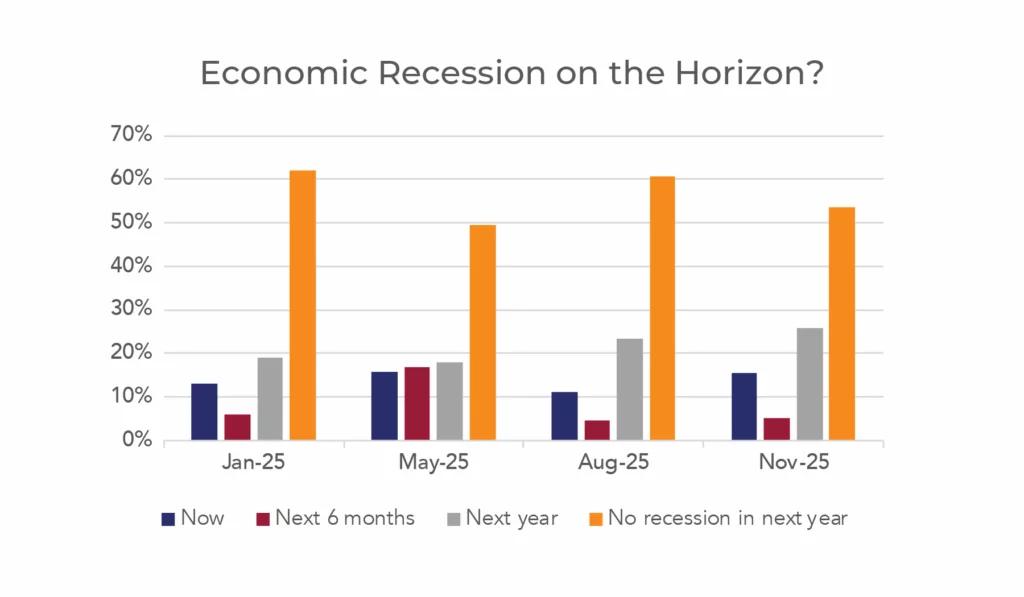
Over 15% of survey respondents believe the country is already in a recession, and about 5% think a recession is coming in the next six months.
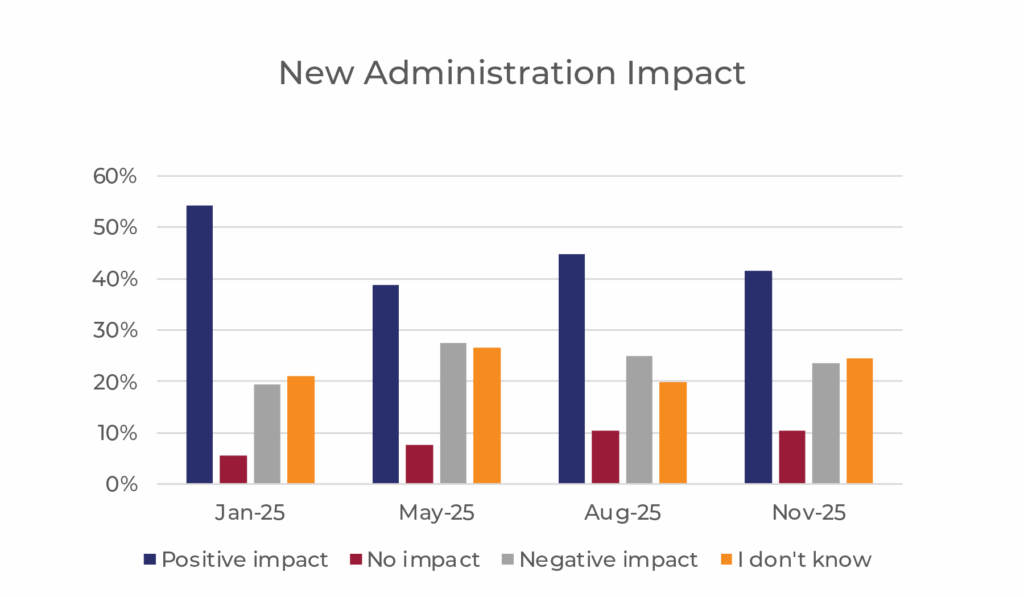
About 42% of the survey participants believe the Trump administration’s policies have a positive impact on their organization or the work they do — down from 54% in January. About 10% believe the administration policies will have no impact, and 24% think the policies may have a negative impact. One-fourth of the respondents replied that they don’t know what impact the administration’s policies will have — about the same as the response in May.
MinistryWatch has been conducting its quarterly survey of the leaders of the nation’s 1,000 largest Christian ministries since October 2022. We have consistently reported about the insights they have provided.
This quarter, we received responses from 108 ministry executives, 92% of whom are in the top role at the organization — CEO, president, or executive director.
While we recognize the response size is somewhat small, the results have shown noteworthy trends over time. MinistryWatch has created graphics to demonstrate these trends in a variety of areas.
Ministry Revenue Over Past Year
Overall, about 64% of ministry executives have seen revenue increase over the last 12 months.
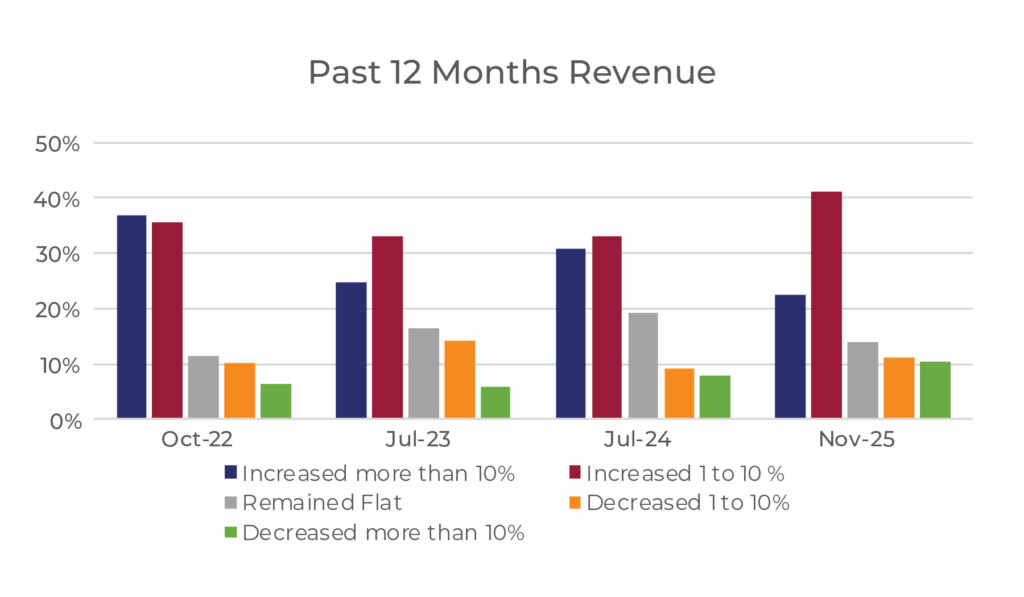
However, that revenue has not increased over the last 12 months as much as it had at this time last year. About 22% saw an increase of at least 10% or more in revenue — down from about 29% of respondents in October 2024.
Despite that, giving has been trending up through the surveys conducted this year. In May, about 16% said they’d seen that level of increase, and in August just under 21% saw that level of increase.
Additionally, about 41% of respondents say revenue has increased between 1% and 10% compared with 33% who gave the same response at this time last year.
There was also a significant decrease of about 9% of survey respondents who said their revenue remained flat compared with our survey in August.
About 21% of ministry executives told MinistryWatch their revenue had fallen during the last 12 months. A very similar percentage reported decreased revenue in August 2025 and a year ago in October 2024.
Ministry Revenue Expectations
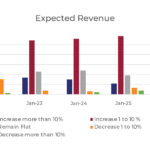
Ministry executives remain optimistic about their revenue growth over the next 12 months, just slightly more optimistic than they were in October 2024. A majority — 56% — believe their revenue will grow between 1% and 10% over the next year, and a healthy 19% believe it will grow by more than 10%. About 19% believe their revenue will remain flat.
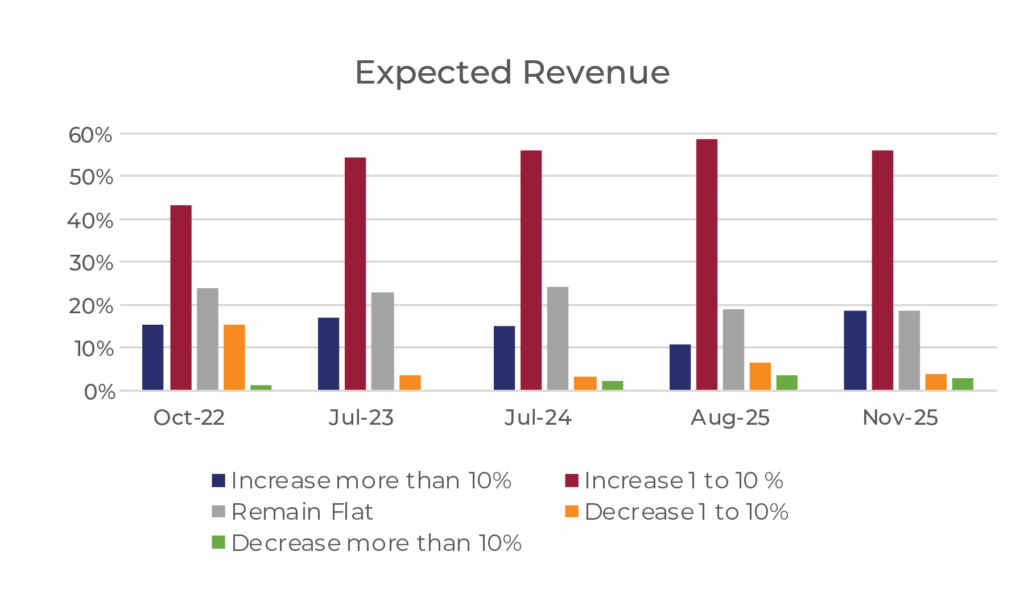
A year ago, about 74% of the leaders who responded expected to see revenue grow over the next 12 months, with 53% expecting that growth to be between 1% and 10%, and 21% saying they expected to see revenue growth of over 10%.
As the graph indicates, most ministries over the nearly three years of surveys have expected to see growth of between 1% and 10%. Going back to our first survey in October 2022, about 58% of survey respondents expected to see some revenue growth in the next year of operations.
According to data contained within Giving USA 2025: The Annual Report on Philanthropy for the Year 2024, total giving outpaced inflation for the first time in three years, growing 6.3% in current dollars and 3.3% when adjusted for inflation. Individuals gave $392.45 billion or 66% of all charitable donations.
Significant Challenges in Ministry
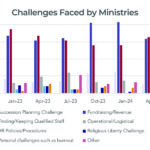
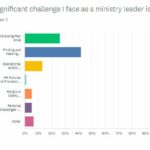
Despite their optimism about revenue growth over the next 12 months, ministry executives cite fundraising as the primary challenge in leading their ministries. About 46% of ministry executives cited fundraising as their biggest challenge, up about 10% from 36% this time last year.
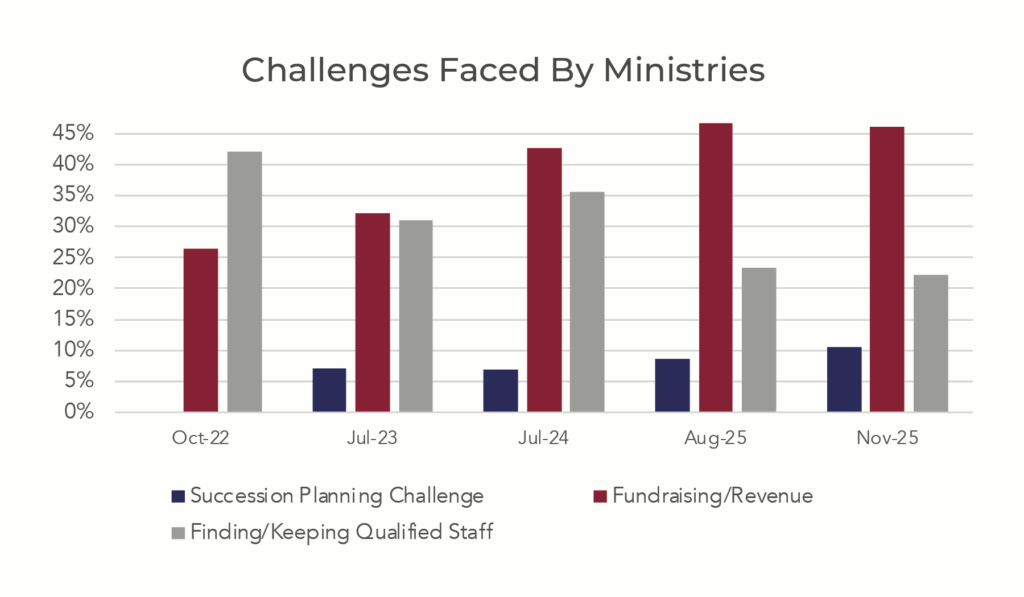
For the first few months of the survey, finding and keeping qualified staff was a persistently challenging situation faced by ministry leaders. While it remains a challenge cited by about 22% of respondents in this quarter’s survey, it is down 20% from when the survey began.
Succession planning was the third ranking response, with about 11% of participants citing it as their primary challenge, compared with about 13% a year ago.
Operational and logistical issues vacillate among top challenges. In this quarter’s survey, about 9% of leaders cited it as a significant challenge. At the start of our surveys in October 2022, it was cited by 13% of respondents. One respondent explained that “operational/logistical relates to cost of employment which has skyrocketed.”:
Other stressors include personal challenges, human resource policies, and religious liberty challenges — about 11% of respondents chose one of those. One respondent said he or she faces challenges in using artificial intelligence (AI) and “building guardrails,” while another cited “scaling the ministry to match our growth.”
A recent study revealed that church and nonprofit leaders are increasingly using AI tools, but are concerned about how AI might use their data.
About 20% of ministries said they were subject to a cyberattack or financial fraud over the last year, even though cryptocurrency, AI, and phishing scams seem to be increasingly targeting churches.
About 80% percent of ministry leaders said they engage in formal goal-setting either annually or every two years
Years in Position 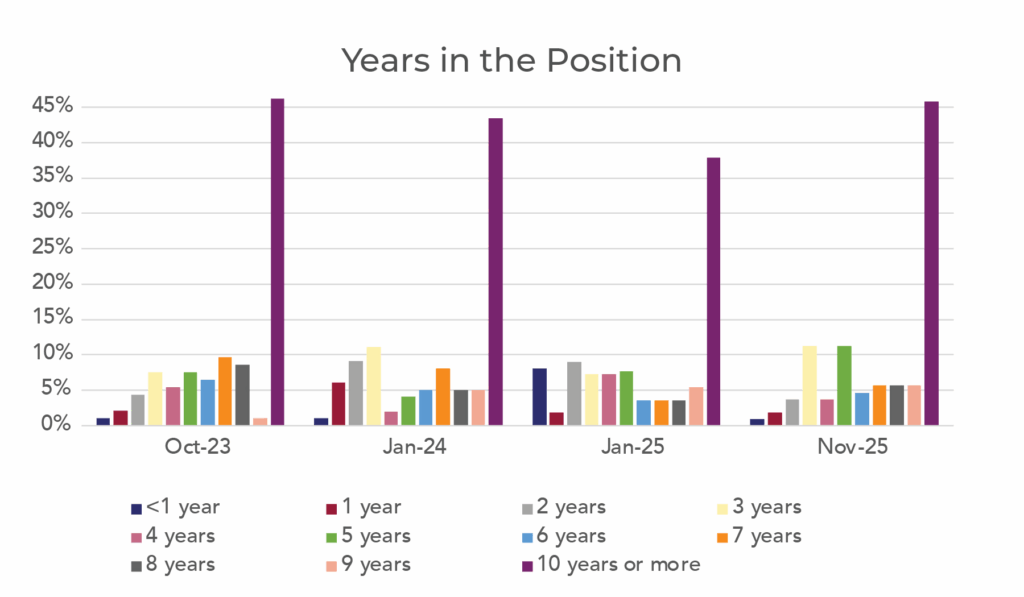
As is evident in the graph, the number of leaders who have been in their position for 10 years or more remains the largest portion of
At the opposite end of the spectrum, 31% of survey respondents said they’ve been in their ministry leadership position for five years or less, up from 28% when the survey began. That may indicate turnover at the top leadership positions where older leaders are retiring.
Access to MinistryWatch content is free. However, we hope you will support our work with your prayers and financial gifts. To make a donation, click here.
Age of Leaders 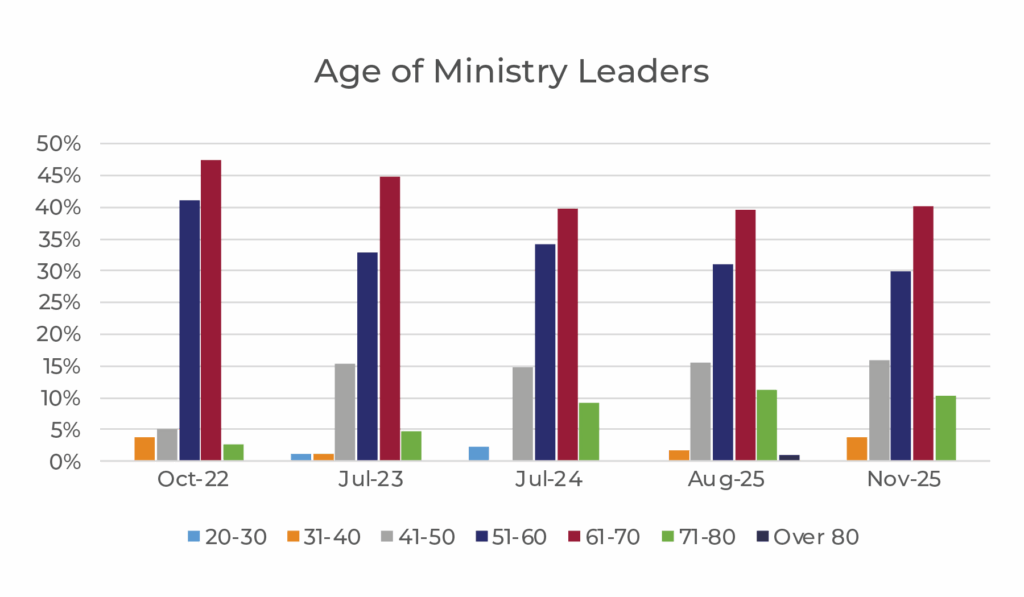
A related category is the aging of ministry leaders, which is a likely explanation for why the number of leaders on the job for five years or less is growing. The number of leaders ages 50 or under has increased to 20% of respondents, up from 9% when the survey began.
Nondisclosure Agreements (NDAs)
MinistryWatch once again asked ministry leaders about their use of the nondisclosure agreements as part of their operations. A debate has arisen in recent years over how and why Christian ministries use NDAs as part of their operations. While NDAs may be used to protect confidential information about how a ministry operates, at other times they are used to prevent persons from discussing the terms of a settlement agreement. NDAs are binding, and violations can result in a lawsuit.
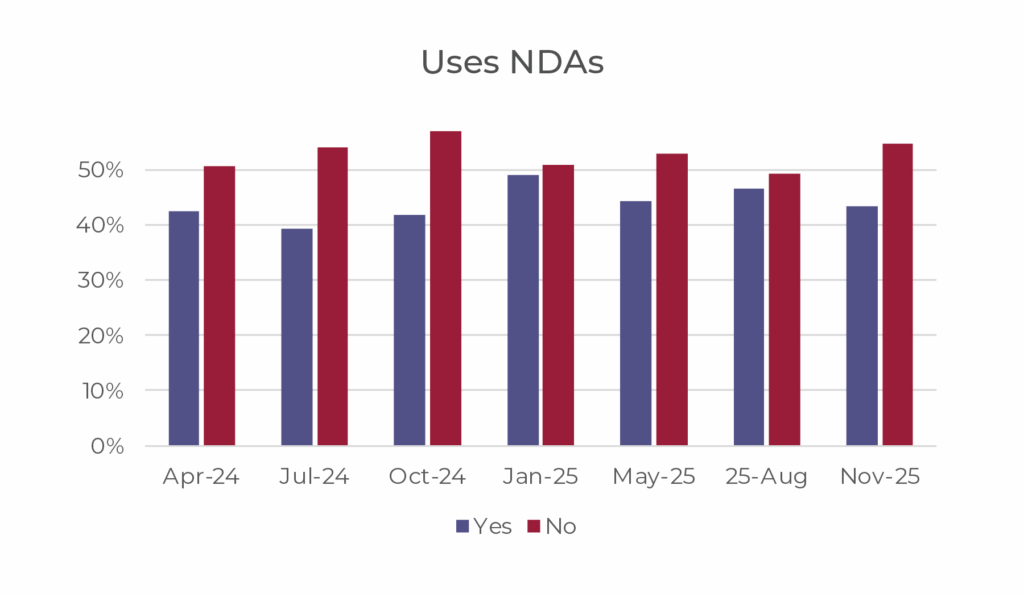
The movement to make NDAs unenforceable, especially when it comes to sexual abuse survivors, has been growing. Both Texas and Missouri passed laws this year to void nondisclosure agreements in certain sexual abuse cases.
The number of ministries saying they use NDAs has vacillated as low as 39% in July 2024 to over 46% in August 2025. In this quarter’s survey, 43% of ministries say they use NDAs.
When asked to elaborate on why they use NDAs, 57% of leaders said they are used for protection of proprietary information, and 20% said they were required by third party vendors.
About 35% of Christian ministries use NDAs as part of their standard onboarding practice, and 33% use them as part of a severance or settlement agreement. 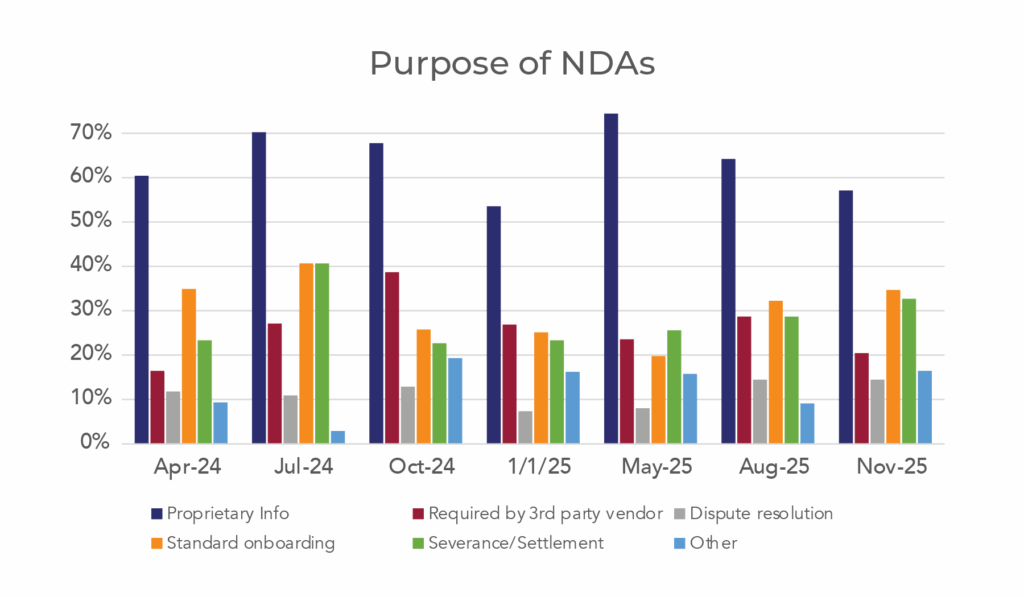
Some respondents chose to elaborate, telling us they use an NDA only to protect donor information.
Are you male or female?
The vast majority of leaders who respond to our survey — 80% — are male. Just about 20% of respondents are women. Those numbers have not changed significantly over the course of the survey.
<insert male/female graph>
As we’ve reported in the past, more women are at the helm of Christian ministries than those leading secular businesses. According to Axios, in 2025 only 55 women led Fortune 500 companies. Although that is a record number, it is only 11% of the nation’s largest corporations. 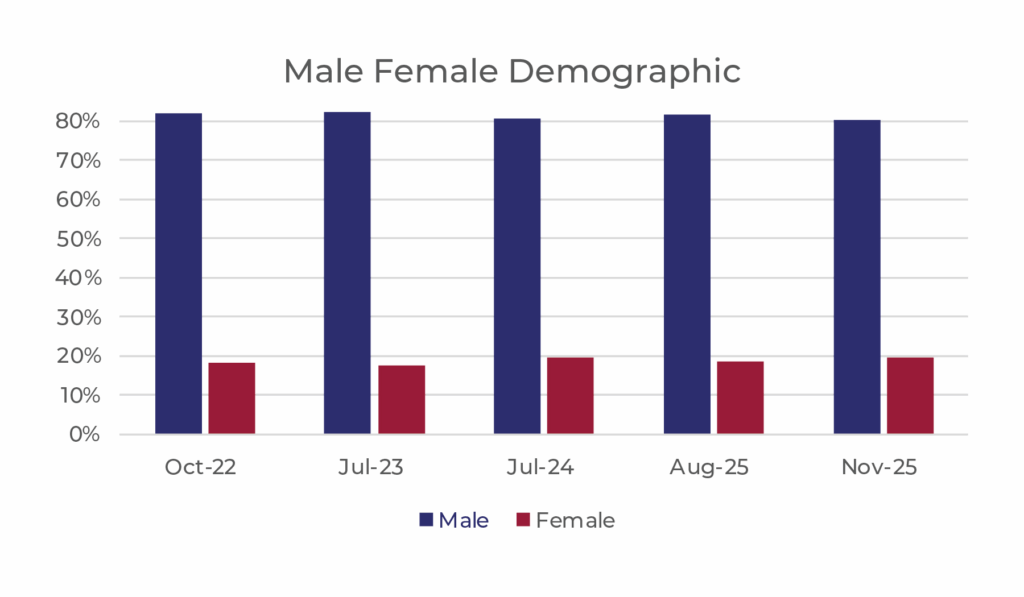
TO OUR READERS: The mission of MinistryWatch is to help Christian donors become more faithful stewards of the resources God has entrusted to them. Do you know of a story that will help us fulfill our mission, or do you want to give us feedback about this or any other story? If so, please email us at [email protected].
Related posts:
![Ministry Leaders Less Optimistic About Revenue Projections]()
Ministry Leaders Less Optimistic About Revenue Projections
![MinistryWatch Survey of Christian Ministry Executives: Optimism about Revenue Continues]()
MinistryWatch Survey of Christian Ministry Executives: Optimism about Revenue Continues
![Revenue Decline Remains Largest Challenge for Ministry Leaders]()
Revenue Decline Remains Largest Challenge for Ministry Leaders
![Ministry Leaders Expect Positive Impact from Trump Administration Policies]()
Ministry Leaders Expect Positive Impact from Trump Administration Policies
![Significant Challenge for Ministries to Find and Keep Qualified Staff, Survey Reveals]()
Significant Challenge for Ministries to Find and Keep Qualified Staff, Survey Reveals