ACNA Archbishop Steve Wood Accused of Sexual Misconduct
It’s the latest in a string of crises to rock the small, conservative denomination.

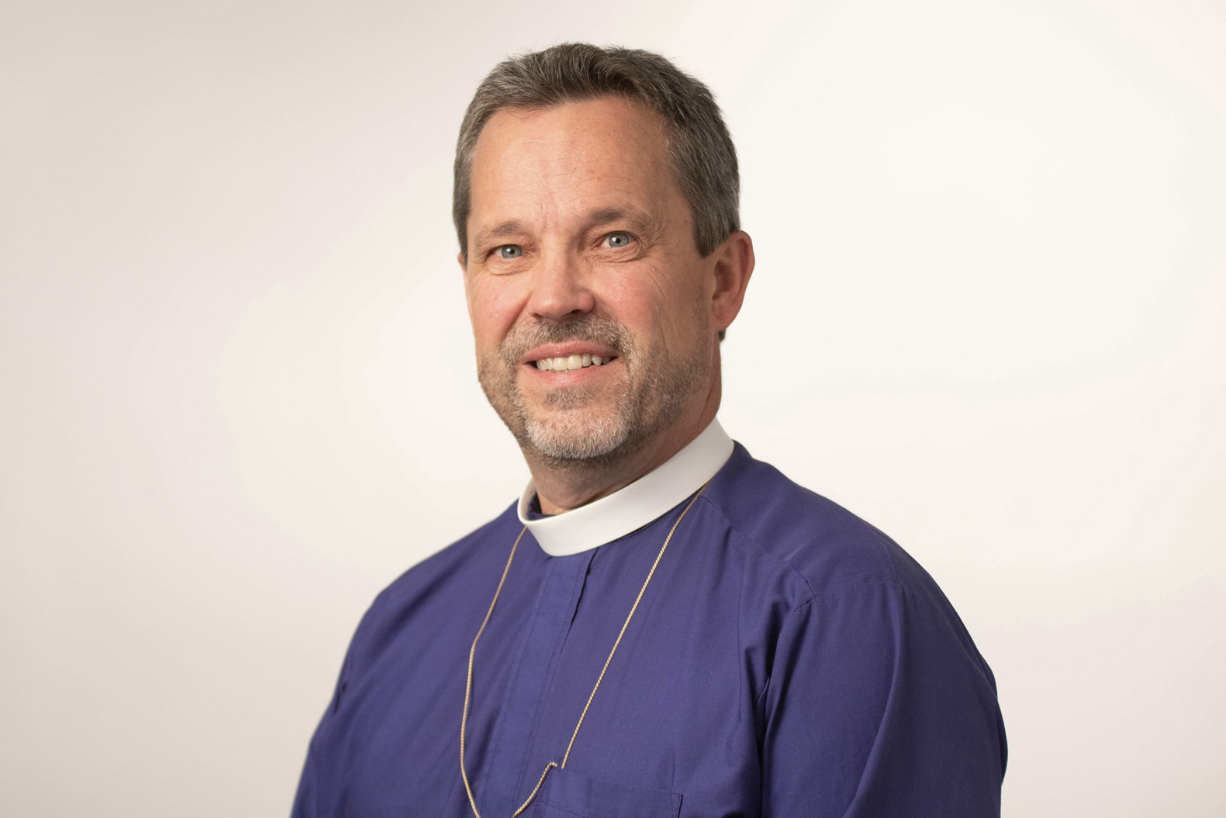
(RNS) — Archbishop Steve Wood, who heads the Anglican Church of North America, faces allegations of sexual harassment, bullying and plagiarism, according to an explosive report released by The Washington Post on Thursday (Oct. 23). The list of charges, signed by at least 10 individuals attesting to the allegations, is the latest in a string of crises to rock the small, conservative denomination.
Archbishop Steve Wood. (Photo courtesy of ACNA)
Claire Buxton, a former children’s ministry director at St. Andrew’s Church in Mount Pleasant, South Carolina, where Wood serves as rector, told the Post that Wood attempted to kiss her in his office in April 2024, just before he was elected to replace Archbishop Foley Beach as head of the denomination. Buxton claims that before the incident, Wood gave her more than $3,000 from church funds and that church employees had commented on Wood’s “excessive praise and fondness” for her. Priests have also accused Wood of plagiarizing sermons and bullying staff members before becoming archbishop.
The presentment, as a formal complaint is known in the church, was submitted on Monday to Wood and other bishops.
“I do not believe these allegations have any merit,” said Wood, who also continues to serve as bishop of the Diocese of the Carolinas, in a statement to Religion News Service. “I place my faith and trust in the process outlined in our canons to bring clarity and truth in these matters and respectfully decline to comment further at this time.”
The charges included in the presentment include alleged violation of ordination vows, conduct giving cause for “scandal or offense,” and sexual immorality.
“I was in shock,” Buxton told the Post. “It’s just bizarre to me how far we — the Anglican Church in North America and its leadership — have gotten away from basic morals and principles.”
Access to MinistryWatch content is free. However, we hope you will support our work with your prayers and financial gifts. To make a donation, click here.
The Post reported that a rector in Wood’s diocese wrote a letter to Wood in 2019, questioning his moral authority to serve as bishop. He accused Wood of preaching sermons he didn’t write, publicly cursing at colleagues and using a $60,000 truck provided by the diocese for church visits — then left Wood’s diocese soon after.
Buxton told the Post that Wood began acting inappropriately with her in fall 2021, repeatedly showering her with money, calling her “Claire Bear” and offering to send her to a luxury resort. Buxton said she was fearful that Wood would attempt to start a physical relationship with her.
When she confronted him in April 2024, Wood reportedly told her: “You know how special you are to me. You’re my favorite person in the world.” When she got up to leave, the Post reported, he put his hand against the back of her head and tried to kiss her.
By September 2025, less than a year into Wood’s tenure as archbishop, a group of Wood’s former colleagues — many now priests — had drafted a presentment and received signatures from at least 10 clergy and laypeople from the denomination, as required by church bylaws.
The Post reported that after the presentment was submitted, denominational officials asked those who signed the presentment to re-sign it and attest to the truth of the allegations “under penalties of perjury.” One of the presentment’s authors told the Post the group backing the presentment declined to comply, saying it was not required by church bylaws.
The Anglican Church of North America was founded in 2009 after some 700 churches split from the Episcopal Church and the Anglican Church in Canada over various disagreements, including LGBTQ issues, views over women serving as priests, and the rewritten Book of Common Prayer.
In July 2021, a mother went public with allegations that Mark Rivera, a onetime lay leader at Christ Our Light Anglican Church in Big Rock, Illinois, had sexually abused her 9-year-old daughter. At least nine other people have also shared grooming or sexual misconduct allegations against Rivera, who has since been convicted of felony sexual assault and felony child sexual assault.
More than 10 clergy and other lay leaders in the Upper Midwest diocese have been accused of misconduct as a result, and its bishop, Stewart Ruch, stood trial in a proceeding that concluded Oct. 15 — but not before two prosecutors had resigned amid claims of procedural misconduct. The church court’s order is expected on or before Dec. 16.
Meanwhile, the denomination has been shaken by dustups involving other bishops. One ACNA bishop was defrocked in 2020 due to his pornography use; in 2024, another bishop, Todd Atkinson, was ousted for inappropriate relationships with women.
In September, Bishop Derek Jones, who oversaw a jurisdiction that endorsed ACNA’s chaplains, announced his departure from the denomination after the archbishop moved to investigate several misconduct allegations against him. The jurisdiction claimed the proposed investigation violated church bylaws, and has moved to exit the denomination, attempting to take its chaplains with it. The jurisdiction also sued the denomination for trademark infringement and unfair business practices.
Since he was elected last summer, Wood has named transparency as one of his priorities and has issued regular, direct communications with ACNA members. In March 2025, he hired a director of safeguarding and canonical affairs as a point person for the denomination’s efforts to protect vulnerable people from abuse and harm.
In July, that director played a key role at a town hall, where ACNA leaders detailed a proposed overhaul of the denomination’s clergy misconduct and abuse protocols. The rewrite aims to clarify the process, making it easier to submit complaints against bishops while also introducing “off-ramps” so that not every complaint becomes an investigation. After several cycles of public feedback, the proposed changes are intended to be voted on next year. If adopted, the revisions would go into effect in January 2027.
At the town hall, Wood reiterated the importance of misconduct protocols. “Discipline in the church is one of the most important things that we can give our attention to, our minds to,” he said.
EDITOR’S NOTE: MinistryWatch exists to help donors become more effective stewards of the resources God has entrusted to them. So, why does MinistryWatch report on sex crimes? These stories are tough to read and sometimes even tougher to report, but we think they are vital to our mission to bring transparency, accountability, and credibility to the evangelical church. Donors who are supporting these ministries need to know this information. Ministry leaders and others can learn lessons from these stories. Victims feel supported. To read more about why and how we report these stories, read “Why MinistryWatch Reports On Sex Crimes.”
Another reason we report on sex crimes is to highlight for ministry and church leaders the importance of employing best practices for hiring and supervising employees in Christian environments.
Below is a list of best practices, curated from content on ministrywatch.com. These are adapted from discussions on Christian ministries, churches, and Christian educational institutions.
Clarifying Mission and Faith-Based Requirements
- Clearly define and document the organization’s religious mission to guide all hiring decisions, ensuring that faith alignment is central.
- Assess personnel needs based on what is required to fulfill the mission, recognizing that requirements may vary by role (e.g., teachers in a Christian school might need to model faith in curriculum delivery).
- Develop detailed job descriptions that explicitly link positions to the mission, including necessary faith commitments, conduct standards, and how they connect to the religious identity.
- Require candidates to affirm a statement of faith (e.g., a restatement of the Apostles’ Creed) to ensure they share the organization’s beliefs, as this is protected under federal laws like Title VII for religious nonprofits.
- Implement policies where employees assent to the mission, receive training on their role in it, are held accountable, and are treated consistently in evaluations or issues.
Avoiding Nepotism and Conflicts of Interest
- Create written anti-nepotism policies prohibiting direct reporting relationships between relatives (e.g., spouses or siblings) and limiting family members’ involvement in hiring, firing, or reviews.
- Establish boundaries to prevent conflicts, such as excluding relatives from decision-making roles in personnel matters.
- Promote transparency and open communication with staff and stakeholders about family hires to build trust and address potential issues.
- Adhere to any denominational guidelines, such as restrictions on family members serving on oversight boards or committees.
- Use resources like sample policies from the Evangelical Council for Financial Accountability (ECFA) and seek professional advice to tailor policies.
Thorough Vetting and Background Checks
- Conduct comprehensive investigations into candidates’ past, especially regarding allegations of misconduct like abuse, using independent firms if needed for objectivity.
- Create confidential channels for reporting concerns or additional information during the hiring process.
- Make relevant assessment findings public (while protecting sensitive details) to demonstrate integrity.
- Include spousal interviews or family vetting to assess overall fit with organizational values, though this should be handled carefully to avoid legal risks.
Legal Compliance and Conduct Expectations
- Hire based on shared faith and mission alignment, as federal law (e.g., Title VII) allows Christian organizations to prioritize believers without discrimination claims.
- Enforce a code of conduct aligned with “Judeo-Christian” values (e.g., prohibiting gossip or certain personal behaviors), but ensure it complies with anti-discrimination laws and does not overreach into protected areas like pregnancy or religion.
- Train new hires on core values, such as working “as unto the Lord,” to integrate them into the ministry culture.
- Be aware of limits: Secular aspects of the organization cannot mandate specific religious practices, and at-will employment allows flexibility but must avoid violations of federal protections.
These practices emphasize stewardship, accountability, and protection against legal challenges, such as those from employment laws or state requirements.