Are 100K Churches Closing in America?
Defining ‘church’ in 2025 and beyond

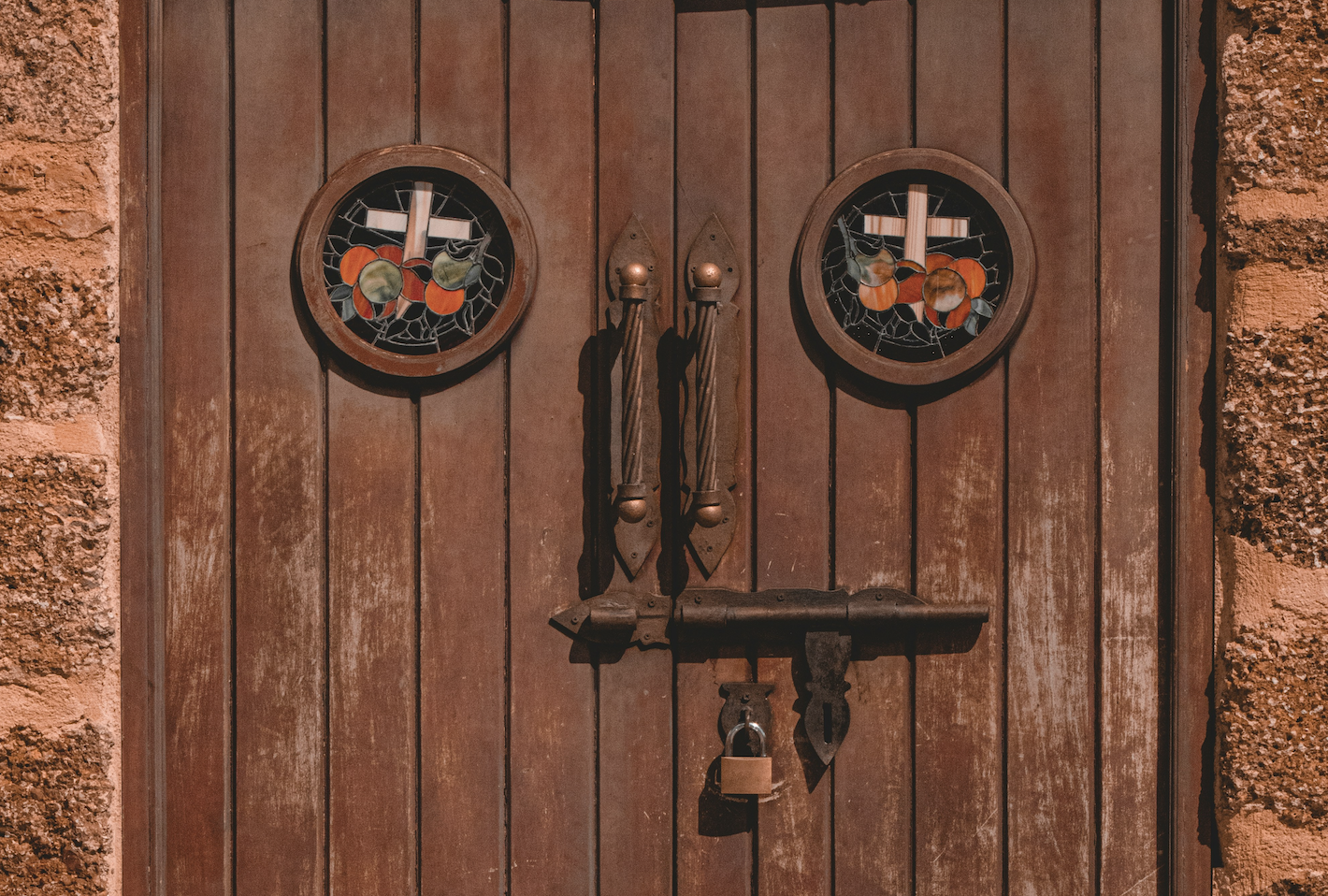
In 2023, The National Council of Churches (NCC) predicted that about 100,000 churches would close throughout the U.S. in coming years. Others estimate that as many as 15,000 churches could close their doors by next year.
Creative Commons
Experts tell us that the nature of collecting data on every church congregation in the country makes it difficult to verify numbers. What is clear, however, is that “Church,” as Americans have long known it, is changing.
Church Data and Numbers
There are an estimated 380,000 to 420,000 churches in the United States, spanning everything from grand cathedrals to small house gatherings. While megachurches and online services often capture the spotlight, it is the smaller congregations that anchor community life.
According to the latest Faith Communities Today (FACT) survey, which tracked trends from 2000 to 2020:
- 65 is the average size of a U.S. congregation
- 7 in 10 congregations draw 100 or fewer people to weekly services
- $120,000 was the median congregational income in 2019
But are 100,000 churches closing in America?
The NCC’s projection of 100,000 church closures has created concern amongst Christian communities. MinistryWatch reached out to the council to confirm the basis for this figure, but has not received a response. For a time, data has somewhat supported the projection.
Access to MinistryWatch content is free. However, we hope you will support our work with your prayers and financial gifts. To make a donation, click here.
In 2023, political scientist Ryan Burge estimated that nearly one-third of the country’s 350,000 Christian congregations were “on the brink of extinction,” and attributed a significant decline in Christianity to the acceleration of religious “nones.” His estimate reflected a possibility in agreement with NCC’s prediction.
But Burge, who writes the “Graphs About Religion” Substack, recently told MinistryWatch that he no longer thinks we will see 100,000 churches close any time soon, as the sharp decline now appears to be slowing.

Ryan Burge
In the past two years, he says, the share of Americans identifying as non-religious has leveled off, while the share identifying as Christian has stopped declining.
“Early signs of this appeared in 2023, but we now have stronger evidence. My view of the trajectory of Christianity’s decline has changed markedly over the last two years. I still believe there’s a decline happening,” he said. “Decline will happen in the future, but my best guess is that the rate of decline is slowing.”
But predicting church closures is nearly impossible, Burge said, “because the vast majority of denominations—and there’s over 400 Protestant denominations in America—I would estimate that less than 5% track that number in a consistent, methodologically rigorous way.”
According to Burge, the margin of error in projecting closures is so broad that any precise number is essentially meaningless.
Burge noted that estimates of church closures vary wildly—from 5,000 to 150,000 over two decades—because denominations rarely track them closely. New church plants complicate numbers, especially those of non-denominational churches, which often go unrecorded.
“Actually, I would venture to guess that most churches starting in America in the next five years will be completely non-denominational,” Burge said. “So I would never in a million years be able to estimate the number of churches that are starting to offset the number of churches that are closing. The margin of error on all these estimates is so large.”
The prospect of America’s churches—long central to the nation’s culture and community life—closing their doors is sobering for many Christians. Yet Thom Rainer, researcher and former Lifeway CEO, remains what he calls an “obnoxious optimist.”
Rainer told MinistryWatch that while he expects roughly 15,000 churches to close in 2025, he sees the figure as the final wave of COVID’s fallout, not the start of a new norm.

Thom Rainer
“The 15,000 closures projected for 2025 represent an anomaly—reflecting congregations that have hung on for years but are now, five years after COVID, finally unable to remain open,” he said. “While the number is unusually high, I don’t expect closures to remain at that level in future years.”
Both Rainer and Burge emphasize that while numbers can gauge church vitality, the deeper story lies in how churches are adapting and transforming.
Which churches are closing and why?
The sharpest losses are among denominational churches, although the downturn is not confined to any single faith tradition or region. From mainline Protestants to evangelicals, the pattern is consistent: attendance, membership, and financial contributions have been falling nationwide for years—a decline that began before the pandemic and shows little sign of reversing.
A Pew Research study released last February found that fewer Americans are tied to traditional church structures, leaving many congregations struggling to maintain themselves despite a steady desire for faith and community.
At the same time, aging congregations with fewer young members face dwindling attendance and financial support, while the high cost of maintaining historic urban buildings and sprawling rural properties often exceeds their capacity to sustain them.
Denominational churches are losing ground as Americans increasingly value personal relationships over institutional ties. The rise of non-denominational congregations, with their independence and local accountability, has left traditional churches struggling to compete.
In August, Burge shared a chart on his Substack showing that 11 denominations together lost 8.5 million members over the past decade. The Presbyterian Church (USA), for instance, has declined steadily for decades, weakened by an aging population and the fact that only about 55% of children raised in mainline traditions remain in the faith as adults. The Southern Baptist Convention, once a story of growth, has shed roughly 250,000 members annually over the last 15 to 20 years, a slide hastened by sex abuse scandals and political divisions.
The ‘silver tsunami’
Burge, who pastored a small-town Baptist church in Illinois for nearly 20 years, and his congregation shuttered its church doors just last year after its membership dwindled to fewer than 20.
Burge—who has both statistical and personal experience in this area—thinks the data indicates that the decline is far from over, primarily due to a forthcoming “silver tsunami.”
As baby boomers enter their 70s and 80s, the demographic shift will leave many congregations without the financial stability, volunteers, or members to sustain themselves.
Burge estimates it will take two decades before the “tsunami” crests. But when it does, churches are likely to be in a much worse position.
“In 20 years, just math that out,” he said. “Most of those people will not be around. How do you recover?”
The latest FACT study supports Burge’s view, highlighting a stark age imbalance across congregations. While only 17% of Americans are 65 or older, fully one-third of congregational participants fall into that age group. In a quarter of churches, seniors make up half or more of the attendees. An aging clergy—whose median age rose from 50 in 2000 to 57 in 2020—leaves many congregations led by older pastors with predominantly older members.
As congregations grow older, so do their sanctuaries. With fewer members to fill the pews or the offering plates, the burden of maintaining these structures falls on dwindling flocks ill-equipped to shoulder the staggering costs.
For many small, aging congregations, the weight of large, crumbling sanctuaries leaves only a handful of options: to sell, to redevelop, to repurpose—or to close their doors for good.
Executive Director of the UCC Church Building & Loan Fund (CBLFund), Patrick Duggan, told MinistryWatch that small urban congregations are often overwhelmed by their oversized, aging buildings, with zoning rules, preservation laws, and costly repairs making redevelopment financially daunting.

Dr. Patrick Duggan
Most lack the expertise or resources to manage projects that take years of planning and steady leadership, leading some into poorly understood deals with painful consequences.
The CBLFund currently assists 20 to 30 churches at a time, though demand far outstrips its capacity.
Older stone churches are among the most challenging to manage, according to Duggan, who has served as the fund’s executive director for 13 years. The buildings are typically oversized, outdated, and prohibitively expensive to maintain and repair. As a result, the small, aging congregations must decide whether to restore, repurpose, or demolish them, often under the constraints of historic preservation regulations.
Churches built after the 1970s are easier to renovate, but a property’s fate ultimately depends on its age, condition, and design. Furthermore, rural churches face parallel challenges: instead of crumbling stone sanctuaries, they often contend with vast, underused properties and dwindling memberships, as residents migrate toward more populated areas.
But beyond bricks and mortar, Duggan said the real challenge often lies with dwindling, aging congregations whose members may lack the energy to take on such demanding projects.
“What happens with a lot of churches that are in decline, they get down to so few members—and they’re sometimes very elderly—so they’re just tired,” he said.
Although there are some exceptions, Duggan said most congregants want help in figuring out how to move past their obstacles.
What happens to churches when they close?
Inwardly, the process of closing a church involves several steps. Board members, who are legally bound to act in the best interests of the congregation, must oversee every step with care—sometimes under the threat of personal liability if they are negligent.
Most churches are incorporated at the state level, and dissolving them requires filing the proper paperwork—often a certificate of dissolution—and providing documentation of the decision. Churches must also account for all debts, from bank loans to pension obligations for retired clergy, and close out payroll and financial accounts. Federal tax authorities also expect notice and may request supporting financial records.
Then there is the question of property: bylaws and incorporation documents often dictate where assets must go, sometimes requiring that land and buildings revert to the denomination.
Regardless of the circumstances, proceeds cannot personally benefit board members. Even after the final service, leaders must secure confidential and corporate records, maintaining them for years to prove the responsible party handled the closure properly.
Some church closings turn out to be an unexpected blessing to their communities. For example, one century-old church congregation made headlines when it used its IRS-mandated funds to bless over 75 charities by donating the proceeds from the sale of its building, amounting to $1.5 million.
The cost of closing
But when churches close, communities often lose much more than a place of worship. Many congregations serve as hubs for AA meetings, food pantries, after-school programs, polling sites, health clinics, and other vital services. These services, often provided at little or no cost, vanish when the church doors shut, leaving a gap in civic life and social support that other institutions rarely fill.
Whatever route a congregation chooses to take, Duggan says, what happens to a church building once it closes matters.
“Take a church that’s 100 years old—there are plenty of them. For a century, it has advanced mission, raised property values in its community, increased safety, and lowered crime,” he says.
Studies of the halo effect, popularized by Partners for Sacred Places, have proven repeatedly that the presence of a faith-based institution lifts a community, even for those who never set foot inside.
“Why would we want that to stop?” Duggan added. “So yes, it matters: it matters because it allows us to continue advancing the mission of the church in new ways. Even if the property is no longer used as a church building, we can still use it to advance our values—and that’s how we approach the marketplace.”
He suggests that selling all its property often isn’t in the church’s best interest. Over the past decade, they have faced a growing urgency regarding the use of their properties. Only now are many denominations beginning to develop strategies in response to this challenge. There are multiple alternatives to just “shutting down” if congregations act early enough.
Reimagining What Church Looks Like
Mark Elsdon, author of “We Aren’t Broke” and editor of “Gone for Good,” told MinistryWatch the challenges facing churches may be less about collapse than about cultural change. He likened the shift to how people rapidly changed how they watched movies in the early 2000s—leaving Blockbuster behind when it failed to adjust.
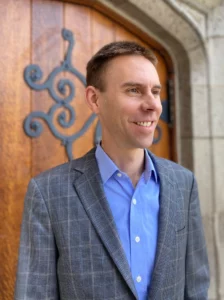
Mark Elsdon
This isn’t about redefining church as Jesus established it—this is about churches reimagining the use of its assets and facilities to fulfill Christ’s mission. Does it need the same level of overhead, real estate, and facilities?
While people still crave meaning and community, they no longer engage in the same traditional ways. The question, he said, is how churches will adapt and intentionally foster connection in an age drifting toward isolation and monetization.
Elsdon told MinistryWatch that the driver for a successful project is clarity about the mission, including the why and how, before getting into the what. “Why does a congregation, or if it’s a closed church, why does a community want to make this change? What impact do they want to have in their neighborhood and community?”
He added that “too often” leaders dive straight into real estate questions—such as renting, selling, developing, finances, and zoning. “All of which are important eventually, but the good projects always begin with a deep sense of why and the impact they want to have.”
Once leaders redirect their focus from their problems to their “why,” they frequently find themselves reimagining both their role and their impact in the neighborhood. Across the country, dwindling congregations are finding new life by reimagining their buildings not as burdens, but as catalysts for community renewal.
In Louisville, Kentucky, Duggan and his team helped shepherd a nearly 120-year-old church with fewer than 50 members and a crumbling $10-million sanctuary, which sparked a major redevelopment that now anchors its long-neglected neighborhood. The congregation launched an $8-million, 30,000-square-foot center housing a bank, a health clinic, a daycare, a business incubator, and nonprofit offices—creating nearly 200 jobs, producing a steady income for the church, and laying the groundwork for restoring the historic sanctuary.
Elsdon told MinistryWatch that he is working on a project in Madison, Wisconsin, where two small churches merged and sold one property, which has now been converted into the city’s most environmentally sustainable apartment building: a passive house–certified development on a former church site. On another site, they are preparing to break ground on a new community center where the aging church, burdened with millions in deferred maintenance, will be demolished and replaced with a facility shared by the congregation and roughly 30 community organizations, alongside 26 units of workforce housing.
For those who find a total transformation overwhelming, they can consider sharing unused space on their property. For example, in San Antonio, Sunset Ridge Church of Christ converted its unused “junk room” into a revenue stream of $650 a month after leasing it to NYX Wellness for yoga classes. The church’s commercial-grade kitchen rents to food entrepreneurs at $400 per user each month, while a coworking space offers remote workers unlimited access for $75 per month. The church has moved on to create the Sunset Ridge Collective, an effort to fill community gaps and opportunities.
“Right now is a time of tremendous opportunity,” said Duggan, who added that many nonprofits are paralyzed by uncertainty, which is creating spaces for churches to act.
Duggan said his fund is raising more than $100 million for 15 or 16 projects slated to break ground in the next three years, including 1,100 units of affordable housing and a recent school expansion in one of the nation’s poorest communities.
He also added that following California’s passing of its 2022 “Yes in God’s Backyard” legislation, which streamlined approvals for affordable housing on faith-owned land, a funder asked Duggan’s team to survey demand. “In the past six months, our surveys identified 39 churches interested in pursuing affordable housing projects—and that’s just in a handful of cities, not the whole state. There are many churches ready to move forward. Our job now is to raise the capital and get it done, and that’s exactly what we intend to do.”
Although not every site is suitable for housing, and some churches will face neighborhood opposition or legal challenges, momentum is building. States from Washington to Maryland have passed “by-right” zoning laws, allowing churches to pursue affordable housing projects without city council approval. Cities like Seattle, San Diego, Atlanta, and Charlotte are experimenting with their own support programs. The push, notably, has drawn bipartisan interest.
While policy shifts open the door for new uses of church property, congregations remain well-positioned to bring neighbors together and strengthen community life. A recent survey of more than 500 rural community members by the Trust for Civic Life reveals that, while Americans may be polarized on the national level, trust remains significantly stronger at the local level.
Furthermore, the findings of a Gallup study released in July indicate that Americans’ confidence in the church is recovering after hitting historic lows.
Even as sanctuaries close, churches are learning to reimagine themselves not just as places of worship, but as engines of community life.
Duggan noted that while the 100,000 projection captures the scale of the challenge, he doubts the number is precise. “Some churches hang on with just a handful of members, defying expectations for years. Closures will happen, but they may be slower—or in some places, even greater—than predicted,” he said.
“What matters is how we respond. Denominations and leaders like us are learning to preserve the mission behind these properties, even if the buildings close. Twenty years from now, we’ll see new models of church emerge alongside remarkable redevelopment projects. Closing, after all, isn’t always a bad thing.
“It can be the beginning of something new.”
TO OUR READERS: The mission of MinistryWatch is to help Christian donors become more faithful stewards of the resources God has entrusted to them. Do you know of a story that will help us fulfill our mission, or do you want to give us feedback about this or any other story? If so, please email us at [email protected].