Churches and Ministries Were Vital to Helene Recovery
TN community turns to small-town church to organize large-scale help

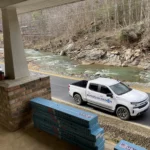
Last year, on the final Thursday and Friday of September, Hurricane Helene tore through several southern states. East Tennessee and Western North Carolina suffered flooding they had never seen before. By Saturday afternoon, the scale of Hurricane Helene’s destruction was clear. News stations had reported on the flooded Unicoi County Hospital, where helicopters airlifted patients and nurses from the roof.
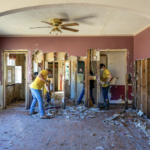
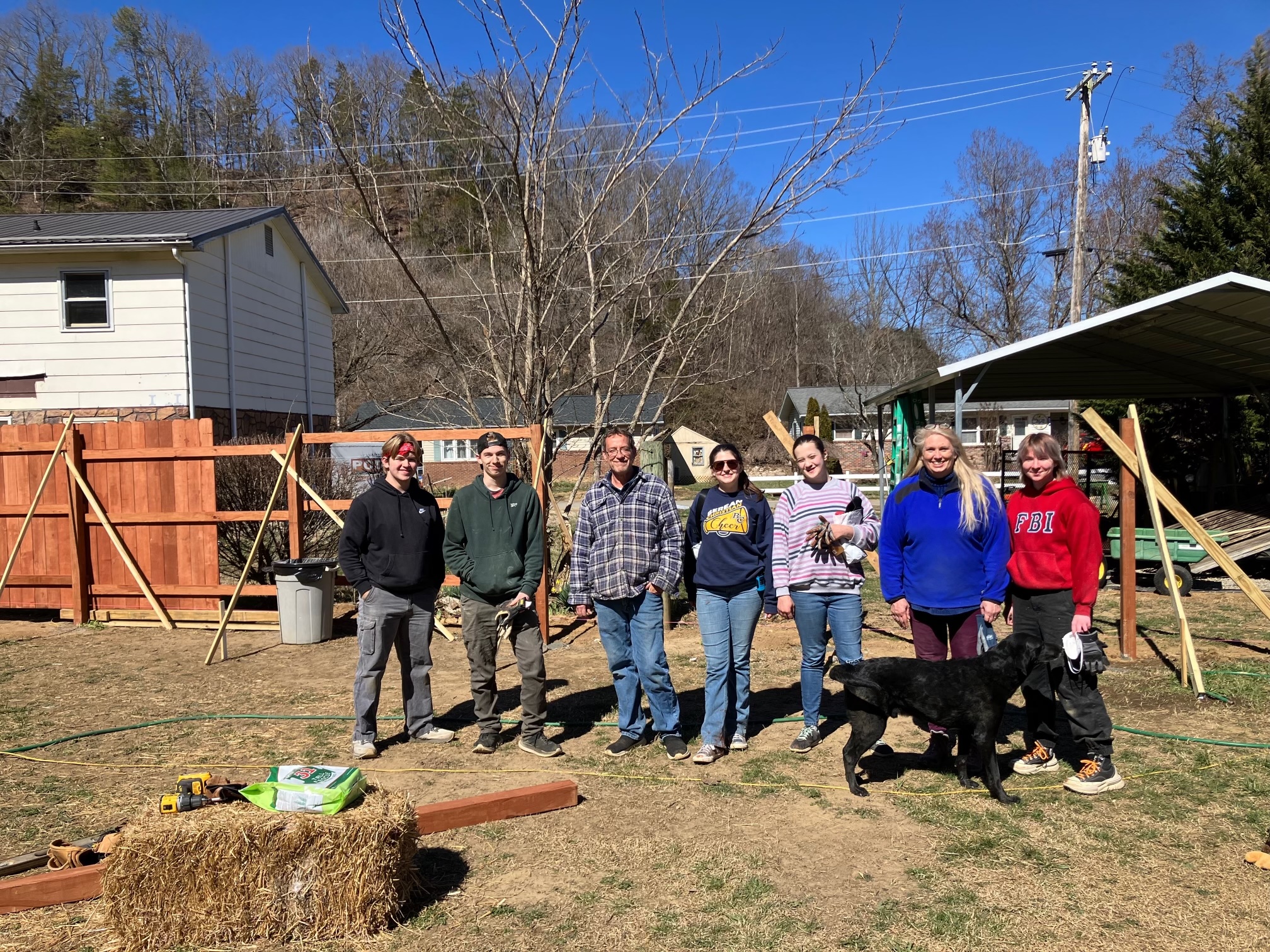
A youth group worked at house in Carter County. At night, they slept at Harmony Free Will Baptist Church / Photo courtesy of Quana Roberts
The storm, a Category 4 hurricane with 140-mph winds and torrential rains, claimed 250 lives and destroyed homes.
What came next was encouraging: a flood of donations and volunteers. But that created a challenge for the relief effort. Who organizes all that help?
Another challenge presented itself in some of the Appalachian towns with a history of distrusting the federal government. People questioned FEMA and other large disaster relief organizations.
Natural disasters are getting worse and happening more often. The National Centers for Environmental Information reported five billion-dollar disaster events in the U.S. in 2000; in 2024, that number was 27. The challenges of disaster relief don’t appear to be going away.
In the devastating aftermath of Helene, churches proved to be crucial in handling these difficulties, organizing the flood of generosity, and acting as a hub of trust between community members and the volunteers, donors, and agencies that could assist after the disaster.
Churches Connected Resources to Needs
Quana Roberts and her family go to Harmony Free Will Baptist Church in Hampton. It’s a small town on the way up to Roan Mountain, Tenn., and the Doe River runs right through the middle.
When the flood hit, Roberts got a call from the lead pastor asking if she’d call around to other members to see who could help. She soon discovered that Harmony’s members needed assistance themselves.
Access to MinistryWatch content is free. However, we hope you will support our work with your prayers and financial gifts. To make a donation, click here.
“Okay, this is not going how you wanted it,” Roberts told her pastor. “I’m not asking them to go volunteer, because they’re so overwhelmed themselves, and I’m starting a list of what people in the church need.”
The pastor agreed, and Roberts started coordinating resources. Their first mission was a member living across the mountain in North Carolina. His water came from a well, and trees had fallen across it.
It just so happened that a volunteer crew had showed up at Harmony with chainsaws looking to help. Roberts sent that crew and Harmony volunteers to the man’s house, and they cleared out his water supply.
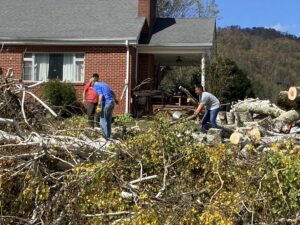
Volunteers from Castle Ministries travelled from Strawberry Plains, Tenn., and helped clear out large tree
Roberts was frequently startled by how timely help arrived. Early on, she got a call from a Colorado truck driver who was going to bring a truck load of frozen food. Harmony posted an invitation on social media , and by 10 a.m., there was a line of cars waiting to pick up much-needed food. They waited, and the truck never showed.
But then a U-Haul arrived, full of supplies. People drove around the church and picked up food like a drive through line.
“God knew exactly what those people needed,” Roberts said. “We didn’t know they were coming, and they show up in the parking lot.”
People Saw the Church as Trustworthy
Roberts said many people in the county didn’t trust larger recovery organizations, like FEMA or even Samaritan’s Purse.
She thinks residents trusted Harmony partly because they are a church of people trying to live like Jesus.
“Even if they are not a Christian, they will more likely trust a church,” said Roberts. “Because they know that that church is doing the best they can to live like Christ.”
A volunteer giving out supplies at Harmony Free Will Baptist Church
But she also thinks it’s because of an annual Back to School Bash they started 15 years ago. The program provides school supplies to students.
For years families would come to the church, have a good time, and receive help from volunteers. They come to pick up school supplies and enjoy carnival activities. There are goats and games and dunk tanks. When it came time to ask for help after a hurricane, they came to Harmony.
Churches Pointed Generous Volunteers to Where They Were Needed
After the first couple weeks, Carter County residents continued calling Roberts. Each time, she added the request to her list. Volunteers showed up from out of town, some from out of state.
“I don’t even know how they get my number,” Roberts said. “And so, 8 o’clock at night, my phone rings and it says Michigan on it. I don’t know a person in Michigan. ‘Hey, we’d like to come down and volunteer.’ They were here within a week.”
About 12 people with experience in skilled labor showed up and worked on homes. Harmony would give them an address and they would fix the plumbing or the electricity.
Early on, a woman drove from Chattanooga. Debbie Morrison had construction experience and wanted to help. She and her husband got a camper and stayed for over six months. Roberts introduced her to homeowners, and Morrison coordinated the actual construction work.
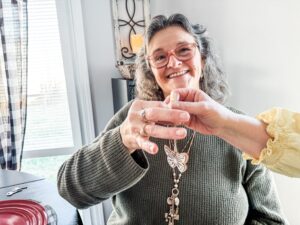
Kim Hughes volunteered at church in Roan Mountain, Tenn., for months while coming home to no water, no septic, and mold. Finally she told someone her trailer had been damaged, and Harmony helped her get this new trailer, decorated by Donna Wisong.
A friend of Roberts, Donna Wisong, decorated houses after they were built—to make it feel homey. Wisong lives in Washington County, Tenn., but she made the trip each time a house needed furnished. The three of them—Roberts, Morrison, and Wisong—called themselves The Three Musketeers.
Volunteers from all over wanted to help out. Roberts would connect them to Morrison who got them set up with a project at a house. They often slept in the Harmony fellowship hall. Crews were still showing up in March.
Depending on a Dwindling Population
Harmony Free Will completed around 25 small projects and three full rebuilds. All of this was funnelled through Quana Roberts’ cell phone. Roberts and the church were a hub of trust, resources and volunteers for the Hampton community.
Churches and faith-based nonprofits fill this role across the country. One report shows that 40% of the social safety net is provided by faith-inspired nonprofits.
But faith institutions have an aging membership. Bob Smietana, in his book Reorganized Religion, discusses how declining religious affiliation affects the country’s infrastructure of disaster care. He talked to Dave Odom, executive director of Leadership Education at Duke Divinity School.
“Civil society is still running on the assumption that what existed in the twentieth century will continue,” Odom told him. “There is a question about whether the kind of structures that we built up in the twentieth century are actually sustainable.”
Many people have written on the decline of church membership. There are many theories about what gets more people into pews and how to keep them there. I’ll just tell you what my experience has been.
For me, becoming part of a church’s practices preceded certainty in all of its beliefs. Participating in shared work—like disaster care—and sharing meals and conversations together created rhythms that intertwined my life with the life of the Body of Christ.
TO OUR READERS: The mission of MinistryWatch is to help Christian donors become more faithful stewards of the resources God has entrusted to them. Do you know of a story that will help us fulfill our mission, or do you want to give us feedback about this or any other story? If so, please email us at [email protected].