

The Risk of One Trusted Insider
Lessons from the Swedish Church of New York Case that Lost $3.8 Million

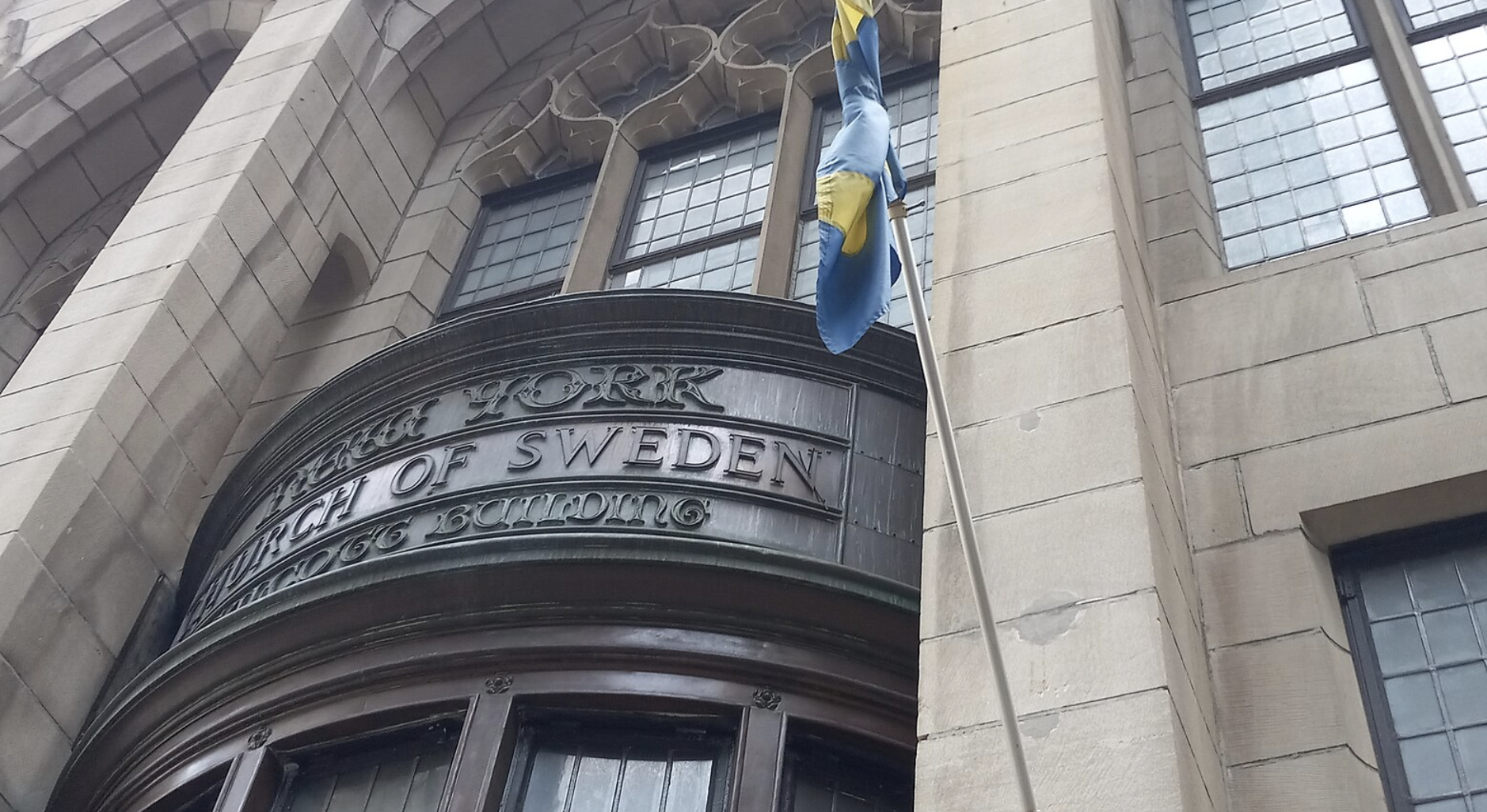
Earlier this month, authorities arrested New York financial advisor Olof Olsson for allegedly orchestrating a years-long fraud scheme that siphoned more than $3.8 million from the Swedish Church of New York. There, he served as a board member, financial advisor, and even a baker.

Swedish Church of New York / Wikimedia / Creative Commons
According to New York Attorney General Letitia James, as a licensed securities broker, the church entrusted Olsson with safeguarding the church’s donations and bequests. But Olsson diverted the Swedish Church’s donations into a secret bank account he opened in the church’s name, but one he exclusively controlled. He then allegedly concealed the theft by fabricating financial statements that led board members to believe the church’s finances were stable.
Authorities say the scheme ran for roughly six years (2018 to 2025) before the New York Attorney General’s office uncovered it. They accuse Olsson of using the stolen funds for personal expenses, including everyday costs such as groceries, as well as for supporting a failed business venture.
Olsson now faces a 24-count indictment, including charges of grand larceny and falsifying business records, and could face up to 25 years in prison if convicted.
Cases like the Swedish Church’s nearly $4 million loss illustrate a pattern that MinistryWatch has repeatedly documented: trusted insiders with excessive financial access and insufficient independent verification. MinistryWatch has long vouched for stronger accountability and transparency in Christian ministries, including through its broader case for accountability, its release of “Faith-Based Fraud,” and reporting on how frequently churches face embezzlement risk. In February, MinistryWatch reported on a North Dakota church case that highlighted a familiar pattern: unchecked access to church finances can lead to extraordinary losses.
MinistryWatch’s past reporting has encouraged basic protections like segregation of duties, board oversight, audits, and internal controls. But the allegations involving the Swedish Church extend beyond these baseline measures, particularly where a single individual can shape both the flow of funds and the reporting around them.
Here, we have added additional safeguards that churches and ministries can consider beyond basic protections:
Independent visibility matters
Prosecutors claim Olsson’s scheme relied in part on fabricated financial statements: board members reviewed information filtered through Olsson, who was later accused of misusing funds. To strengthen understanding of how those responsible are stewarding funds, Church Law & Tax suggests leaders consider the value of strong finance and audit subcommittees with specific responsibilities, with oversight extending beyond internal reports. Furthermore, direct, independent visibility into bank and investment accounts (at least at the board level) is another added step to ensure leaders can verify financial reporting at any given time.
Independent visibility is one critical safeguard, but it works best alongside others—shared control, system-level enforcement, proactive review, and a culture that expects accountability.
Control should be shared—and periodically shifted
When a single individual controls payments, records, and reporting for an extended period, irregularities become easier to conceal. While segregation of duties addresses this at a basic level, the General Council on Finance and Administration says rotating financial responsibilities over time adds another layer, reducing the likelihood that someone can easily hide anomalies or discrepancies for an extended period.
Systems should enforce controls beyond policies
Written procedures are only as effective as their enforcement. The ECFA stresses the importance of controls embedded in systems, such as dual authorization for transactions and restricted permissions within banking platforms. Olsson’s reported use of an undisclosed account reminds leaders to establish and enforce clear rules governing who can open accounts, under what authority, and with whose review—and strengthening accountability by signing up to receive alerts or updates when someone makes changes.
Oversight should be both routine and unpredictable
A MinistryWatch report from 2020 showed that nonprofits are far less likely to use surprise audits or proactive reviews, leaving a window for fraud to go undetected. While traditional audits play an important role, they are periodic and often predictable. In contrast, targeted, irregular reviews (such as spot-checking transactions or independently verifying vendors) can surface issues that routine processes miss, particularly in long-running schemes.
Culture shapes whether controls work
Terisa Clark, a CPA advising nonprofits, points to “tone at the top” as the foundation of effective internal controls. MinistryWatch’s reporting on church fraud cases has made similar points: MinistryWatch’s recent coverage of ECFA’s new leader-care standard demonstrates how leadership isolation, burnout, and weak oversight can erode leadership expectations, creating the very conditions in which a single individual can operate without proper accountability. Furthermore, MinistryWatch has compiled resources to help leaders guard against burnout and ensure strong, accountable leadership at the top.
As for Olsson, he is due to appear in the New York Supreme Criminal Court on July 15.
MinistryWatch reached out to the Swedish Church of New York to ask about their lessons learned in the process. We have not heard back at this time.
TO OUR READERS: The mission of MinistryWatch is to help Christian donors become more faithful stewards of the resources God has entrusted to them. Do you know of a story that will help us fulfill our mission, or do you want to give us feedback about this or any other story? If so, please email us at [email protected].
Access to MinistryWatch content is free. However, we hope you will support our work with your prayers and financial gifts. To make a donation, click here.