
The Jesus Film Project Doubles Digital Strategies Spending
Over past 10 years, the media missions’ nonprofit operating budget grew by over $40 million


The Jesus Film was first released in theaters in October 1979. Filmed in Israel and based on the Gospel of Luke, the movie was a blockbuster flop. It failed to make entertainment history, but it has made history of another kind. Recognizing the film’s potential as an evangelistic tool, The Jesus Film Project was officially launched in 1985 and has overseen the translation of the film into more than 2,200 languages. In the past 46 years, the nonprofit says the film has been viewed in more than 220 countries and territories throughout the world, making it one of the most widely viewed films ever.

Photo from new animated Jesus movie via Jesus.au / The Jesus Film Project
Now, the Jesus Film Project (JFP) is taking on a new megaproject—an animated version of the “Jesus” film. It’s investing $150 million into the project, according to its website. It is an indication of a wider shift within JFP — a ministry of Cru — away from in-person, global interactions and toward digital accessibility.
“I would say that over the last 10 years we’ve made significant investments in digital, because that’s where we can see the world going,” JFP Executive Director Joshua Newell told MinistryWatch.
Christian media projects are getting a lot of attention — from “David” to “The King of Kings” to “Unbreakable Boy.” Some call it a boom in Christian film. But the Jesus Film exists in a slightly different ecosystem than media like “David” or “The Chosen.” It’s used primarily for the purpose of evangelizing to non-Christians overseas, often in places that don’t speak English. The competition isn’t Angel Studios; the competition is missions organizations.
Access to MinistryWatch content is free. However, we hope you will support our work with your prayers and financial gifts. To make a donation, click here.
The JFP website includes a quote from former megachurch pastor Rick Warren calling the film the “most effective evangelistic tool ever invented.” But over the years, JFP has received criticism for its lack of cultural context and the need for in-person explanations to accomplish effective evangelism. JFP intends to address those needs, perhaps counterintuitively, with various digital strategies.
Since 1980, JFP has translated its central film into more than 2,200 languages. The Jesus Film Project has been around for decades with steady growth, but over the last 10 years its operating budget has doubled: from $42,976,000 in 2015 to $87,927,000 in 2024.
“With 70% of the world not being able to speak English, there is a huge opportunity for the gospel to spread to unreached places,” according to the JFP website. “We have a vision to make it easier to watch, download and share Christian videos with people in their native heart language.”
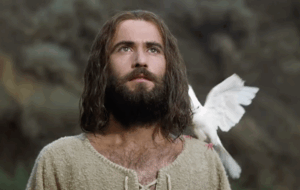
Video screenshot from The Jesus Film trailer
Between 2022 and 2024, spending on “Digital Strategies” went from $10.5 million to $23.8 million. The “Digital Strategies” funding area “creates and manages online engagement using films, video and other media.”
Newell said a large part of this increase is the animated film project — which is largely motivated by the increased popularity of animated content among young people — and that it reflects a general shift in focus for the nonprofit toward digital media.
The $150 million animated film project is one of those endeavors. When JFP first had the idea, their market research found that over 50 Bible or Jesus-related animated films were on the slate for production by 2025. Not all of those came to fruition—but even if they had, said Newell, their thought was it’s better to have more, rather than less, Jesus films.
JFP chose to forge ahead, convinced the project fit well into the nonprofit’s mission and their desire to “put Jesus in the hands of the Body of Christ in every language” — even if other companies were pursuing similar animated projects.
“Our job isn’t to make a blockbuster,” he said. “So we don’t judge results by how many tickets are sold on opening day. We judge results from life change… It’s a different paradigm that led us to continue to think about doing this. Otherwise I don’t think we would’ve made it.”
Colin Yuckman, senior director of Digital Learning Formation at Duke Divinity School, focuses his research on missiology and has published a paper analyzing the Jesus Film within the broader context of missions.
Yuckman sees limitations. The words of the film are translated, but the visuals aren’t. For years, the same film was shown in many countries—which Yuckman sees as a weakness.
“Different cultures and languages think about visual cues and clues differently,” he told MinistryWatch. “They may have different taboos around visual signs. Everything from the way certain clothes are depicted to head gear to the use of the right hand versus the left hand.”
Newell said he acknowledges the cultural critique as valid and points to more recent projects — like the “Walking With Jesus” series — that aim to contextualize the Gospel in other cultures.
Yuckman thinks the Jesus Film Project can be helpful for missions but that in-person interaction makes it more effective. Like gas that gets a rocket off the ground, he said, the film works well at the beginning. But without moving to contextualization and discipleship, a person could adopt disembodied ideas about the faith, he said. The film is a starting point. Yuckman said JFP has always seemed to recognize that.
JFP, Newell said, has tried to innovate as technology has advanced — from film to DVDs to streaming. But along the way, he said, embodiment and mediation have always been challenges. Often, on-the-ground JFP staff have facilitated in-person relationships.
“I’ve been in so many Jesus Film showings around the world where people stop the movie in the middle of it and take time to explain what it is that’s on the screen,” Newell said. “That’s a vital part of it.”
However, JFP has decreased its funding for in-person interactions in recent years. Two funding areas, “Global Mobilization” and “Global Expansion,” go towards direct field ministries. Between 2022 and 2024, combined spending on those fell from about $17.5 million to about $10.5 million. Newell said this spending shift partly represents typical fluctuations in equipment, travel, and supply chain costs but that they have, in fact, shifted their focus to digital accessibility.
“We do our best to stay innovative,” Newell said. “That means, these days, investing in digital so that real people can have access to digital tools to make an impact with the people that they are trying to reach.”
The nonprofit takes a blended approach to missions. Newell doesn’t think the focus on digital media compromises the relational aspects of JFP’s ministry.
“If you’re just talking truly digital, and everything is dis-intermediated, then certainly something is lost, but we see digital as a way to equip partners,” Newell said. “The blended approach really helps accelerate and create deeper connection.”
In the past, 200 people may have attended a film showing, Newell said, and that was the end of the interaction. Now they can use a digital tool to follow up with all 200 people after a showing.
“I think [the Jesus Film] can still potentially be effective,” Yuckman said. “I’m not distraught over conversions. If there are conversions as a result of this, hallelujah. I want to celebrate that.”
Newell said that JFP is comfortable with the fact that they are putting the message out there for people to discover and that it’s not the end of the process.
“The Holy Spirit is guiding and directing people both to and with the story of Jesus,” he said. “That goes well beyond the visual images or the particular media that they see. They’re having an encounter with the living God.”
TO OUR READERS: The mission of MinistryWatch is to help Christian donors become more faithful stewards of the resources God has entrusted to them. Do you know of a story that will help us fulfill our mission, or do you want to give us feedback about this or any other story? If so, please email us at [email protected].