

The Day I Stopped Looking to Washington for Salvation

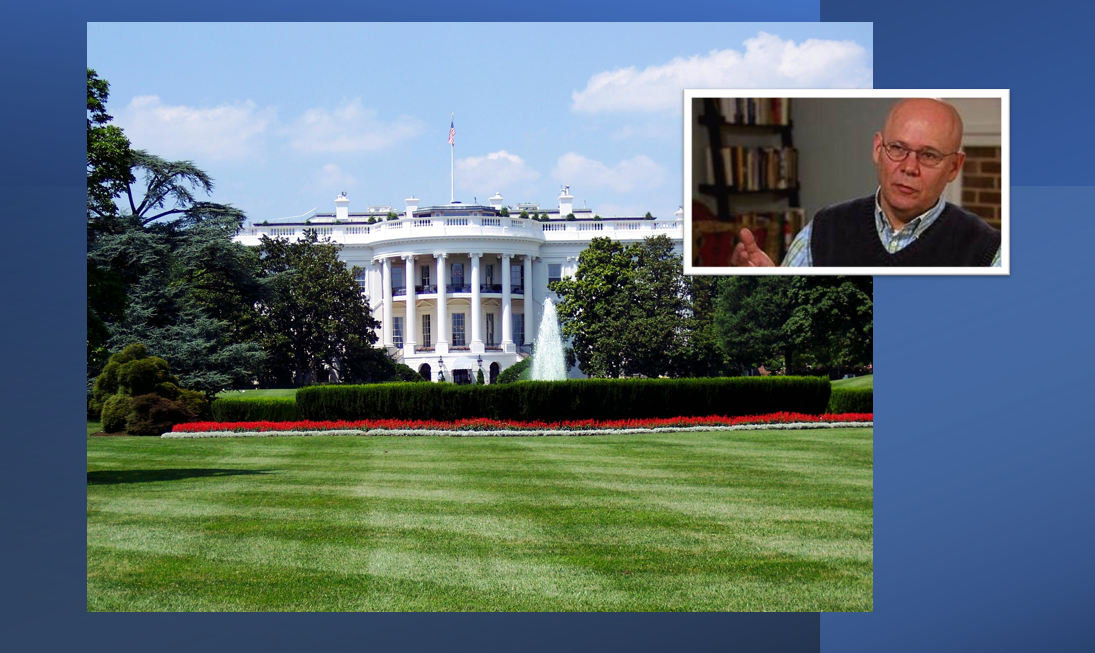
Recent federal cuts to the Corporation for Public Broadcasting, to USAID, to the Department of Education, and to other government agencies and NGO have caused much discussion and – in some quarters – great fear. 
Some of these cuts have been unnecessarily chaotic and disruptive. But I am, in general, in favor of them. There was a time in my life I would not have been, and I can pinpoint to the day my position changed.
It was the fall of 1981. The United States was coming out of a recession. Ronald Reagan had been president since January. Among his first acts in the White House had been to dramatically cut spending for social programs, cuts not unlike those we are seeing today.
And the woman sitting next to me on an airplane was not happy about it.
I was sitting on the aisle, and she had the window. She worked for an organization called Camp Fire Girls, now called Camp Fire, and she could not stand Ronald Reagan. I wanted to know why. She described an after-school program she ran that served hundreds of poor children. I remember thinking then that it sounded like a worthwhile endeavor. The program received about $100,000, almost its entire budget, from the federal government. Reagan had eliminated that funding.
In 1981 I was a young man whose thinking was in a state of transition. In 1976 I voted for Jimmy Carter, but in 1980 I pulled the lever for Reagan. I still liked Carter but thought he was incompetent regarding economic matters. My concerns were urgent and personal. I graduated from college in 1980, during the Carter Recession. I then spent more than a year in a series of part-time and temporary jobs, all the while looking for full-time employment. The plane trip that landed me next to this Camp Fire Girl executive was one of the first adult business trips I had ever taken after finally getting a “real” job.
Though I voted for Reagan, I was not a conscious part of the “Reagan Revolution.” Rather—like many who voted for Barack Obama in 2008—I was hoping for change.
So, when this Camp Fire Girl leader started railing against Reagan, I offered no defense. “That’s terrible,” I said. “Sorry that program got eliminated. What do you do now?”
“Oh,” she said. “I still run the program.”
I was confused. “I thought you said Reagan eliminated the program,” I said.
Access to MinistryWatch content is free. However, we hope you will support our work with your prayers and financial gifts. To make a donation, click here.
“We weren’t going to give him the satisfaction,” she said defiantly. “So, we started raising money.”
She described how local businesses pitched in. Plus, lots of individuals. They held fund-raisers. They even asked the parents whose daughters participated in the program to pay a little, to give them a stake in the process, and a sense of accomplishment.
As she told this story, I could hear the excitement and pride rising in her voice. She said the after-school program now had a budget of almost $250,000, more twice what the federal government had cut. It was serving more girls than ever. In fact, she said she was on her way to speak at a conference to discuss the program’s success.
“Well,” I said, emboldened by her story to make a feeble defense, “it sounds like Ronald Reagan was the best thing that ever happened to that program.”
She became indignant, pointing out how many more students they could be serving with the government money plus all this new money.
“Yes, but would you have gone after the new money if you didn’t have to?” I asked. “Didn’t those cuts provide motivation?”
“We were planning to start raising money anyway,” she affirmed. “Those cuts had nothing to do with it.”
I was unconvinced. I grew up in the South, where rural wisdom teaches that “fixin’ to do something” and actually doing it are two different things.
Today I am more convinced than ever that Reagan’s cuts had much to do with that woman and her colleagues finding the motivation to go out and find the money. But more than that, those cuts—and what happened next—gave all involved in the process a sense of dignity, empowerment, and self-determination. I could clearly hear it in this woman’s story and in the very tone of her voice, though — ironically — she could not.
Over the years I have often thought about this chance encounter on an airplane. Today I consider that meeting as the day I became a fiscal conservative. It was the day I stopped looking to Washington to solve our problem. Years later, I heard Chuck Colson say it this way: “Salvation will not come on Air Force One.” It was the moment I stopped being enthralled with what philosopher Jacques Ellul called “The Political Illusion,” the illusion that all problems are political, and all solutions must therefore come be political.
That day has informed my work since. It now informs the work we do here at MinistryWatch. It was the day I discovered that economics is not just about math. It is about motivation. Debits, credits, ledgers, and spreadsheets matter, but so do determination, motivation, and leadership. It was the day I learned that not all help is helpful. It was the day I learned that charity must not be merely transactional, but transformational – or it must at least create that possibility. Sound, moral economic policy must take the foibles and folly of a fallen human nature into account. It must have human dignity—an understanding that we are all made in the image of God—as its goal. It took me years to be able to describe that lesson in this way, but I am convinced that it was on that day in 1981 that I first learned it.
All these years later, I have no idea where that Camp Fire Girl is, but if I did, I might ask her to sit around the campfire with me and eat a s’more (if they still do that sort of thing) so I could shake her hand and say, “thank you.”
EDITOR’S NOTE: This article is a revised version of one originally published by WORLD in 2012.