

Son of Daystar TV Hosts Sued for Abuse Following His Arrest
The incarcerated youth pastor is the son of Gary and Drenda Keesee

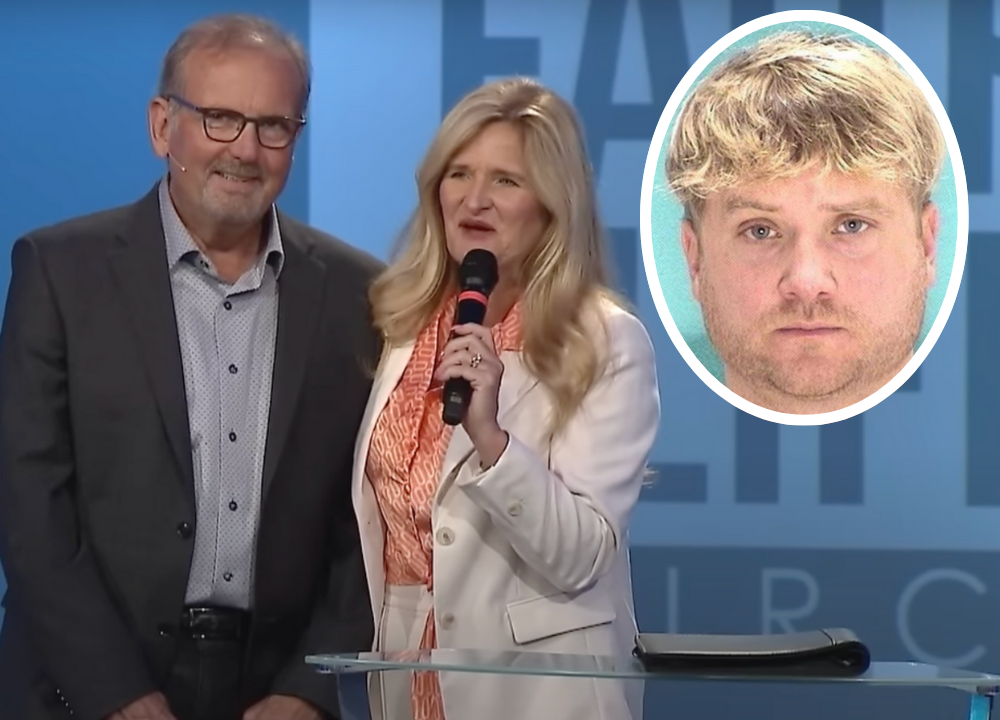
A 29-year-old woman has filed a civil suit against an Ohio megachurch’s former youth pastor, alleging he sexually abused her when she was 5. Police arrested the man earlier this year in connection with the case.

Gary and Drenda Keesee, Video screenshot / Insert, mugshot of Tom Keesee
In a civil lawsuit filed against former Faith Life Church youth pastor Gary Thomas “Tom” Keesee Jr., a woman identified as “O.W.” says Tom Keesee, 36, raped and sexually abused her from the time she was 5 years old until she was around 16.
Tom Keesee is the son of founding pastors of Faith Life Church and Daystar TV hosts Gary and Drenda Keesee. The lawsuit names the couple and the church as additional defendants alongside Tom Keesee, alleging they failed to report multiple claims of sexual abuse involving minor girls.
In April, an Ohio grand jury indicted Tom Keesee on 27 counts related to sexually abusing minors, including his own younger sister. Out of the 27 charges, 11 counts are of first-degree felony rape and third-degree felony gross sexual imposition. The crimes allegedly took place between May 2002 and October 2011.
The indictment followed an investigation that included around 40 witness interviews, some of which included current and former members of Faith Life Church.
When Tom was arrested in April 2025, several people came forward saying church leaders and parents had ignored them when they had tried to express concerns.
In a livestream interview hosted by Laura-Lynn Tyler Thompson, three women—Connie, Emily, and Nicole—spoke publicly about the allegations against Tom Keesee and cover-up at Faith Life.
Connie recounted a time she raised concerns about late-night communications between Tom and a 16-year-old, but claimed leaders leveraged her husband’s job to keep her quiet.
Access to MinistryWatch content is free. However, we hope you will support our work with your prayers and financial gifts. To make a donation, click here.
Emily, a former youth group member and church audio technician, said Faith Life fostered a culture of control and silence. Emily also claimed the church minimized abuse concerns and punished questioning leadership. She and others said people widely suspected Tom’s inappropriate behavior with underage girls for years, and that senior leaders—including his parents and brother—were aware but failed to intervene.
The women also noted the couple’s power and influence in their town of New Albany, Ohio, highlighting Drenda Keesee’s role as a Knox County commissioner. MinistryWatch previously reported that the investigation initially stalled when the Knox County Sheriff’s Office declined to investigate due to a conflict of interest. The sheriff’s office eventually passed the case to Ohio Attorney General Dave Yost, who also recused himself, citing a friendship with Drenda Keesee.
The matter was ultimately referred to Licking County authorities.
A law firm representing Faith Life Church shared an earlier statement to 10TV on the church’s behalf saying the alleged incidents occurred “approximately two decades ago that in no way involved Faith Life Church.” The church claimed in the statement that they responded in accordance with the information available to them at the time and will remain committed to transparency and truth.
In the suit, the woman is seeking judgment, plus punitive damages totalling at least $25,000.
Tom Keesee has remained in custody since his arrest and is awaiting a jury trial scheduled for November 18.
EDITOR’S NOTE: MinistryWatch exists to help donors become more effective stewards of the resources God has entrusted to them. So, why does MinistryWatch report on sex crimes? These stories are tough to read and sometimes even tougher to report, but we think they are vital to our mission to bring transparency, accountability, and credibility to the evangelical church. Donors who are supporting these ministries need to know this information. Ministry leaders and others can learn lessons from these stories. Victims feel supported. To read more about why and how we report these stories, read “Why MinistryWatch Reports On Sex Crimes.”
Another reason we report on sex crimes is to highlight for ministry and church leaders the importance of employing best practices for hiring and supervising employees in Christian environments.
Below is a list of best practices, curated from content on ministrywatch.com. These are adapted from discussions on Christian ministries, churches, and Christian educational institutions.
Clarifying Mission and Faith-Based Requirements
- Clearly define and document the organization’s religious mission to guide all hiring decisions, ensuring that faith alignment is central.
- Assess personnel needs based on what is required to fulfill the mission, recognizing that requirements may vary by role (e.g., teachers in a Christian school might need to model faith in curriculum delivery).
- Develop detailed job descriptions that explicitly link positions to the mission, including necessary faith commitments, conduct standards, and how they connect to the religious identity.
- Require candidates to affirm a statement of faith (e.g., a restatement of the Apostles’ Creed) to ensure they share the organization’s beliefs, as this is protected under federal laws like Title VII for religious nonprofits.
- Implement policies where employees assent to the mission, receive training on their role in it, are held accountable, and are treated consistently in evaluations or issues.
Avoiding Nepotism and Conflicts of Interest
- Create written anti-nepotism policies prohibiting direct reporting relationships between relatives (e.g., spouses or siblings) and limiting family members’ involvement in hiring, firing, or reviews.
- Establish boundaries to prevent conflicts, such as excluding relatives from decision-making roles in personnel matters.
- Promote transparency and open communication with staff and stakeholders about family hires to build trust and address potential issues.
- Adhere to any denominational guidelines, such as restrictions on family members serving on oversight boards or committees.
- Use resources like sample policies from the Evangelical Council for Financial Accountability (ECFA) and seek professional advice to tailor policies.
Thorough Vetting and Background Checks
- Conduct comprehensive investigations into candidates’ past, especially regarding allegations of misconduct like abuse, using independent firms if needed for objectivity.
- Create confidential channels for reporting concerns or additional information during the hiring process.
- Make relevant assessment findings public (while protecting sensitive details) to demonstrate integrity.
- Include spousal interviews or family vetting to assess overall fit with organizational values, though this should be handled carefully to avoid legal risks.
Legal Compliance and Conduct Expectations
- Hire based on shared faith and mission alignment, as federal law (e.g., Title VII) allows Christian organizations to prioritize believers without discrimination claims.
- Enforce a code of conduct aligned with “Judeo-Christian” values (e.g., prohibiting gossip or certain personal behaviors), but ensure it complies with anti-discrimination laws and does not overreach into protected areas like pregnancy or religion.
- Train new hires on core values, such as working “as unto the Lord,” to integrate them into the ministry culture.
- Be aware of limits: Secular aspects of the organization cannot mandate specific religious practices, and at-will employment allows flexibility but must avoid violations of federal protections.
These practices emphasize stewardship, accountability, and protection against legal challenges, such as those from employment laws or state requirements.
Related posts:
![On This Date at MinistryWatch: Scandal Arises at OH Megachurch]()
On This Date at MinistryWatch: Scandal Arises at OH Megachurch
![Megachurch Founder's Son Indicted on 27 Charges of Sexual Abuse]()
Megachurch Founder's Son Indicted on 27 Charges of Sexual Abuse
![WEEKLY REVIEW: Snapshot of Top Ministry Happenings From This Past Week]()
WEEKLY REVIEW: Snapshot of Top Ministry Happenings From This Past Week
![MinistryWatch’s Top 10 Stories for the Month of April]()
MinistryWatch’s Top 10 Stories for the Month of April
![Sexual Abuse Allegations at Ohio Megachurch Prompt Scrutiny of Church Practices]()
Sexual Abuse Allegations at Ohio Megachurch Prompt Scrutiny of Church Practices