Sign-Language: The Final Gospel Frontier
Ministries use tech and multimedia to reach deaf community.

The International Mission Board and RevelationMedia announced plans to integrate American Sign Language into animated videos of the Gospel of Luke. The collaboration is the latest advance in a lesser-known theater of the Bible translation race: bringing God’s Word to deaf people.
Photo via social media @Deaf Bible Society
“This project … will be the world’s first, natural sign language animation of the Gospel of Luke in ASL,” RevelationMedia said in a press release. “Once the first chapter of Luke is complete, the scenes will be reanimated into the more than 300 sign languages worldwide, allowing Deaf individuals to experience the Gospel in their own native languages.”
Why deaf ministry matters
Among Christian ministries that serve deaf people, a troubling statistic is often cited: Only 2% of deaf people worldwide have been reached with the Gospel. The figure’s origin is murky, but it dates to at least 2019, when CHVN Radio attributed the claim to the Deaf Bible Society.
How many people the remaining 98% represent depends on the source. Many ministries say there are 70 million deaf people worldwide. The statement from the mission board and RevelationMedia cites an official estimate of 80 million while acknowledging “unofficial” tallies as high as 400 million. The secular World Federation of the Deaf, an international umbrella organization with ties to the United Nations, says no official global count exists but cites an estimate of more than 70 million members of “signing deaf communities.”
Whichever figure is correct, Christian ministries share a concern that millions of people remain unreached by the Gospel and that their disability puts them at risk of isolation, marginalization and abandonment.
“In many parts of the world, Deaf individuals are treated as second-class citizens,” RevelationMedia CEO Steve Cleary said in the press release. “Disconnected from the hearing world, these individuals often feel forgotten and unloved.”
Access to MinistryWatch content is free. However, we hope you will support our work with your prayers and financial gifts. To make a donation, click here.
“Do you ever wonder why it is that so many Deaf people do not know Jesus?” asked Mark Lowenstein, director of the Deaf Group at Pioneer Bible Translators, in a 2019 blog post. “Deaf people are often neglected, isolated, and abandoned, even within the Lord’s church. Deaf people experience the same thing in their families, schools, and workplaces.”
Making the Gospel accessible to the deaf community
Many ministries to deaf people focus on translating the Gospel into the hundreds of sign languages used around the world.
Deaf Missions, for example, seeks to reach deaf people through what it calls their “heart language.”
“For many sign language is their first and heart language — the clearest way to understand the Gospel,” the ministry says on its website.
In 2020, Deaf Missions completed what it describes as the first full ASL Bible translation. This achievement was the culmination of four decades of labor in partnership with multiple organizations, including the Deaf Bible Society, Deaf Harbor, DOOR International and the American Bible Society.
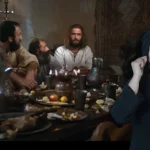
In 2024, Deaf Missions released “JESUS: A Deaf Missions Film,” which it promoted as the first feature film produced entirely in ASL. The film featured a fully deaf cast and production team, and the ministry said it intends to create versions in other sign languages.
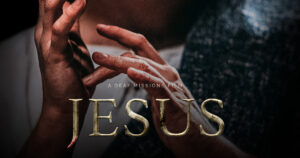
Photo via Deaf Missions
Meanwhile, Deaf Pathway Global, a Tennessee nonprofit that adheres to the Lausanne Covenant, aims to translate the New Testament into multiple sign languages by 2033. The ministry also says it is “working to produce a minimum of 300 Bible Stories for each Deaf people group.” Its website stresses the urgency of that task, claiming that “1,837 Deaf die daily without the Gospel.”
In pursuit of its evangelistic mission, Deaf Pathway Global offers a Bible app that “brings the Bible to life for the Deaf, with signed videos in native sign languages and a clear picture for every story.” The app includes stories from Genesis to Revelation and is available in ASL.
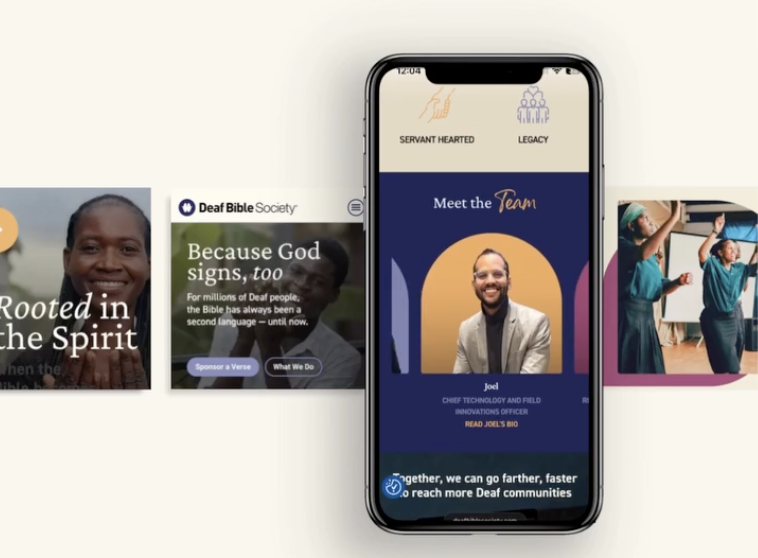
The Deaf Bible Society also is embracing technology. It promotes its Deaf Bible app, which it advertises as “available in 92 sign languages and growing every year,” and its Deaf Church Where app, which maps churches that offer deaf-led services, sign language and deaf Bible studies.
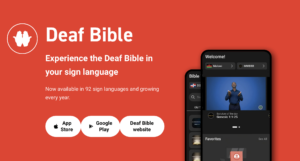
Photo via Deaf Bible Society
One such church is Pure Heart Church of Glendale and Peoria, Ariz. Pure Heart uses ASL interpreters for its sermons and runs a ministry that teaches sign language and visits deaf people in hospitals, jails and prisons.
“Our Ministry with the Deaf has a profound understanding of Deaf culture and is fluent in ASL as well as English, enabling not only outreach to the Deaf community, but to other churches interested in starting their own ministry,” the church’s website states. “We know more than just ASL; we also know PSE [Pidgin Signed English] and SEE [Signed Exact English]. Using tactile sign language, or ‘live Braille,’ the Deaf-Blind are served as well.”
When it comes to transparency and financial accountability, ministries to deaf people in MinistryWatch’s database have room for improvement. Deaf Missions, DOOR International and the Deaf Bible Society share a C grade in transparency, while Deaf Pathway Global has a D. The Deaf Bible Society balances its grade with a donor confidence score of 80 and 4-star Financial Efficiency Rating. The Donor Confidence Scores of Deaf Missions, DOOR International and Deaf Pathway Global all hover in the 50s, and their efficiency is either low or unrateable.
TO OUR READERS: The mission of MinistryWatch is to help Christian donors become more faithful stewards of the resources God has entrusted to them. Do you know of a story that will help us fulfill our mission, or do you want to give us feedback about this or any other story? If so, please email us at [email protected].
Related posts:
![American Bible Society Names New CEO]()
American Bible Society Names New CEO
![Polish Baptists, Southern Baptist Mission Board Rally to Aid Ukraine]()
Polish Baptists, Southern Baptist Mission Board Rally to Aid Ukraine
![MinistryWatch 1000 Database: Largest Christian Ministries in the U.S.]()
MinistryWatch 1000 Database: Largest Christian Ministries in the U.S.
![Jesus Film Project Releases Persian Sign Language Film, BG-RRT Deploys to Tennessee Shooting, Immigration Coalition Aids Haitian Families]()
Jesus Film Project Releases Persian Sign Language Film, BG-RRT Deploys to Tennessee Shooting, Immigration Coalition Aids Haitian Families
![FMI's Pastor Conference in Kenya, Hope Homes' Support for Ex-Inmates, and BGEA Chaplains Aid Ukrainian Refugees]()
FMI's Pastor Conference in Kenya, Hope Homes' Support for Ex-Inmates, and BGEA Chaplains Aid Ukrainian Refugees