
Office of Faith-Based and Community Initiatives has Outlived its Usefulness
Early critics of the 25-year-old office have proven prophetic.

As you can read elsewhere on MinistryWatch, the Office of Faith-Based and Community Initiatives is now 25 years old. Despite the good intentions of those who founded it, the office — like many government entities — has outlived its usefulness and needs to end.
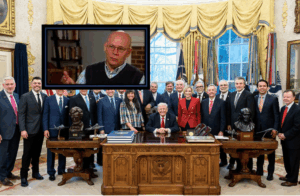
President Donald Trump meets with faith leaders on March 5, 2026. (Official White House photo by Molly Riley / via RNS)
When the office began, in 2001 during the George W. Bush administration, one could make a weak case for the office. Billions of government dollars were doled out to nonprofit organizations for refugee resettlement, disaster relief, and all manner of education programs. Religious nonprofits were systematically excluded from these grants. The OFBCI was supposed to “level the playing field” so religious groups could get their fair share of this government largesse.
That problem no longer exists. MinistryWatch tracks the amount of money going to evangelical organizations, and the top 50 organizations received more than $2.7 billion last year. World Vision, the number one organization on that list, received more than $600 million in a single year.
But even if that problem did still exist, it represents a weak case in an era of massive government deficits, deficits which threaten all Americans.
Another weakness of the OFBCI (now called The White House Office of Faith-Based and Neighborhood Partnerships) is that — now that its original mission is accomplished — it has become little more than a political arm of the White House. The office has always played a political role. After all, as the old saying goes, “You can’t take the politics out of politics.” I remember attending a briefing hosted by the OFBCI in the early 2000s that met in the Eisenhower Executive Office Building and featured a presentation from Karl Rove, who in addition to being President Bush’s Chief of Staff, was also his chief political operative.
Access to MinistryWatch content is free. However, we hope you will support our work with your prayers and financial gifts. To make a donation, click here.
But, beginning with the Obama Administration and continuing through Biden and Trump, the office has become overtly political and propagandistic. When Religion News Service asked for details regarding the work of the office, “the White House responded by pointing to a link to a page on its website titled ‘President Trump’s Top 100 Victories for People of Faith.’ It lists the establishment of the new office and Cabinet-level offices with directors or liaisons, and the issuing of executive orders related to religion. It also noted a dozen ways it had honored ‘Religious Days of Remembrance,’ including a National Day of Prayer event in the Rose Garden, and Easter and iftar dinners at the White House.” The office is currently led by controversial prosperity gospel preacher Paula White.
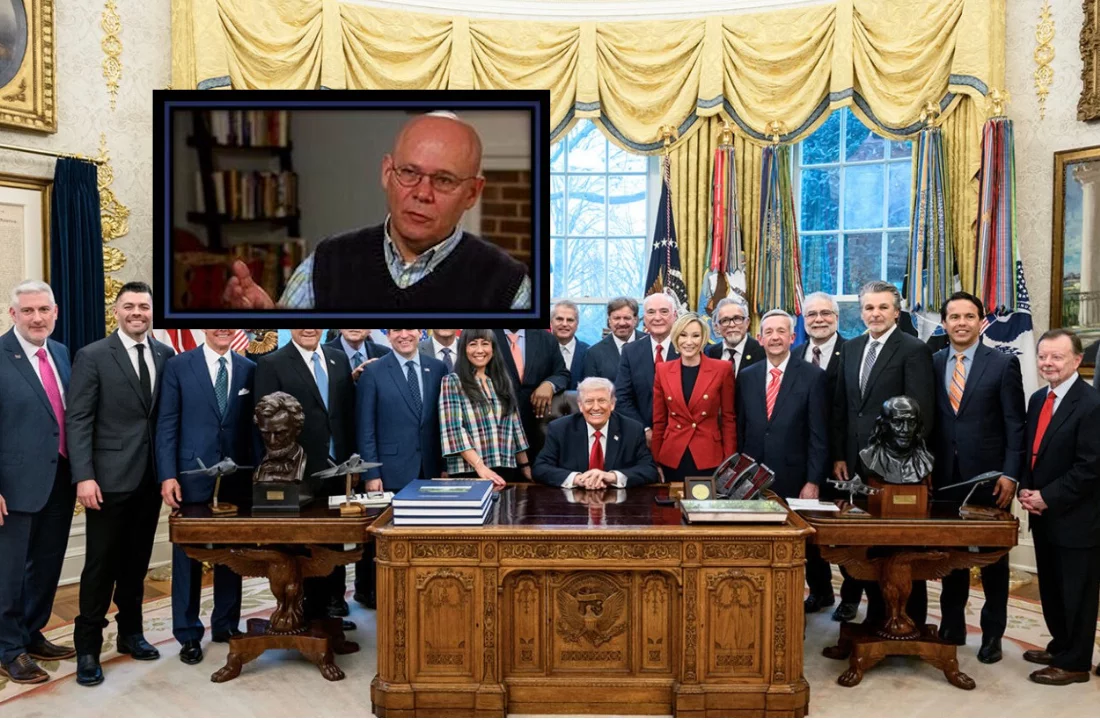
It is interesting to note that even some former supporters of the OFCBI have turned against it. When I went to the White House briefing I mentioned earlier, the deputy director of the office was David Kuo. His 2006 book “Tempting Faith” became a New York Time bestseller and accused the office of being little more than a cynical political tool. He argued the administration used the initiative for photo-ops and to court evangelical voters without genuine commitment. White House staff, he said, showed disrespect for the faith community and treated the effort as electoral seduction rather than serious policy to help the poor.
Libertarian groups have consistently opposed the program. In his 2001 Cato commentary “The Federalist Case Against Faith-Based Initiatives,” Robert Levy contended that the program failed on constitutional federalism grounds. Beyond church-state issues, he argued the federal government has no authority under the Constitution to fund or administer welfare/charity programs at all—faith-based or otherwise. Expanding federal involvement in social services, even through religious groups, represented unacceptable central-government overreach.
In his 2001 Cato briefing paper “Corrupting Charity: Why Government Should Not Fund Faith-Based Charities,” Michael Tanner warned that accepting federal dollars inevitably comes with “strings attached”—extensive paperwork, bureaucratic regulations, and oversight that undermine the independence and effectiveness that make private/faith-based charity successful. This mixing of government and religion risks corrupting the charitable mission, creating dependency on the state, and raising separation-of-church-and-state problems.
Richard Land, longtime president of the Southern Baptist Convention’s Ethics & Religious Liberty Commission and now executive editor of The Christian Post expressed strong reservations, famously warning that government “shekels” would bring “government’s shackles.”
Marvin Olasky, a key intellectual figure behind “compassionate conservatism” and an advisor to George W. Bush during his Texas governorship, played a role in conceptualizing the original Office of Faith-Based and Community Initiatives.
However, as early as 2002 Olasky began to have concerns about the office. He has since been critical of how the initiative was implemented. Olasky saw positives in the OFBCI’s promotion of government and nonprofit partnerships and attention to faith-based groups’ effectiveness. But he criticized its “big-government” direction as contrary to true compassionate conservatism — helping the poor without growing government or its pitfalls.
These early critics of the Office of Faith-Based and Community Initiatives have proven to be prophetic. The office has outlived whatever usefulness it may have had, and it needs to go.
TO OUR READERS: The mission of MinistryWatch is to help Christian donors become more faithful stewards of the resources God has entrusted to them. Do you know of a story that will help us fulfill our mission, or do you want to give us feedback about this or any other story? If so, please email us at [email protected].