

N.C. Anti-Trafficking Group Accused of Exploiting Women
Clients allegedly forced to work for free during rehabilitation

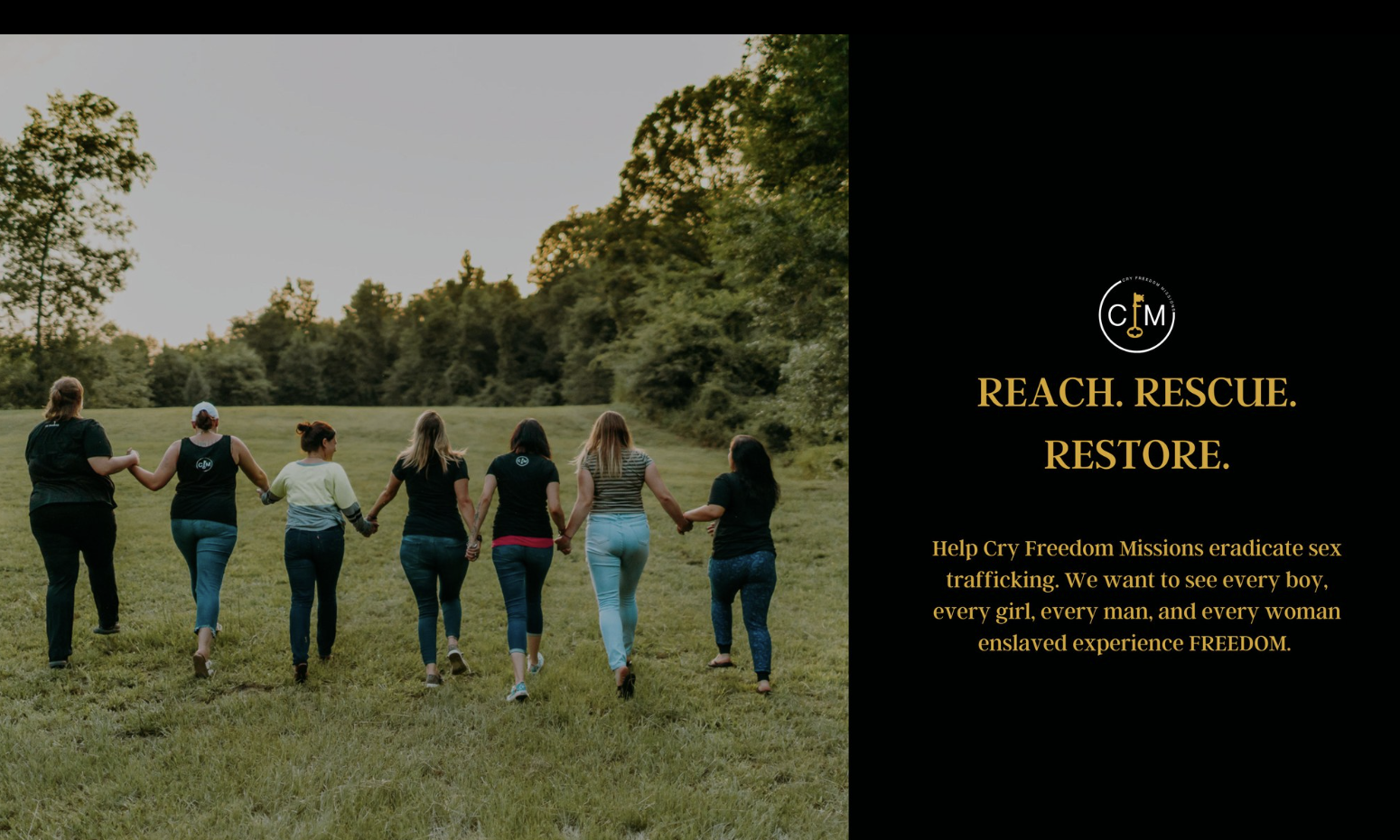
For a brief time, Ashley Vrabel was the poster girl for Cry Freedom Missions (CFM), a Goldsboro, N.C., anti-trafficking ministry.
Cry Freedom via its Facebook page
Arrested in 2018 for heroin possession and larceny, Vrabel found a second chance through CFM. By 2020, she was already on the ministry’s staff and publicly sharing her story of rehabilitation from drugs and prostitution.
While Vrabel fundraised, revenues for CFM and its umbrella organization more than doubled from $750,892 in 2019 to $1,700,662 in 2020, according to the ministry’s 990 tax forms. But behind the scenes, former colleagues claim, all was not well.
Vrabel struggled at work and regretted her public exposure, which had led to her daughter being bullied at school. She lost her job and relapsed. Then in Jan. 2022, she died following an overdose.
Relapses happen. But for some who knew her, Vrabel’s decline pointed to broader problems at the ministry.
CFM, these whistleblowers argue, has been at best negligent and at worst exploitative of the women in its care — using them for fundraising, subjecting them to unpaid labor under the guise of vocational training, tightly controlling their lives, and flouting industry standards while the rehabilitative element of the program takes a back seat.
The Ministry
Cry Freedom Missions operates under the umbrella of a crisis pregnancy ministry called Wayne Pregnancy Center. Both ministries are run by Beverly Weeks, a self-described “author, international speaker, ordained minister, and CEO,” who is also a Goldsboro City Council member.
CFM advertises that it “reaches, rescues, and restores survivors of human trafficking,” by providing care and rehabilitation for former sex workers. Women are provided a safe place to stay at CFM’s emergency shelter or transitional home while they turn their lives around and overcome drug addiction.
According to former staff members, women in CFM’s long-term recovery program are required to undergo job skills training by working at the ministry’s cafe and multiple retail locations, which CFM’s website claims “are full of beautiful survivor-made jewelry, gifts, handbags, home décor, art, and more.” In addition, the women must attend church together every Sunday and adhere to tight restrictions regarding everything from where they can go, to what they can listen to on the radio, to whom they can call on the phone.
Access to MinistryWatch content is free. However, we hope you will support our work with your prayers and financial gifts. To make a donation, click here.
Fundraiser Props
Chretien Dumond, who served as CFM and Wayne Pregnancy Center’s director of marketing and public relations until he resigned in October 2020, had worried that Vrabel was being pushed to do too much too fast, and thought the ministry should be more cautious in sharing clients’ faces with the public. “[Vrabel] expressed that she didn’t like all of the notoriety in the community as CFM was overly using her story to market and raise funds,” Dumond told MinistryWatch. “The survivor shared it was taking a toll on themselves as well as their child.”
Dumond opined that even if CFM had the legal right to share Vrabel’s story, that didn’t mean it should. He added that Beverly and Jonathan Chavous, CFM’s former COO, didn’t like considering the “could-vs.-should conversations.”
Dumond worries that critics might dismiss his testimony because he ran against Weeks for her city council seat. But another former staff member, who asked to remain anonymous, agreed that while Weeks and Vrabel maintained a friendship to the end, Weeks should have focused less on fundraising off of Vrabel’s story and more on completing Vrabel’s rehabilitation.
“Where I take issue is that Beverly put Ashley in the spotlight too soon — pushing her to share her story publicly before she was truly ready. I don’t think this was malicious, but I do think it was negligent. There were clear warning signs that Ashley needed to step back and focus on her recovery, and those red flags were ignored,” the staff member said. “The focus isn’t truly on survivors — it’s on money, power, and maintaining an empire built under the guise of faith-based outreach.”
Free Labor
The mandatory labor component of the rehabilitation program is supposed to equip the women with employable skills. Stephanie Craig, who worked at CFM from 2020 to 2021 and then from 2023 to 2024, paints a different picture: full-time schedules doing mostly menial labor and acquiring few skills while having almost no time for counseling or study. While Craig was on staff, she never observed any of the women advance beyond the first skills they learned. Most worked in inventory — without pay.
“Whenever they questioned [working for free], they were told that their food and housing were their compensation. However, when the women came into the program, their food stamp cards were given to them by the ministry,” Craig said. “I often heard the ladies make comments that they felt like they were being trafficked all over again.”
What’s more, according to Aubrey Lartch, who worked for CFM in 2019, the jewelry-making was a ruse.
“The jewelry that is advertised as ‘made by survivors of human trafficking’ is … most often put together by volunteers and staff, with the occasional ‘survivor’ making a handful,” Lartch said. “I personally made many pieces myself in order for us to have enough to sell at an event or in the Shoppe, thinking that I was helping since the proceeds would help in the long run. At the Shoppe and at every single event where we sold items, we were told to tell customers it was handmade by individual survivors that CFM had saved.”
Incompetent Care
Whistleblowers portray the CFM environment as chaotic and unprofessional, with staff who lacked the training to properly do their jobs while top leadership imposed a confusing combination of strict rules and inconsistent enforcement.
In one extreme case that Craig witnessed, a diabetic client was allegedly forbidden from talking to her own doctor during appointments. After a health emergency, her doctor prescribed an insulin dosage increase plan, but CFM staff members allegedly disagreed with the plan and decided to ignore it. Craig recounted being warned by the staff members that the client might lie about her dosage. When Craig pushed back, her colleagues admitted their ploy to alter the dosage, telling her they “decided that is best, so that is what we are going to do.”
Nightmare Experience
For one ex-prostitute, CFM’s alleged eagerness to convert clients into fundraising props felt like salt in the wound.
In 2021, Veronica (not her real name) was desperate for a place for herself and her two teenage children to stay after her boyfriend — a gang leader — was murdered. Afraid for her life, and nursing a knife wound that had punctured her lung, Veronica fled to CFM, which initially agreed to help. But when the ministry learned about her felonies, Veronica says Weeks’ attitude changed.
For shelter, Weeks allegedly sent the family to a hotel and covered just two or three nights of their stay. During that time, according to Veronica, CFM repeatedly forgot to send the money, resulting in management knocking on their door multiple times to try to evict them. Weeks declined to provide a counselor, help with food, or get Veronica the medical attention she needed — claiming CFM didn’t have the money.
Instead, Weeks allegedly advised the injured woman, whose children were now sick with COVID-19, to browse the internet for grants that might help. According to Veronica, CFM also reported her to law enforcement, who attempted to interrogate her children behind her back regarding the whereabouts of her oldest son — a gang member who was not with them.
Veronica was so desperate for cash that she sold her plasma and even started doing sex work at the hotel to feed her kids and pay for the nights CFM wouldn’t cover. She honored Weeks’ rule about going to church, but her kids declined to attend. Due to the church attendance issue and her resistance to cooperate with law enforcement, Veronica says CFM decided to end its involvement with her family, but not before inviting the family to a restaurant for a meal, only to cancel on them at the last minute as they waited for their ride.
According to Veronica, the insult did not end there. As the family was preparing to connect with another agency willing to provide the help CFM would not, Weeks repeatedly pressured the family to do a promotional photo shoot and write a positive review of CFM. Veronica refused.
“[CFM] feels like a sugar daddy. It’s just not about the sex. You get shelter and help with some of that, but they just want to use you to get money for themselves,” Veronica said. “Similar to a pimp, you’re controlling us. If you don’t do what we want, we aren’t gonna help you.”
Severed Ties
Today, Veronica is clean from drugs and works a stable job as a Dollar Tree store manager. She credits that success not to CFM, but to the woman who gave her the courage to decline the photo shoot — Liz Liles.
Liles, founder and CEO of a similar ministry called Daughters of Worth, had been partnering with CFM but decided to cut ties with the organization after observing how it treated the women in its care. While declining to provide details of what she observed, Liles echoed others’ sentiments, telling MinistryWatch, “It’s just like being trafficked, only without the sex.”
Veronica said that, after CFM sent her family away, Liles got them something to eat, helped them fix their car, and made it possible for them to move from North Carolina to Texas. That intervention sparked a friendship that continues to this day.
“Cry Freedom doesn’t understand that women need to feel safe. It doesn’t understand anything about the sex industry,” Veronica said. “They’re not even a ministry to me.”
Neither Cry Freedom Missions nor Beverly Weeks responded to repeated requests for comment.
TO OUR READERS: Do you have a story idea, or do you want to give us feedback about this or any other story? Please email us: [email protected]