
McLean Bible Church Lawsuit Lives On
VA appellate court disagreed with lower court’s decision, reviving suit over elder election and membership rolls

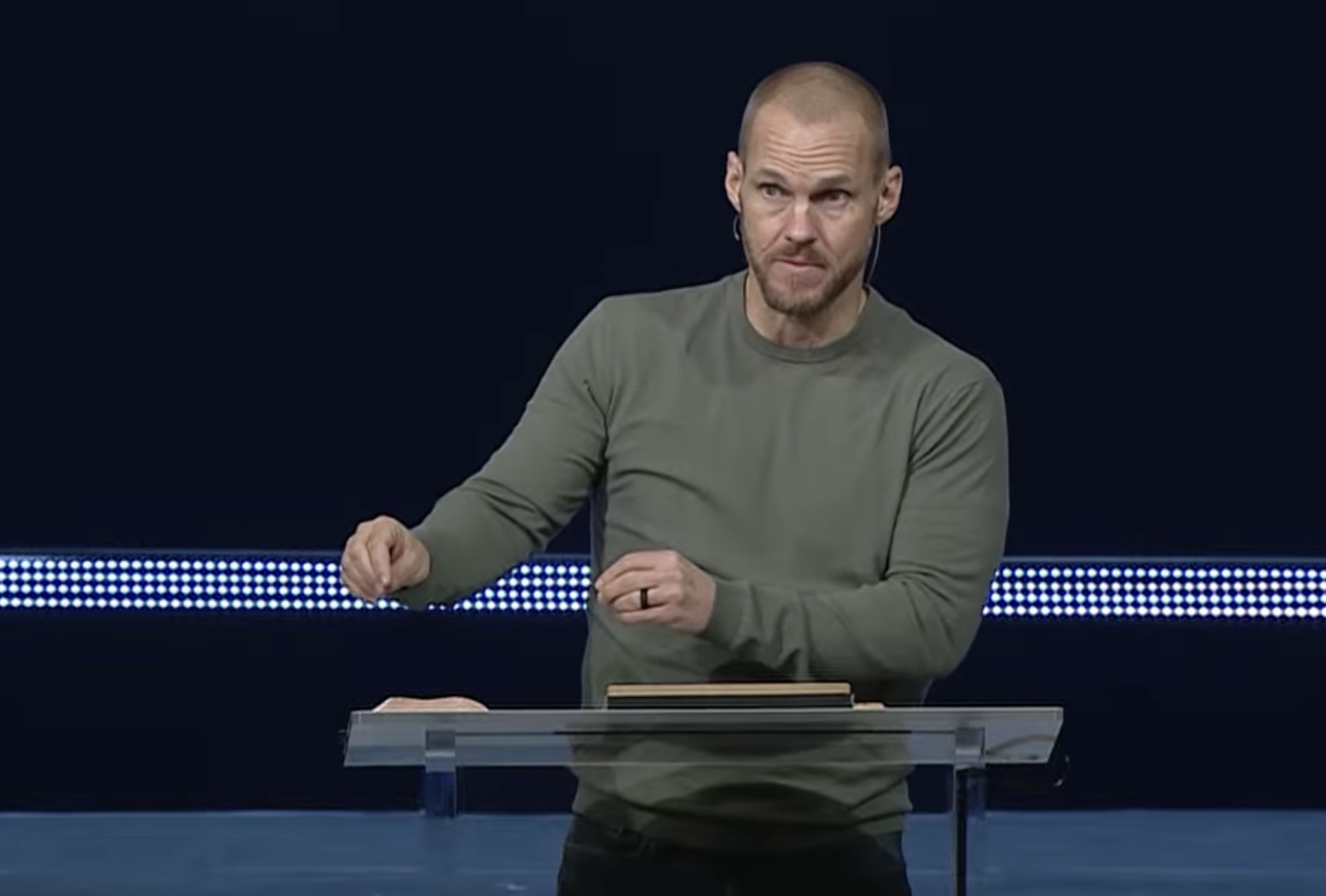
A Virginia appellate court has allowed a civil case against McLean Bible Church, led by David Platt, to continue. In a decision issued last week, a three-judge panel sent the case back to the lower court for more inquiries about the application of the First Amendment.
avid Platt / Video screenshot @Mclean Bible Church
McLean Bible Church had argued that releasing certain documents about its church membership rolls as part of the discovery process is prohibited by the First Amendment — but the appellate disagreed that it was automatically prohibited.
“[U]ntil MBC demonstrates a genuine threat to, or a present infringement of, its First Amendment rights, the dissenters are entitled to pursue discovery and this case endures,” Virginia Judge Frank Friedman wrote in the opinion.
A group of congregants sued McLean Bible Church in 2021, alleging Platt and other leaders illegally barred them from voting at a congregational meeting to approve new “handpicked” church leaders. The vote also purged the voting rolls of “inactive members,” even though the plaintiffs claimed there was no evidence the members had missed eight consecutive Sundays without “reasonable excuse” as required by the church’s constitution.
Platt had also come under scrutiny by some critics who labeled his comments about racism and social justice issues as “woke” and liberal.
The church agreed to hold a new election in July for the same three candidates and did not permit secret ballot voting.
In May 2022, McLean Bible church leaders agreed to redo the election, hoping to render the lawsuit moot. The plan allowed members to vote using secret ballots, and a neutral observer oversaw the election and counted the votes. All active members, including anyone who had been a member at the beginning of the pandemic and claimed to still be a member, was allowed to vote.
After that new election was held, the circuit court judge dismissed the case as moot, considering the issues resolved.
“I know that many churches across America have faced and are facing similar challenges during these days, and it is vitally important that we move past division and live out John 13:35, demonstrating love for one another and love for a world in need of Jesus,” Platt said in a statement about the apparent resolution.
Access to MinistryWatch content is free. However, we hope you will support our work with your prayers and financial gifts. To make a donation, click here.
However, the congregants appealed the circuit court’s decision. In June 2023, the appellate court agreed with the plaintiffs that not all parts of the case were moot because there were claims of “ongoing disenfranchisement of members, transparency and notice, and the secret ballot dispute.”
After that, McLean Bible Church amended its constitution eliminating a “vote of confidence” procedure for elders, and the plaintiffs claimed they were not allowed to vote on the constitutional amendment.
Additionally, the plaintiffs made several requests as part of the litigation for membership lists, minutes of the Board of Elders meetings, and explanations for the removal of members from the rolls.
The circuit court denied the discovery requests, citing the First Amendment’s protections for religious liberty and freedom of association.
Now the appellate court has sent the case back to the circuit court after finding it erred in its application of First Amendment principles.
Friedman explained that rather than the First Amendment barring discovery altogether, it is a privilege that requires a “balancing test” where the church must show that the disclosure of the membership rolls will “chill associational rights.”
If the church meets that burden, then the plaintiffs must demonstrate a “compelling need for the requested information.”
The lower court must engage in this inquiry now that the case has been sent back to it for more analysis.
The appellate court also addressed the application of the “ecclesiastical doctrine.” The ecclesiastical doctrine is the idea that a civil court doesn’t have jurisdiction in matters that involve questions of faith or doctrine.
However, if a dispute can be resolved by looking to “neutral principles of law, without reference to issues of faith and doctrine,” the court can decide the case.
While church membership decisions have long been recognized by Virginia courts and the U.S. Supreme Court as fundamentally religious, Friedman noted that in this case, the church’s constitution has a neutral standard of missing eight consecutive weeks of worship to be considered inactive.
The church argued in reply that the Board of Elders must determine whether the members’ excuses for missing worship are “reasonable,” and that is a “purely ecclesiastical” inquiry.
The court agreed that the “reasonable” excuse inquiry is a matter of religious doctrine, but that the case has not yet reached that point. The discovery process is likely to reveal whether that was part of the decision to remove members from the rolls.
“An assertion that a dispute might involve a purely religious question is quite different from an assertion that the dispute will turn on such a question. The latter is a good reason to apply the ecclesiastical abstention doctrine and short-circuit the litigation; the former is not,” Friedman wrote.
The case will now return to the lower circuit court for more inquiries about whether the First Amendment associational principles apply and if they don’t then on to ecclesiastical abstention doctrine questions.
TO OUR READERS: The mission of MinistryWatch is to help Christian donors become more faithful stewards of the resources God has entrusted to them. Do you know of a story that will help us fulfill our mission, or do you want to give us feedback about this or any other story? If so, please email us at [email protected].
Related posts:
![Top 10 Stories for the Month of July]()
Top 10 Stories for the Month of July
![MinistryWatch’s Top 10 Stories for June]()
MinistryWatch’s Top 10 Stories for June
![EDITOR’S NOTEBOOK: Pregnancy Resource Centers, Christians Suing Christians, Private Inurement and Book Royalties]()
EDITOR’S NOTEBOOK: Pregnancy Resource Centers, Christians Suing Christians, Private Inurement and Book Royalties
![David Platt’s Church Sued Again by Members Seeking New Leadership]()
David Platt’s Church Sued Again by Members Seeking New Leadership
![Lawsuit Against David Platt and McLean Bible Church Dismissed]()
Lawsuit Against David Platt and McLean Bible Church Dismissed