

LGBTQ-Focused Ministry Disputes ‘Conversion Therapy’ Accusation
Founder: ‘Church not complete without same-sex attracted people’

While laws against conversion therapy face court challenges, some opponents of the controversial treatments have begun to lump traditional biblical counseling under the same banner.
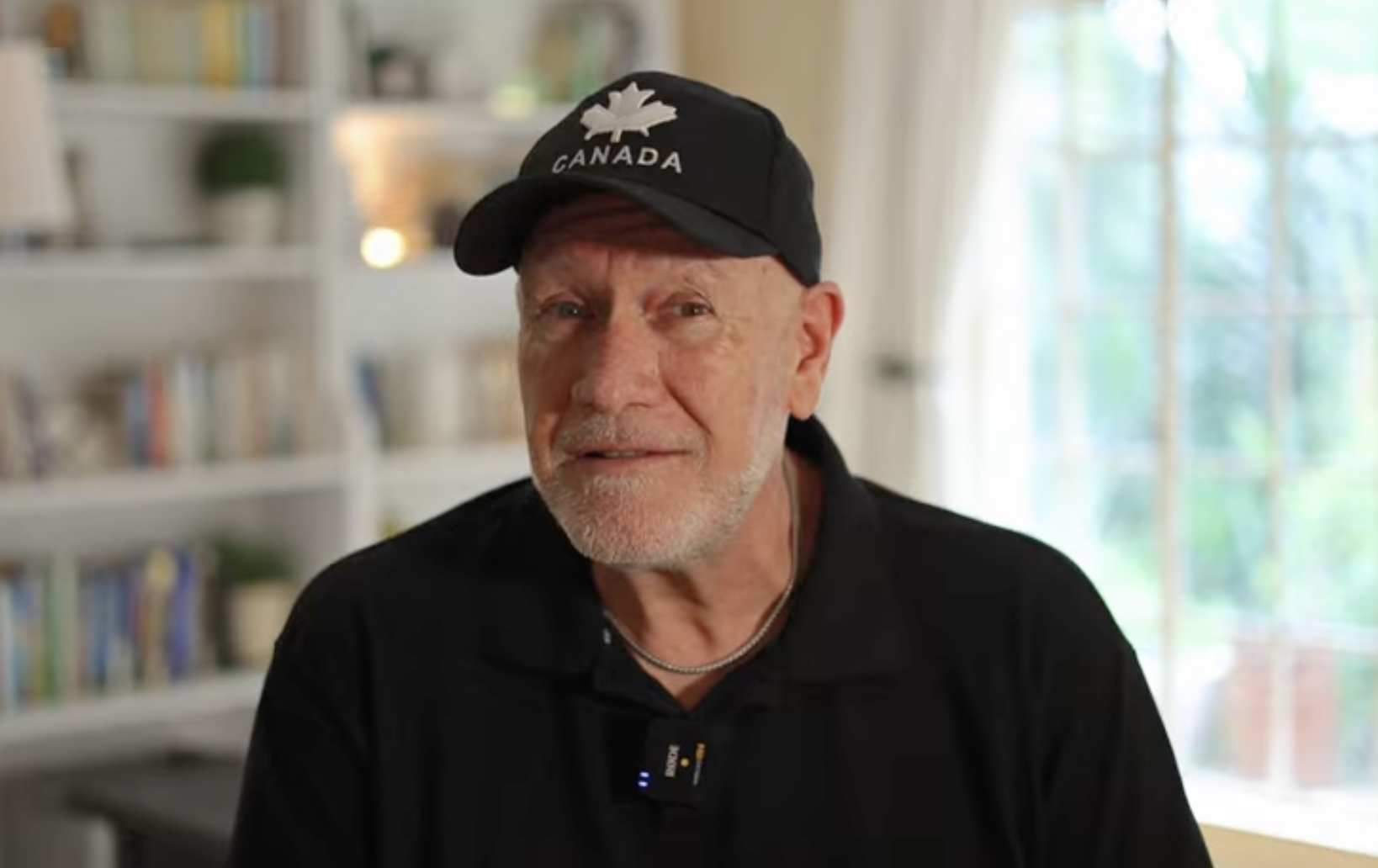
Guy Hammond, executive director of Strength in Weakness / Video screenshot @ICOC Disciples Today
Strength in Weakness (SIW), a ministry to same-sex attracted Christians, their families and church communities, has come under fire for practicing what critics call conversion therapy in disguise.
Conversion therapy is a vaguely defined term that refers to mental health care designed to alter a person’s sexual orientation. The practice is a topic of debate in the broader culture as well as among Christians who adhere to biblical sexual norms. In recent years, the term has developed a negative connotation due to claims of ineffective and even harmful techniques. Its bad reputation has also been fostered by pro-LGBTQ ideology, which equates any resistance to same-sex attraction with bigotry and abuse.
In an Uncloseted Media investigative report published on MSN, critics characterized SIW’s approach as a dangerous loophole that traumatizes clients.
SIW offers no mental health care services and does not attempt to change its clients’ sexual attractions. However, Dr. Lucas Wilson, a pro-LGBTQ advocate and SSHRC Postdoctoral Fellow at the University of Toronto Mississauga, sees a distinction without a difference.
“Any effort to suppress someone’s gender or sexuality falls under the umbrella of conversion therapy,” Wilson told Uncloseted Media. “Pushing people to remain celibate or pushing people into mixed-orientation marriages are conversion practices.”
For SIW founder Guy Hammond, such accusations come with the territory of challenging the prevailing culture.
Hammond, a self-professed same-sex attracted man who walked away from the gay lifestyle and is now married to a woman, characterized his approach as nearly the opposite of conversion therapy. SIW’s purpose, he explained, is not to reverse sexual orientations but rather to help people live as faithful Christians while wrestling with sinful desires.
“Our goal is not to become heterosexually attracted. Our goal is to be holy,” Hammond told MinistryWatch. “I’m just as attracted to men today as when I became a Christian 40 years ago…Are there people who have fully changed what they’re attracted to? Maybe. I’ve never met one.”
Access to MinistryWatch content is free. However, we hope you will support our work with your prayers and financial gifts. To make a donation, click here.
Based in Canada and closely associated with the International Churches of Christ, SIW primarily serves U.S. congregations and families. It relies on a small volunteer team to provide what Hammond calls “peer-to-peer mentoring.” He emphasized that his team members do not advertise themselves as professional counselors or therapists and that if a client feels the need for such services, SIW advises them to go elsewhere.
What’s more, according to Hammond, a large portion of SIW’s mentoring work is geared toward supporting Christian parents in their desire to maintain or mend relationships with children who identify as LGBTQ. Hammond also trains churches on how to reach LGBTQ-identifying individuals with the Gospel.
“The majority of my teaching is to talk about how we can create safe, welcoming, loving environments within the church so LGBTQ can come and learn about Jesus,” Hammond said. “The church is not complete without same-sex attracted people.”
While Hammond does not endorse sexuality conversion techniques, Uncloseted Media noted SIW’s past connections to two individuals it alleges have practiced conversion therapy: Michael Rosebush, a former SIW counselor and Focus on the Family vice president who has since come out as an LGBTQ-affirming homosexual, and Pastor Kris Boyer, the ministry’s former associate director.
The report also featured a map of locations where SIW conducted speaking engagements despite local conversion therapy bans, and cited a 2019 blog post in which Hammond admitted having “tremendous respect” for “reparative therapy,” another term for conversion therapy. In the post’s context, however, Hammond neither discouraged nor encouraged the practice. Instead, he cited evidence for and against the underlying psychological theory, which ties the development of same-sex attraction in males to bad parenting. He concluded, “We may one day discover that their theory was correct. Or not…Personally, I know of some fathers out there who got a ‘bum rap’ from sons who blamed their same-sex attractions on their father. Like my dad.”
If pro-LGBTQ advocates fail to distinguish between conversion therapy and religious or other protected speech, U.S. law currently leans toward such differentiation. In March, the Supreme Court struck down a Colorado ban as overly broad and thus violating the First Amendment after a Christian therapist argued she was unconstitutionally prohibited from expressing certain viewpoints with youth patients.
Does Strength in Weakness Harm Clients?
A number of former clients who later rejected Hammond’s teachings on biblical sexuality now say his ministry inflicted deep psychological trauma. In the investigative report, participants recounted feeling shame and depression and experiencing suicidal thoughts.
One former client and volunteer, Dezi Redler, was a female-identifying biological male who detransitioned to recover his male characteristics, then left SIW, began openly identifying as nonbinary, and later committed suicide. This tragedy led Dezi’s mother, Leslie, to conclude that SIW’s mentoring is a form of conversion therapy.
Former participants also accused the ministry of asking inappropriately personal questions to youth about their sexuality during sessions. Hammond denied this claim, insisting he discourages mentors from becoming too intimate with clients. He also said counselors are prohibited from being alone in a physical space with a client, and he typically limits peer-to-peer sessions to clients 18 or older. Otherwise, he said, the parents must also be involved.
“If I have hurt somebody, I want to know it,” Hammond said, while noting he has talked to many former clients who now live “great faithful Christian lives.”
“The number of people our ministry has helped in the last 20 years would be in the thousands,” he said.
One of those people, Davion Hambrick, now serves as an SIW volunteer in addition to being an associate pastor at his church, Columbia Church of Christ in Columbia, Missouri.
Hambrick first encountered SIW in 2013 through his previous church in Dallas. As a Christian experiencing same-sex attraction, Hambrick signed up for the ministry’s newsletter and devotional and later reached out to Hammond for help navigating his situation and how to confess his struggles to his soon-to-be wife, with whom he now shares three children.
“[The mentoring] helped me to overcome the shame that I would feel whenever I wrestled with attractions that I have for the same sex, recognizing that God doesn’t care about what I’m attracted to, but if I am choosing to live for him,” Hambrick said.
As for the accusation that SIW does conversion therapy, Hambrick said he can only speak from his own experiences, but he does not see any connection between the controversial practice and Hammond’s ministry. He also emphasized that SIW doesn’t try to force its views on anyone.
“People are free to disagree and free to live how they want,” Hambrick said. “I stand on the truth that if you want to be a Christian…that includes surrendering our sexuality.”
TO OUR READERS: The mission of MinistryWatch is to help Christian donors become more faithful stewards of the resources God has entrusted to them. Do you know of a story that will help us fulfill our mission, or do you want to give us feedback about this or any other story? If so, please email us at [email protected].