

Finishing Well
The Philip Yancey news should motivate self-reflection in us all.

OPINION–On Monday, I drove from my home in Charlotte to Greenville, S.C., to have dinner with one of MinistryWatch’s long-time supporters, someone who has over the years also become a friend. He lives in Anchorage, Alaska, but he was visiting family in South Carolina. The fact that he was so close was an opportunity I could not pass up. 
At the end of a pleasant and encouraging two-hour dinner, we walked to the parking lot and prepared to get in our cars. My friend asked, “How can I pray for you?”
I answered with a phrase that may sound like a “canned answer,” a cliché, but — for me — is not. I answered, “Greg, pray that I finish well.”
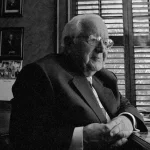
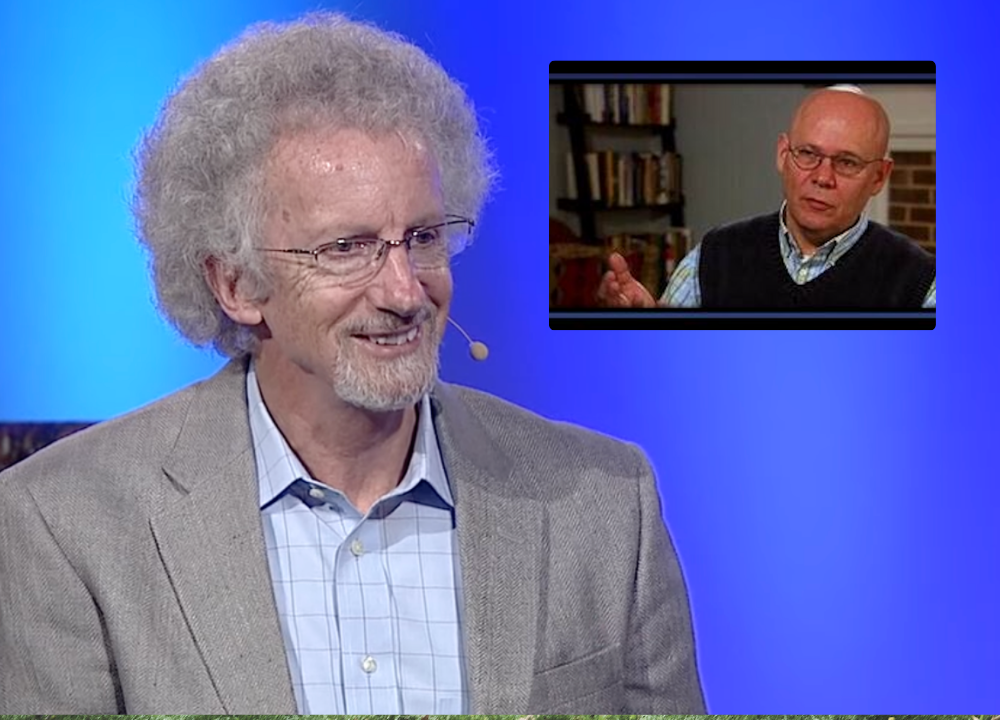
The idea of finishing well has been on my mind a lot lately. The nature of our work here is that sometimes we cover Christian leaders who do not finish well. We got another tragic example this week—Philip Yancey, a Christian leader whose books have sold at least 15 million copies. Yancey, who is 76 years old and has Parkinson’s disease, was in sight of the finish line of his race. But he will now be remembered — following his confession of an eight-year extramarital affair — as a man who did not finish well.
The idea of finishing well has become particularly front-of-mind in recent years as I age and get closer to the end of my life than I am to the beginning. I think, though, this idea has been part of my thinking for years, even decades. As a student of literature, I learned the Latin phrase memento mori: “remember death.” It is a phrase that pops up often in the study of Shakespeare, especially the graveyard scene in Hamlet. In 18th century poetry, the contemplation of death became a sub-genre. Think Thomas Gray’s “An Elegy Written in a Country Churchyard.”
This notion of contemplating death is a biblical idea. The writer of Ecclesiastes tells us: “It is better to go to a house of mourning than a house of feasting, for death is the destiny of everyone. The living should take this to heart.” (Eccl. 7:2)
These ideas are why the phrase of coram deo took root in Christian theology. The phrase itself comes from Latin translations of the Bible, especially the Vulgate, where coram Deo means “before the Lord” or “before God” or even “before the face of God.” For example, Genesis 17:1 records God’s word to Abraham: “Ambula coram me et esto perfectus.” (“Walk before me and be blameless.”)
While the phrase is biblical in origin, it took the Protestant Reformers, especially John Calvin, to give coram Deo its rich theological meaning. Calvin used it to describe the Christian life as lived before God’s gaze, not merely in religious acts but in ordinary work, ethics, and private thought.
In modern times, R. C. Sproul often said, “To live coram Deo is to live one’s entire life in the presence of God.”
I do not want to speculate about what happened to Philip Yancey, about why he did what he did. But I can say authoritatively that when I engage in sin, it is precisely because I forget I am living coram Deo, before the face of God. God sees me. I am not “getting away” with anything.
It is easy to think of Christian leaders who have not finished well. My partial list includes Ravi Zacharias, Bill Hybels, Jerry Falwell Jr., Steve Lawson, Robert Morris, Brian Houston, Mike Bickle, Carl Lentz, and — now — Philip Yancy. We have written about all these men at MinistryWatch.
But, in contemplating this list, two things spring to mind. First, this list is small compared to what could easily be a list of many millions of ministers of the Gospel who are living faithful, quiet, even anonymous lives.
Even among “celebrity” Christians these faithful ministers make up a majority. I have been encouraged, instructed, and edified by the lives and testimony of such men as Alistair Begg, Chuck Swindoll, J.I. Packer, John Stott, Tim Keller, Howard Hendricks, R.C. Sproul, Billy Graham, and many more. Perhaps you have your own list.
When we remember people who fall, let us remember these men, too. As the writer of Hebrews says: “Remember those who led you, who spoke the word of God to you; and considering the result of their conduct, imitate their faith.” (Hebrews 13:7)
The second thing that springs to mind is more important, and that — as Augustine said — is that a fallen minister does not negate the work of the Holy Spirit. Myles Werntz recently wrote in Christianity Today, “This is so because the fallen pastor or troubled tradition was never responsible for securing the truthfulness of the gospel. That is God’s work, and God never fails us.”
Still, seeing a Christian leader fall is discouraging. For some it can be devastating. That is why — for Philip Yancey, his wife, and all those harmed by Yancey’s choices — I pray for healing. And I will also try to remember that God’s grace is, indeed, amazing, and that it is only by His Amazing Grace that I, or any of us, will finish well.
TO OUR READERS: The mission of MinistryWatch is to help Christian donors become more faithful stewards of the resources God has entrusted to them. Do you know of a story that will help us fulfill our mission, or do you want to give us feedback about this or any other story? If so, please email us at [email protected].
Related posts:
![MinistryWatch's Top 25 Stories of 2023]()
MinistryWatch's Top 25 Stories of 2023
![Asheville Christian Academy, International Cooperating Ministries Drop Into Bottom 20% for Financial Efficiency]()
Asheville Christian Academy, International Cooperating Ministries Drop Into Bottom 20% for Financial Efficiency
![Top 10 MinistryWatch Stories for May: UMC Disaffiliations, T.D. Jakes' Billion-Dollar Deal, and Carl Lentz's Ministry Exit]()
Top 10 MinistryWatch Stories for May: UMC Disaffiliations, T.D. Jakes' Billion-Dollar Deal, and Carl Lentz's Ministry Exit
![Zacharias Institute Leaders Vince and Joanna Vitale Announce Plans to Resign]()
Zacharias Institute Leaders Vince and Joanna Vitale Announce Plans to Resign
![Beyond the “Billy Graham Rule”]()
Beyond the “Billy Graham Rule”