
Christian Disaster Relief Groups Balance COVID Safety with Speedy Response to Hurricane Ida


In the wake of Hurricane Ida, faith-based disaster relief groups are assessing damage, setting up mobile kitchens and preparing to send skilled volunteers to Louisiana, Mississippi and other states hit hard by the storm.

Those groups began putting equipment and supplies into place before Ida made landfall on Sunday (Aug. 29) and have kept in constant contact with church leaders and other volunteers to determine the best places to set up relief operations, given widespread power outages.
As the cleanup began, they have also been mindful that COVID-19 could put all their work at risk.
“We are taking all the precautions we can,” said Sam Porter, national director for Southern Baptist Disaster Relief, adding that Baptist leaders from Louisiana and other states had done the bulk of the planning.
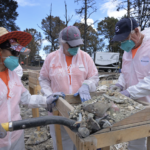
Those precautions included splitting up volunteers into smaller groups and housing volunteers from different states in different locations, rather than all together. Volunteers will also wear masks when gathering in groups.
“We don’t want to have positive COVID tests where the whole team has to go home,” Porter said, adding that COVID had already interrupted some of the rebuilding efforts from last year’s hurricanes.
Presbyterian Disaster Assistance, a ministry of the Presbyterian Church (USA), focuses on long-term recovery after natural disasters. The group has been doing rebuilding work in Lake Charles, Louisiana, which was hard hit by Hurricanes Lara and Delta in 2020.
The Presbyterian volunteers are also required to have vaccines. “The risk of harm to a local community that is still suffering — and the risk of harm to volunteers — is so significant that we want to make sure everyone is vaccinated,” said the Rev. Laurie Kraus, director of Presbyterian Disaster Assistance.
Access to MinistryWatch content is free. However, we hope you will support our work with your prayers and financial gifts. To make a donation, click here.
Much of Louisiana is without power after the storm, making the job more difficult for the Southern Baptist teams, which normally work from churches and other faith institutions. Drinking water and gasoline are also in short supply, according to The Associated Press.
The Southern Baptists nonetheless have to set up several large kitchens, aimed at preparing tens of thousands of meals a day, and plan to send in chainsaw teams and cleanup crews to help with the immediate cleanup.
Samaritan’s Purse, a North Carolina-based evangelical nonprofit, also plans to set up three disaster relief locations in communities affected by Ida.
“Louisiana was pummeled by Hurricane Ida, and thousands of families are in need of both physical assistance and hope,” said Franklin Graham, president of Samaritan’s Purse. “We are coming alongside these hurting communities to help them start to get back on their feet and remind them of the true hope that can only be found in Jesus Christ.”
Lara Martin, director of the U.S. Disaster Response unit for the United Methodist Committee on Relief, said the first step for local Methodist volunteers is to do damage assessments. Once those are done, the local teams invite other Methodists to come in to assist with relief efforts. Methodist relief volunteers will also wear masks and take precautions to prevent the spread of COVID-19.
The Louisiana Annual Conference of the United Methodist Church has a strong disaster relief group already in place, she said.
Martin added that disaster relief starts long before a storm hits. Training and advance preparation are crucial to any response. “We’re so grateful for the strong partners that we have there in the conference,” she said.
Relief efforts may be needed in other states as well, Martin said, including Mississippi and Tennessee, which was already hit with recent catastrophic flooding in the town of Waverly, west of Nashville. At least 20 people were killed in flooding in Middle Tennessee last week.