

Stewards, Not Owners, of Every Dollar
The Wichtermans see wealth, time, and work as tools for Kingdom impact, not personal security.

This story is part of MinistryWatch’s occasional series “Generous Living,” which shares stories of people practicing their own version of radical generosity.
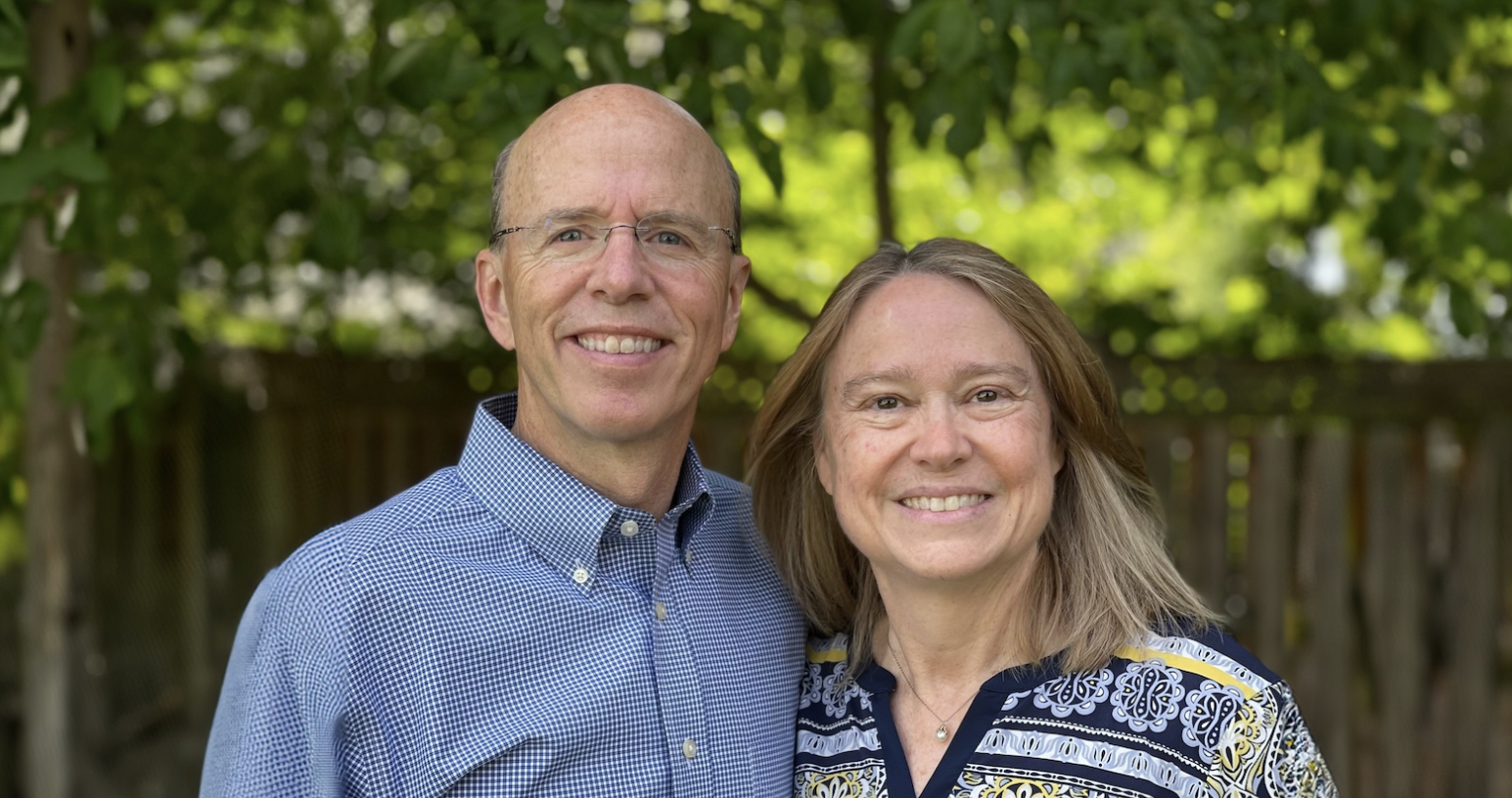
Bill and Dana Wichterman via stewardsnotowners.com
One night, the Wichtermans had a large group of friends over to their Northern Virginia home. Somewhere in the evening’s commotion, someone gouged a deep scratch into the hardwood floor.
“My first thought was, ‘Oh, this is going to cost a lot to fix,'” Dana Wichterman recalled. “The Holy Spirit immediately stopped me and said, ‘I want you to see this scratch as a scar of love — as proof that love happened here.'”
It’s a moment that captured something Bill and Dana Wichterman have spent more than two decades learning: that everything they have — their money, their time, their home — belongs to God, not to them.
“Our vision from the beginning was about how we can be more generous,” Bill said. “It was important to us even before we got married.”
Starting in debt, starting with discipline
Before they started dating, Bill and Dana had each independently committed to living below their means. But it took years of marriage before they began examining not just what they gave, but where they invested.
“We wanted to make sure we were aligning our investments with our faith,” Bill said. “We didn’t want to invest in a strip club or something we didn’t support to send money to missionaries. We wanted to avoid what Dana calls ‘ill-gotten gains.'”
The couple shared their story at a Generous Giving gathering in Orlando, Florida, in April, alongside others focused on managing wealth to make a global, kingdom impact. Their journey — from a couple $10,000 in debt in their first year of marriage to authors of a book on biblical stewardship — illustrates a shift many Christians wrestle with: moving from seeing themselves as owners of their resources to seeing themselves as stewards of God’s.
“We had no money, no car, and we shared our apartment with cockroaches,” said Dana, who holds a master’s degree in international relations from Columbia University. “We were about $10,000 in debt that first year, but we had read the book by Larry Burkett, who founded Crown Financial Ministries, and we were both on the same page in wanting to prioritize our finances.”
A mentor told them that good intentions weren’t enough.
“Budgets lie,” the mentor said. “You need to keep track of where you’re spending so you know exactly where your money goes.”
That advice prompted the couple to start monthly financial meetings — a habit they still keep today.
Two paths, one calling
Bill earned a master’s degree in political theory from The Catholic University of America, then traveled abroad for missionary work, spending a year with Turkish guest workers in West Berlin before returning to Capitol Hill.
“When I got back to Washington, I hit the pavement until I found something. I had 200 résumés and one suit,” Bill said in a March interview on the Everyday Radical Podcast, where he and Dana discussed their 2025 book, “Stewards Not Owners: The Joy of Aligning Your Money with Your Faith.”
“I started from the bottom and worked my way up little by little,” he said.
Over the next 20 years, Bill built a career in law and politics, including a role as special assistant to President George W. Bush, before trading his office near the Capitol Rotunda for one at Covington & Burling, where he’s now a senior advisor. He also co-founded the Wedgwood Circle, an angel-investment network for faith-driven entrepreneurs.
Dana was drawn to a similar calling. She spent a year in India working on international poverty alleviation, then worked at the U.S. Agency for International Development for 20 years before becoming a senior advisor at The Impact Foundation.
Budgeting for generosity
Sticking to a budget came naturally to the Wichtermans. Giving beyond it did not — at least not at first.
“We actually found that we were excellent at budgeting and sticking to it,” Bill said. “But we hadn’t budgeted for generosity beyond our 10% tithe. So we started with 11% and worked our way up from there.”
They used the extra money for hospitality — covering dinner when they went out with friends, for example. Whatever they didn’t spend rolled over to the next month.
“It really started to feel fun,” Bill said.
From fear to freedom
Bill embraced giving quickly. Dana needed more time.
She grew up in a financially secure home until early high school, when a series of poor financial decisions strained her family and contributed to her parents’ divorce.
“Financial stress is one of the leading causes of marital separation,” Dana said. “I knew I didn’t want it to be a part of my marriage, so I was cautious when it came to spending.”
That caution came to a head when Bill asked her a hard question.
“Bill asked me if I was struggling with the sin of greed,” Dana said. “It was like a dagger in my heart, but I took it seriously. And what I found was, yes, I had a little bit of greed in my heart, but behind it was fear — based on feelings of abandonment and financial insecurity from things I experienced in my youth. I didn’t trust the Lord to take care of me. I clung to too many safety nets.”
The couple had been leaning into hospitality as a form of generosity, Dana said, but she went along with it reluctantly — until the night of the scratched floor made the lesson click.
Access to MinistryWatch content is free. However, we hope you will support our work with your prayers and financial gifts. To make a donation, click here.
Owners vs. stewards
That shift from ownership to stewardship, the Wichtermans say, changes everything — not just finances, but identity.
“It is more than just finances,” Dana said. “God gave us every breath. He owns everything, including the cattle on a thousand hills. What we give back is our time, tithe, talent and relational ties. God made us in his image to be creators. We’re either builders or backers, founders or funders. If we are doing what God calls us to, success isn’t dependent on us, because our faithfulness is what matters in growing our walk with him.”
Redefining retirement
That mindset shift extends even to how the Wichtermans think about retirement.
Many people see retirement as a financial finish line. The Wichtermans see it as a chance to keep making a difference.
“I think we were made to work. It’s rewarding,” Bill said. “When you retire, you’ve decided you have enough money to live out the rest of your days. If you keep working, even for an extra year or two, you can help improve the lives of others.
“When I’m having a hard day at work, I think of a woman we met a few years ago in a slum in Kenya who had a café. She had a computer and was saving money to buy a second one. You know how hard it is to build working capital in a poor part of the world? For me, working one more day means I can invest in what she’s doing, which is vital.
“We don’t believe that everyone is called to give away all that they have,” Bill said. “But we believe that all are called to be good stewards of what we have. Your money is a love letter to God.”
MAIN PHOTO: Bill and Dana Wichterman via stewardsnotowners.com
TO OUR READERS: The mission of MinistryWatch is to help Christian donors become more faithful stewards of the resources God has entrusted to them. Do you know of a story that will help us fulfill our mission, or do you want to give us feedback about this or any other story? If so, please email us at [email protected].