
Former VA Youth Pastor Sentenced for Exploiting Girls Online
Jacob Barnett posed as a teenage boy to solicit explicit images from girls as young as 12.

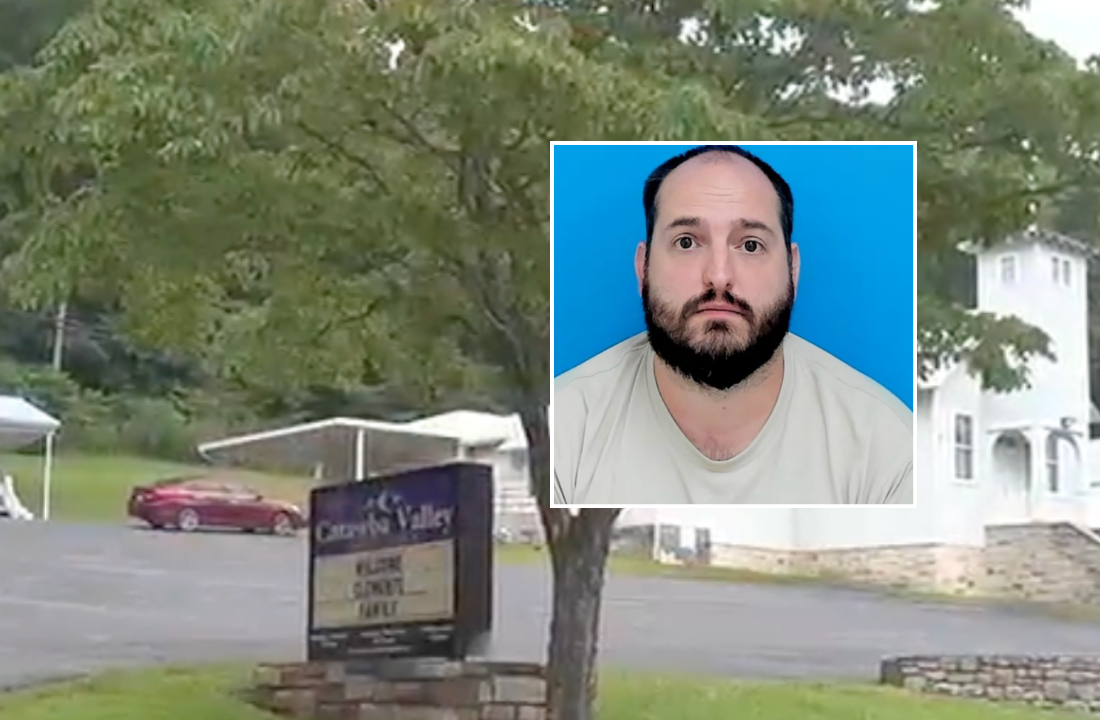
On Monday, July 27, a judge sentenced a former Virginia youth pastor who posed online as a teenage boy to 20 years in federal prison for attempting to sexually exploit a 15-year-old girl.

Catawba Valley Baptist Church in Virginia (Video screenshot) / Insert of Jacob Barnett
Jacob Ryan Barnett, 35, formerly served at Catawba Valley Baptist Church in Troutville, Virginia.
MinistryWatch earlier reported that FBI agents arrested Barnett in August 2025 while he was chaperoning a church youth retreat in Brevard, North Carolina. Catawba Valley Baptist Church later said it was “deeply grieved” by the allegations and was praying for those affected and for justice.
Barnett pleaded guilty in December 2025 to one count of attempted sexual exploitation of a child.
U.S. District Judge Robert Ballou handed down the 20-year sentence — five years above the 15-year mandatory minimum and four years and four months below what prosecutors requested.
“The things I did were evil,” Barnett told the court before sentencing, according to the Roanoke Times. Ballou said Barnett had been raising a family and ministering to young people while secretly pursuing girls online. “He was leading a double life,” the judge said.
Prosecutors said Barnett targeted at least a dozen girls from across the country, ranging in age from 12 to 17. He followed nearly 7,000 social media accounts — most belonging to young girls — and used TikTok, Snapchat, Discord and other platforms to contact minors. He claimed to be a 17-year-old named “Jodie Johnson” and sent photos of teenage boys that he claimed were pictures of himself. Investigators said Barnett also solicited images from boys to support the false identity he used to approach girls.
The investigation began when the mother of a 15-year-old Michigan girl checked her daughter’s phone and found sexually explicit messages. The mother reported the messages to the FBI, which traced the phone number and social media activity to Barnett. The girl reportedly had told Barnett her age, but he continued sending increasingly graphic messages and repeatedly requesting photos and videos.
The prosecutors’ sentencing memorandum described Barnett’s communications with other girls and the harm they reported. Some had previously experienced sexual abuse. One 12-year-old told investigators she complied with Barnett’s requests because she was lonely and believed sending photographs would make him care for her. Prosecutors also said some of the images Barnett obtained were shared with other people online.
In Barnett’s sentencing memorandum, his attorney argued that he never traveled to meet the girls, physically assaulted them, threatened them, or used his ministry position to gain their trust.
The defense asked Ballou to impose the 15-year mandatory minimum, arguing it would provide substantial punishment while allowing for treatment and eventual supervision.
Barnett remained in federal custody after sentencing and was advised of his right to appeal. Under federal appellate rules, a defendant generally must file a notice of appeal within 14 days after the judgment is entered on the court docket.
Access to MinistryWatch content is free. However, we hope you will support our work with your prayers and financial gifts. To make a donation, click here.
###
EDITOR’S NOTE: MinistryWatch exists to help donors become more effective stewards of the resources God has entrusted to them. So, why does MinistryWatch report on sex crimes? These stories are tough to read and sometimes even tougher to report, but we think they are vital to our mission to bring transparency, accountability, and credibility to the evangelical church. Donors who are supporting these ministries need to know this information. Ministry leaders and others can learn lessons from these stories. Victims feel supported. To read more about why and how we report these stories, read “Why MinistryWatch Reports On Sex Crimes.”
Another reason we report on sex crimes is to highlight for ministry and church leaders the importance of employing best practices for hiring and supervising employees in Christian environments.
Below is a list of best practices, curated from content on ministrywatch.com. These are adapted from discussions on Christian ministries, churches, and Christian educational institutions.
Clarifying Mission and Faith-Based Requirements
- Clearly define and document the organization’s religious mission to guide all hiring decisions, ensuring that faith alignment is central.
- Assess personnel needs based on what is required to fulfill the mission, recognizing that requirements may vary by role (e.g., teachers in a Christian school might need to model faith in curriculum delivery).
- Develop detailed job descriptions that explicitly link positions to the mission, including necessary faith commitments, conduct standards, and how they connect to the religious identity.
- Require candidates to affirm a statement of faith (e.g., a restatement of the Apostles’ Creed) to ensure they share the organization’s beliefs, as this is protected under federal laws like Title VII for religious nonprofits.
- Implement policies where employees assent to the mission, receive training on their role in it, are held accountable, and are treated consistently in evaluations or issues.
Avoiding Nepotism and Conflicts of Interest
- Create written anti-nepotism policies prohibiting direct reporting relationships between relatives (e.g., spouses or siblings) and limiting family members’ involvement in hiring, firing, or reviews.
- Establish boundaries to prevent conflicts, such as excluding relatives from decision-making roles in personnel matters.
- Promote transparency and open communication with staff and stakeholders about family hires to build trust and address potential issues.
- Adhere to any denominational guidelines, such as restrictions on family members serving on oversight boards or committees.
- Use resources like sample policies from the Evangelical Council for Financial Accountability (ECFA) and seek professional advice to tailor policies.
Thorough Vetting and Background Checks
- Conduct comprehensive investigations into candidates’ past, especially regarding allegations of misconduct like abuse, using independent firms if needed for objectivity.
- Create confidential channels for reporting concerns or additional information during the hiring process.
- Make relevant assessment findings public (while protecting sensitive details) to demonstrate integrity.
- Include spousal interviews or family vetting to assess overall fit with organizational values, though this should be handled carefully to avoid legal risks.
Legal Compliance and Conduct Expectations
- Hire based on shared faith and mission alignment, as federal law (e.g., Title VII) allows Christian organizations to prioritize believers without discrimination claims.
- Enforce a code of conduct aligned with “Judeo-Christian” values (e.g., prohibiting gossip or certain personal behaviors), but ensure it complies with anti-discrimination laws and does not overreach into protected areas like pregnancy or religion.
- Train new hires on core values, such as working “as unto the Lord,” to integrate them into the ministry culture.
- Be aware of limits: Secular aspects of the organization cannot mandate specific religious practices, and at-will employment allows flexibility but must avoid violations of federal protections.
These practices emphasize stewardship, accountability, and protection against legal challenges, such as those from employment laws or state requirements.