
Religious Statistics Can Clarify and Conceal
New Lifeway study offers a teachable moment for the evangelical church.

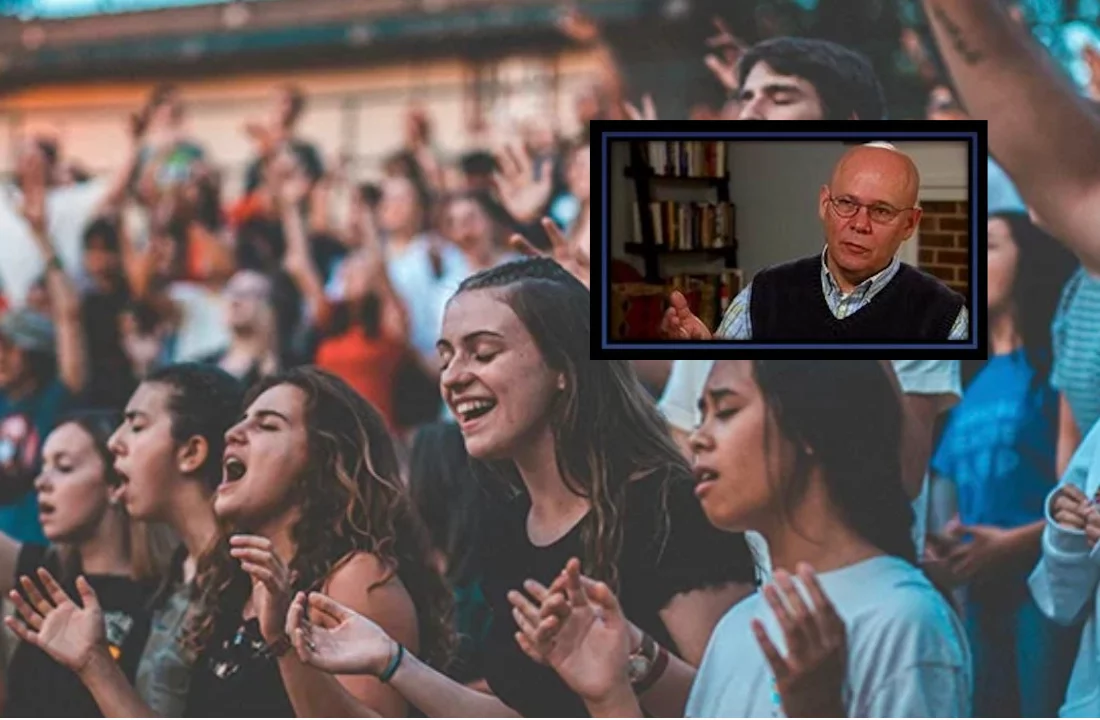
Because I am a writer and I love words, I came too late to the insight that numbers matter.
I need look no further than Scripture to learn how important numbers are. From the 12 apostles to the feeding of the five thousand, from the six days of creation to the 40 days in the wilderness, numbers are everywhere in scripture. There is even a Book of Numbers.
Kyle Smith photo | Unsplash
So, it should be no surprise that numbers can be powerful ways of making a persuasive argument, or — on the other hand — to bear false witness.
A famous example of numbers used for ideological purposes — an example I use when I teach journalism — occurred on the National Mall in Washington. In 1995, the Nation of Islam organized the so-called Million Man March. The National Park Service (NPS) estimated attendance at about 400,000, not the 1 million the organizers claimed. The dispute became highly contentious. The controversy led Congress to prohibit the NPS from producing crowd estimates. As a Park Police official explained, “No matter what we said or did, no one ever felt we gave a fair estimate.”
I share this story to help explain why I take surveys seriously, but I examine them skeptically. Numbers — or the people who use them often have agendas.
That is why a recent survey from Lifeway Research caught my attention.
Lifeway says Gen Z adults who are regular churchgoers attend church at greater rates than other age cohorts. A statement from Lifeway said, “While the median churchgoer in each generation attends four worship services each month, the average Gen Z churchgoer attends a worship service at their church 6.2 times a month.” This compares with “4.8 times for millennials, 5.1 for Gen X and 4.5 for baby boomers and older. This implies that while the typical Gen Z churchgoer attends at a similar frequency to other generations, there is a portion of young adults who attend at much higher rates.”
We are already in the weeds, so to speak. What is a “regular churchgoer?” Is a Gen Zer who identifies as a regular churchgoer the same as a Baby Boomer who identifies as a regular churchgoer? Probably not.
Access to MinistryWatch content is free. However, we hope you will support our work with your prayers and financial gifts. To make a donation, click here.
Let us set this question aside for a moment and let us set aside even the question of whether Lifeway’s data are accurate. I would like to begin by simply noting that this result is an outlier, not consistent with others doing similar research. I looked at recent surveys by Barna, Pew, and Gallup, and they all had different — sometimes significantly different — conclusions. Here is what I found:
Barna
The Barna Group’s recent research is the closest comparison to LifeWay. In 2025 Barna reported Gen Z and Millennials who identify as Christians are now the most frequent church attenders among Christians. But here is where the studies diverge. Barna said the average Gen Z Christian attends 1.9 weekends per month. Millennials average 1.8 weekends. Older generations attend less frequently.
These numbers are a far cry from Lifeway’s 6.2 times per month. Even if you make an allowance for the fact that Barna counts weekends attended, whereas LifeWay appears to count individual worship services (which could include mid-week Bible studies), these findings are hard to reconcile.
Pew
Pew asks a different question, but Pew’s studies help us understand Lifeway study by putting it in a larger context. Rather than measuring how often churchgoers attend, Pew asks how many Americans attend at least monthly or weekly.
Its newest Religious Landscape Study found that only 25% of Americans attend church weekly, and another 8% attend once or twice a month. But here is the key finding that is relevant to our purposes here: Church attendance among all Americans increases significantly with age. Younger adults remain much less likely than Baby Boomers or older adults to attend regularly.
In short, the only way you can conclude that Gen Z attends church more frequently than Baby Boomers is to measure subsets that are not representative of these cohorts as a whole. As we will see in a moment, that is exactly what Lifeway has done.
Gallup
Gallup data mostly agrees with Pew that church attendance increases with age. Gallup also found that worship attendance in all age groups continues to decline, though not as rapidly as in year’s past.
According to Gallup: “Specifically, more 18- to 29-year-olds, 35%, say they have no religious preference than identify with any specific faith, such as Protestant/nondenominational Christian (32%) or Catholic (19%). Additionally, young adults, both those with and without a religious preference, are much less likely to attend religious services — 22% attend regularly, eight points below the national average. These trends are consistent with other Gallup indicators of religious beliefs and practices, including the importance of religion to Americans and formal membership in churches and other houses of worship.”
So, What’s Really Happening, and Why?
So, what are we to make of these comparisons? First and foremost: any suggestion that Gen Z church attendance is on the rise, or that it is greater than older cohorts (Millennials, Gen X, Baby Boomers) is simply not supported by the preponderance of data available. It is possible to cherry pick the data — to find anecdotes or examples — to support almost any conclusion, but those highly qualified conclusions tend to obscure, not illuminate, what is happening in the religious ecosystem in America.
So why is the Lifeway study such an outlier? One reason is its methodology. I do not want to get too much in the weeds here, but it is important to note that Lifeway used an opt-in panel for its study.
Ryan Burge recently wrote an article about survey methodologies and how different methodologies can arrive at significantly different conclusions. Here is what he said about opt-in panels: “Respondents volunteer to be part of a pool and are surveyed repeatedly. While researchers use heavy weighting to make these panels look like the U.S. population, there is a limit to what math can fix. If a certain ‘type’ of person never joins the panel in the first place, no amount of weighting can account for them.” So, what type of person is the “type” that does not join a panel asking questions about religion? The answer is secular young people. Ryan Burge quoted a Pew research investigation into survey methodologies. Its conclusion: “Online opt-in polls can produce misleading results, particularly among young people.”
I do not believe Lifeway manipulated any data, and it fully disclosed its methodology. It simply could not correct for the significant — you might even say extreme — bias inherent in its methodology.
This bias becomes more obvious when you look at the sample size for each cohort in the Lifeway study:
- Gen Z (18 to 28 years old): 156
- Millennials (29 to 44): 541
- Gen X (45 to 60): 632
- Baby Boomers (61+): 801
As you can see, the survey had five times more Baby Boomers than Gen Zers. It had more than four times more than Millennials, Gen Z’s closest analog. Again, at the risk of getting too deep into the statistical weeds, these sample sizes mean the margin of error for the Gen Z cohort is more than 7%, more than three times the margin of error for the sample size as a whole. To cut to the chase, this means it is really impossible to tell if “Gen Z Churchgoers,” as Lifeway calls them, really attend church more or not. Why? Because the Gen Z sample size includes only the most passionate Gen Zers. The other cohorts include the most passionate plus many others as well.
So, what is the moral of this story? It is not that Lifeway’s research is flawed or dishonest. Lifeway fully disclosed its methodology and sample sizes, including cohort breakdowns. And I agree with one of the principle conclusions of the study, that within an increasingly secular Gen Z there remains a “committed remnant.” In other words, there are fewer young adults in church, but those who are there are often attending with greater frequency and intentionality than previous generations of young adults.
That said, Lifeway’s methods have inherent and significant limitations. It probably knows that, which is why it provided all the disclosures about its methodology. But it also probably knew that most people would not understand those disclosures, or the implications of them. I would gently chastise Lifeway for not being more forthcoming and direct about those limitations, and for not being more measured and qualified in its conclusions.
The moral of this story for the rest of us is that most Americans are not very mathematically literate, and we therefore see in the numbers what we want to see. We want to believe the current myth that America is experiencing revival, especially among young people. That narrative supports other political and cultural narratives we also want to believe.
Because we want these religious, cultural, and political narratives to be true, we look for data to support these narratives, and we discount or ignore data or qualifications that undermine the desired narratives.
Numbers can help us get at the truth. Even the Bible tells us so. The Bible also says, “He who has eyes to see, let him see.” We cannot be so focused on what we want to see that we fail to see what is actually there.
TO OUR READERS: The mission of MinistryWatch is to help Christian donors become more faithful stewards of the resources God has entrusted to them. Do you know of a story that will help us fulfill our mission, or do you want to give us feedback about this or any other story? If so, please email us at [email protected].