
Indictment in ND Church Case Highlights Familiar Pattern
Church fraud case highlights why ordinary access to church finances can equal extraordinary losses

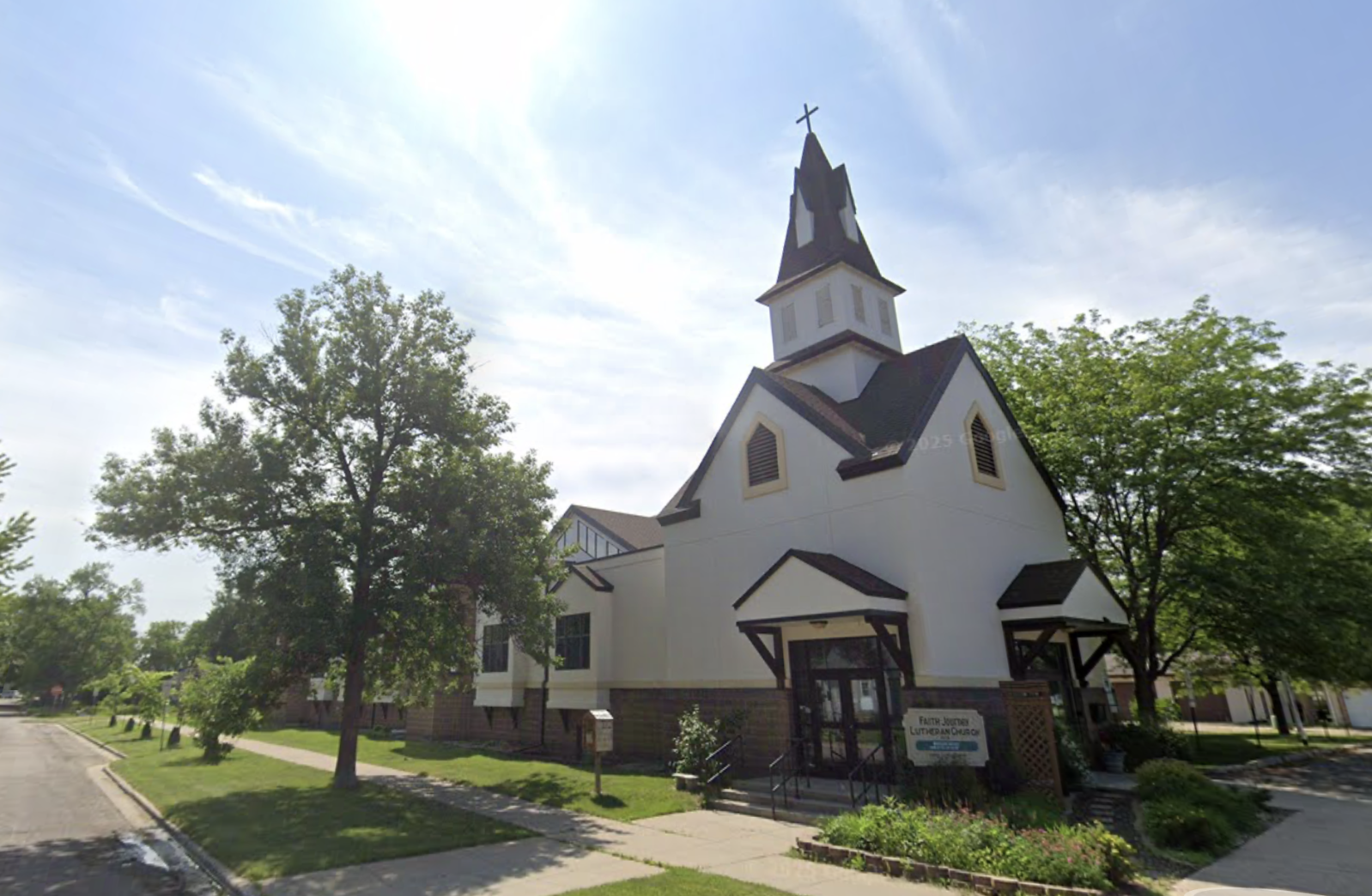
A federal jury in North Dakota has indicted a former business manager at Faith Journey Lutheran Church in West Fargo, alleging she diverted more than $600,000 from the congregation over five years. An indictment filed last month in the U.S. District Court charges Carly Anne Tufte with five counts of bank fraud and one count of access device fraud.
Faith Journey Lutheran Church / Photo via Google Maps
Prosecutors say Tufte, hired in 2018, was given sweeping control over church finances—reporting to the council, tracking and counting weekly offerings, and holding sole access to key accounting functions and bank accounts. The indictment alleges that in April 2019, Tufte opened an unauthorized First National Bank of Omaha (FNBO) credit card in both her and the church’s names. She had those statements sent to her home and racked up nearly $640,000 in charges, interest, and fees for personal spending. The vast majority of non-church purchases were reportedly for vacation travel and clothing, it says.
It further alleges that she used a Gate City Bank debit card tied to the church’s general fund to make roughly $600,000 in unauthorized payments on the FNBO credit card that she opened and used without authorization. Prosecutors say Tufte concealed her scheme by hiding bank statements from the church treasurer and recording false journal entries that inflated expenses and masked lower bank balances.
The indictment says two days after learning that Faith Journey’s new pastor planned to review the church books, Tufte abruptly resigned (Dec. 13, 2024). Church officials discovered the credit card the following month. Tufte canceled the card on Jan. 28, 2025.
Investigators say the alleged scheme succeeded, in part, because church leaders sidestepped or failed to implement routine safeguards. The church only discovered the fraud when the new pastor indicated an intent to review the church’s finances more closely.
Access to MinistryWatch content is free. However, we hope you will support our work with your prayers and financial gifts. To make a donation, click here.
Faith Journey said in a statement that it can’t comment on specifics but has implemented “additional financial oversight measures” to prevent a similar incident from occurring again.
If a jury convicts Tufte, the court could order her to forfeit property prosecutors say traces to the alleged fraud, and prosecutors could seek substitute assets if the proceeds are missing or have been transferred or mixed with other funds.

Carly Anne Tufte
Lifeway Research reports that 1 in 10 Protestant churches has had funds stolen by staff or volunteers, and many incidents go undetected. Churches usually do not lose money to outsiders or to top leadership—they lose it when trusted insiders, like the longtime treasurer, the reliable usher, or the well-loved deacon, abuse their access.
Frequently, church embezzlement involves someone with no prior record who never imagined they would cross “that” line.
Protecting your church from fraud
The pattern is familiar enough to have a name. The Association of Certified Fraud Examiners (ACFE) ‘s Fraud Tree classifies cases like Tufts as asset misappropriation—money siphoned off through ordinary channels. The patterns displayed in the tree (as well as in stories like Tufte’s) show why segregation of duties matters, as most losses require only routine access to cash handling or everyday disbursements.
The ACFE explains that fraud can be both straightforward and surprisingly complex. Criminologist Donald Cressey, whose research on embezzlers coined the term “trust violators,” demonstrated what he called the Fraud Triangle. The Triangle comprises three lines representing pressure, opportunity, and rationalization. For example, the likelihood of misconduct sharply rises when a personal financial need meets easy access, followed by a self-justifying story.

Graphic via Association of Certified Fraud Examiners
That reality leaves churches with a practical question: “What does healthy fraud prevention look like?” The good news is that the most effective safeguards are not complicated or expensive, but rather simple measures that make it harder to sustain significant losses and easier to detect them early.
Guidance from the Evangelical Council for Financial Accountability’s 9 Essentials for Avoiding Church Fraud and firms like Good Shepherd Bookkeeping Solutions translates fraud prevention into practical steps that protect both church funds and the people entrusted to handle them.
Both start with the same fix: eliminate the single point of failure. They suggest not designating a single person to count, deposit, record, and reconcile funds. Instead, they propose separating those duties so that no single person is responsible for them.
For cash handling, Good Shepherd Bookkeeping Solutions recommends two-person counting teams in a secure room, endorsing checks immediately, making deposits within 48 hours, and documenting each step so a reviewer can trace the deposit from the offering plate to the bank.
ECFA Guide
ECFA’s recommendations agree and also advise that counters keep personal bags out of the room and that churches use basic camera coverage with no blind spots.
Both sets of guidance call for adding friction to spending. Require dual approval for disbursements: checks, ACH transfers, and larger purchases, captured in bill-pay or accounts payable systems. They say to pair that with a monthly independent review of bank statements and reconciliations, credit card charges, and missing receipts, transfers, and vendor changes, using audit logs as routine oversight.
ECFA, in particular, highlights the “quiet drains” that can be harder to notice than Sunday offerings (such as payroll, projects, and reimbursements). Payroll is often the largest outflow for most churches, making it a prime target for padding, unapproved bonuses, and even “phantom” workers.
They warn of the need to watch for filler expenses tied to building programs, which magnify risk through large contractor payments and vendor change fraud. Moreover, expense reimbursements—especially for senior leaders—need independent review, because accountability becomes fuzzy when reporting lines are personal (ECFA expounds on this “sticky issue” in section five of its report).
What about when someone retires or when a key staff member is replaced? Both Good Shepherd and ECFA emphasize putting controls in writing so they survive turnover.
The more complex the ministry becomes, the greater the potential for accountability weaknesses. The two propose that the same controls should extend beyond the main office. Churches should apply uniform procedures across all locations so satellite campuses mirror headquarters, and remote collections don’t become easy gaps.
And because fraud isn’t only about cash and checks, protect non-cash assets too: keep an equipment inventory (e.g., laptops, mobile phones, audio/visual equipment) and document gift card custody and usage (if you use them).
Good Shepherd also prescribes basic technology safeguards and routine oversight, including two-factor authentication, limited admin access, audit logs, and two-person approval for vendor and banking changes.
They also advise keeping the board updated with a 10-minute monthly fraud check that includes a one-page view of bank movements, which will reveal anything that single totals can hide.
Lastly, ECFA emphasizes that most churches uncover fraud because someone speaks up. Leaders should make reporting safe, simple, and specific. It recommends clear internal reporting channels, protection for good-faith reports, and an impartial process for investigating concerns.
TO OUR READERS: The mission of MinistryWatch is to help Christian donors become more faithful stewards of the resources God has entrusted to them. Do you know of a story that will help us fulfill our mission, or do you want to give us feedback about this or any other story? If so, please email us at [email protected].